
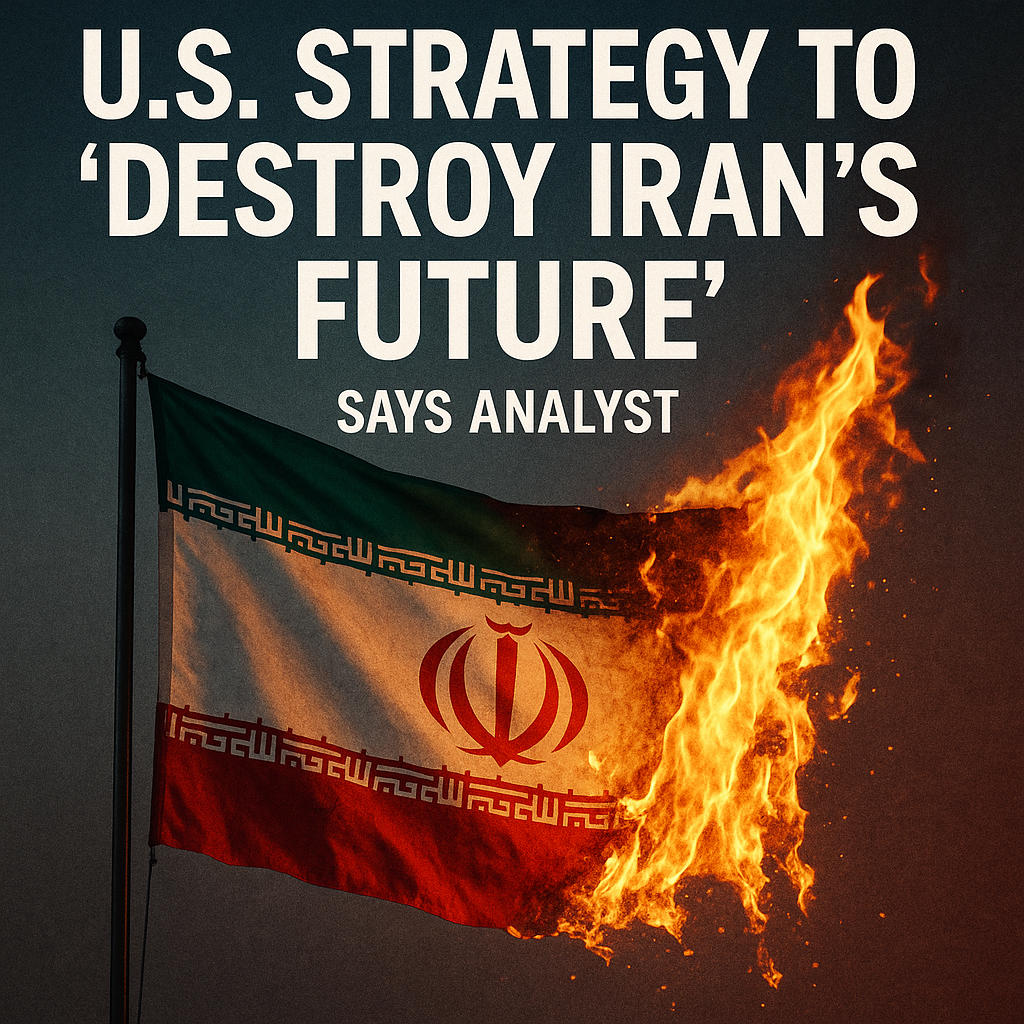
US Strategy to ‘Destroy Iran’s Future’, Says Analyst

US Strategy to ‘Destroy Iran’s Future’, Says Analyst
In recent discussions surrounding the geopolitical landscape of the Middle East, a controversial statement has emerged: a high-profile analyst claims that the United States aims to “destroy Iran’s future.” This perspective, while alarming, opens the door to a deeper exploration of the complexities at play in U.S.-Iran relations.

A New Approach to an Old Conflict
The backdrop of U.S.-Iran relations is steeped in decades of tension, sanctions, and military engagements. Analysts are now dissecting whether current strategies might indeed reflect an intention to undermine the very foundations of Iran’s political and economic structures. According to reports, this claim was articulated by an analyst who pointed to recent U.S. actions, including sanctions and military posturing, as part of a broader strategy that jeopardizes Iran’s future.


Military Presence and Economic Sanctions
One key area of focus is the U.S. military presence in areas close to Iran. For instance, recent deployments have been described as “provocative” and aimed at destabilizing Iran’s influence in the region. Many analysts argue that such military strategies serve not just as a deterrent but as an active means of reshaping regional dynamics to favor U.S. interests.


Economic Impact on Iran
Simultaneously, the economic situation in Iran has been increasingly strained due to decades of sanctions. Economic analysts have noted that the U.S.’s financial sanctions are designed to limit Iran’s ability to engage in global commerce, thereby stunting its economic development. A report highlights that Iran’s economy, once rich in natural resources like oil and gas, is now grappling with soaring inflation and decreasing currency value—a situation exacerbated by sanctions intended to push policy change within the Iranian government.
Diverse Perspectives
Despite the severity of the claims regarding U.S. intentions, there are contrasting viewpoints within the geopolitical analyses. Some experts argue that the U.S. strategy is not solely focused on undermining Iran but rather on creating a balance of power in a region characterized by aggressive posturing from various nations.
Diplomacy vs. Military Action
This perspective emphasizes the importance of diplomatic solutions. In light of this, several reports indicate a growing call within international communities for renewed dialogue with Tehran. The sentiment echoes that military solutions are both costly and often lead to unintended consequences that could further exacerbate conflict rather than resolve it.
On the other hand, critics of U.S. policies argue that the rhetoric of balancing power often conveniently ignores the way it disproportionately impacts civilian populations. As one report from Al Jazeera pointed out, the impact of sanctions and military deployments is borne most heavily by those within Iran who are already impacted by economic hardships.
The Uncertain Future
As the international community watches these developments unfold, it raises critical questions concerning the future of Iran, the stability of the broader Middle East, and the U.S.’s role as a global power. The notion that a singular strategy exists to “destroy Iran’s future” is indeed a simplistic framing of a complex geopolitical chess game. Various analysts suggest that the multifaceted nature of the U.S.-Iran relationship requires a nuanced understanding that incorporates both military and diplomatic efforts.
The potential for either escalation or reconciliation remains uncertain. Current discourse surrounding U.S. strategies reveals a fundamental divide in perspectives—those advocating for aggressive tactics to control Iranian power versus those fostering dialogue to promote stability and peace.
Conclusion: A Call for Nuance
The assertion that the U.S. is out to “destroy Iran’s future” encapsulates the intensified tensions and the varied strategies at play. Yet, as with most geopolitical situations, simplicity fails to capture the entire picture. The stakes are incredibly high, not only for Iran but for regional actors and the global community alike.
Balancing strategies that include military readiness with diplomatic solutions may offer the most promising route toward establishing a more stable and equitable future for all parties involved. As rhetoric continues to shape the landscape, the need for informed discourse remains imperative if any real progress is to be made toward peace and prosperity in the region.















