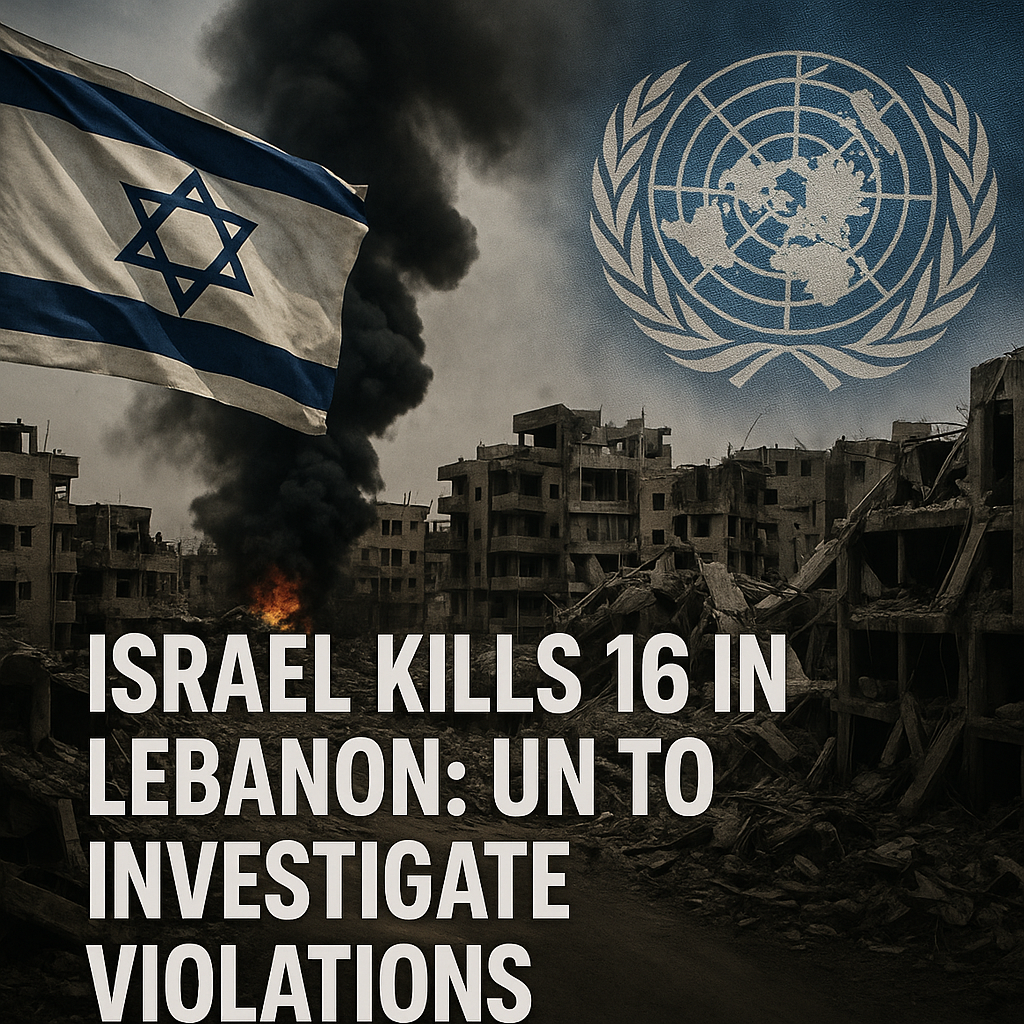
Israel Kills 16 in Lebanon: UN to Investigate Violations

In a significant escalation of regional tensions, Israel conducted military operations in Lebanon that resulted in the deaths of 16 individuals. This incident has prompted the United Nations to launch an investigation into potential violations of international law. The complexities surrounding this event highlight the ongoing conflict in the Middle East and the differing perspectives on the use of military force.

The Incident and Immediate Reactions
The Israeli military reported targeting positions of militant groups in southern Lebanon, asserting that these actions were necessary to prevent imminent attacks against its territory. Conversely, Lebanese officials condemned the strikes as indiscriminate aggression, claiming that civilians were among those killed. Such contrasting narratives underscore the ongoing struggle for truth and accountability in a region plagued by violence.


The UN’s response has been swift, with expressions of concern over the civilian casualties reported. The organization emphasized that all parties must adhere to international humanitarian laws, which prioritize the protection of civilians during conflicts. This response indicates a growing international awareness of the humanitarian impacts of military actions and a call for accountability.


Different Perspectives on Military Engagement
Several viewpoints emerged from the coverage of the incident, illustrating the multifaceted nature of the conflict. On one side, Israeli sources emphasize the narrative of self-defense, arguing that attacks were launched in retaliation for heightened threats from militant groups, primarily Hezbollah. They view military action as a necessary measure to ensure national security and deter future aggression.
In contrast, reports from Lebanese media and human rights organizations paint a different picture. They highlight the casualties among non-combatants, calling for greater scrutiny of Israel’s military tactics. This perspective challenges the justification of such force, asserting that the loss of civilian lives cannot be dismissed as collateral damage in ongoing hostilities.
The Role of International Law
The call by the UN for an investigation into the Israeli strikes brings the issue of international law to the forefront. Legal experts highlight that military actions must adhere to principles that distinguish between combatants and non-combatants. The investigation aims to determine whether the operations carried out constituted a breach of these laws.
Moreover, there are calls from the international community for both sides to deescalate tensions and engage in dialogue. The complexity of the regional conflict—a mix of historical grievances, territorial disputes, and political power plays—underscores the challenges in achieving lasting peace.
Understanding the Broader Context
This incident cannot be viewed in isolation. It sits within a long history of conflict between Israel and various groups in Lebanon, particularly Hezbollah. The cyclical nature of this violence often raises questions about the feasibility of peace negotiations.
Stability in the region is further threatened by external influences, including geopolitical interests from global powers. The involvement of various state and non-state actors complicates the responsibilities and responses for maintaining peace and security.
As the UN prepares to investigate, questions about accountability persist. Will the findings influence future military engagements, or will they simply reinforce existing narratives on both sides? The answer remains uncertain, but the accountability of nations to uphold humanitarian principles is critical for the international order.
Conclusion
The incident in Lebanon that resulted in the deaths of 16 people is not just a tragic chapter in the ongoing Israeli-Lebanese conflict; it is a poignant reminder of the dire implications of military action in populated areas. The differing perspectives underscore the necessity for a careful approach in assessing responsibility and the need for dialogue to resolve the underlying tensions.
As the UN embarks on its investigation, the hope remains that tangible outcomes might emerge, fostering a greater understanding of international law’s role in conflict. True lasting peace can only come through commitment to accountability and the protection of civilian lives, essential principles that have often been sidelined in the heat of battle.