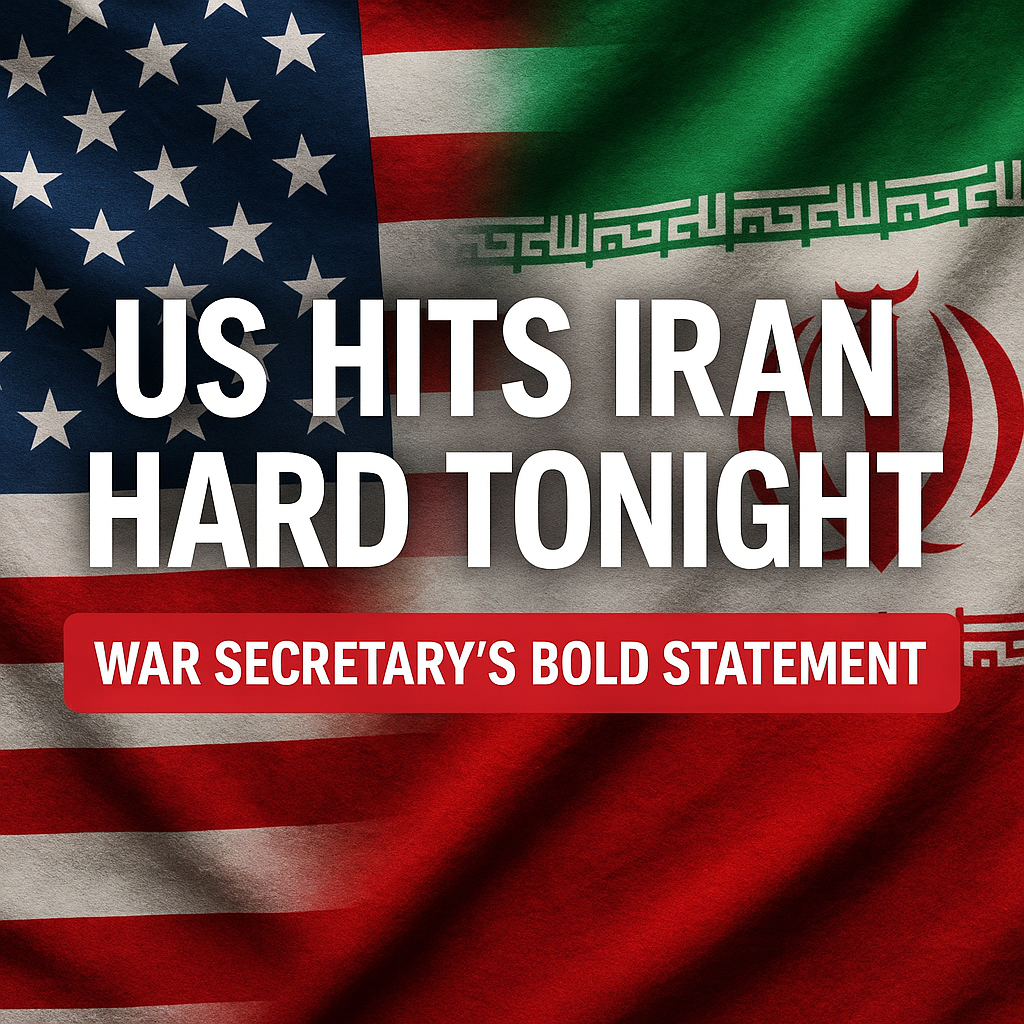
US Hits Iran Hard Tonight: War Secretary’s Bold Statement

US Hits Iran Hard Tonight: War Secretary’s Bold Statement

Recent developments between the US and Iran have intensified geopolitical tensions, aptly characterized by the War Secretary’s remarks signaling a forceful stance. As the situation evolves, it’s crucial to examine the underlying factors that shape these interactions.


Amplified Aggression: Understanding the Context
The backdrop of the War Secretary’s assertive statement comes amid a series of military drills and persistent threats from both nations. The US has made it clear that it is prepared to take drastic measures to address perceived threats from Iran, which it considers a destabilizing force in the Middle East. According to an article from RT, the War Secretary emphasized, “We will be hitting Iran hard,” underscoring a commitment to maintaining regional security and deterring Iran’s nuclear ambitions.


Al Jazeera adds nuance by outlining Iran’s response to such threats, characterizing them as reckless provocations that only exacerbate an already volatile situation. The Iranian government has condemned these statements, asserting that they possess the capability to defend their sovereignty against foreign aggression. This highlights a broader struggle not just for military dominance, but for regional influence, as both nations seek to rally allies and assert their ideologies.
A Clash of Perspectives: The Domestic and Global Reactions
The implications of the War Secretary’s statement resonate beyond just military considerations; they touch on domestic politics in the US and global diplomatic relations. Critics of the administration argue that such rhetoric could lead to an escalation of conflict, shifting the focus away from diplomatic solutions that might address the underlying issues at play.
Moreover, varying responses from international allies showcase the fracture lines within global sentiment about US policy in the region. For instance, while traditional allies in the Gulf may support a harder stance on Iran, European nations have often favored a more diplomatic approach, advocating for dialogue over confrontation. This divergence in strategies suggests that if the US continues its aggressive posture, it risks alienating key partners whose support may prove vital in any prolonged engagement.
Navigating Uncertainties: The Path Forward
Despite the War Secretary’s assertive declarations, there remains a degree of uncertainty about the potential outcomes of this bold stance. Analysts point out that while the US military has significant resources, the complexities of engaging with Iran demand careful consideration of numerous factors, including economic sanctions, reliance on regional partners, and the potential for miscalculation in military engagements.
The situation is further complicated by Iran’s own strategic calculations. The Islamic Republic has historically leveraged crises to consolidate internal power, and military confrontations could play into this narrative. As tensions rise, the unpredictability of both nations’ responses could lead to a cycle of retaliation that complicates any prospects for resolution.
In summary, the tensions between the US and Iran as highlighted by the War Secretary’s remarks about hitting Iran hard reflect much deeper geopolitical dynamics. The narrative is shaped by both assertive military posturing and diplomatic fraughtness, leaving observers questioning the efficacy of such tactics. As we contemplate the future, the call for a balanced approach—one that combines firm defense with strategic dialogue—becomes increasingly critical for both regional stability and international cooperation.