
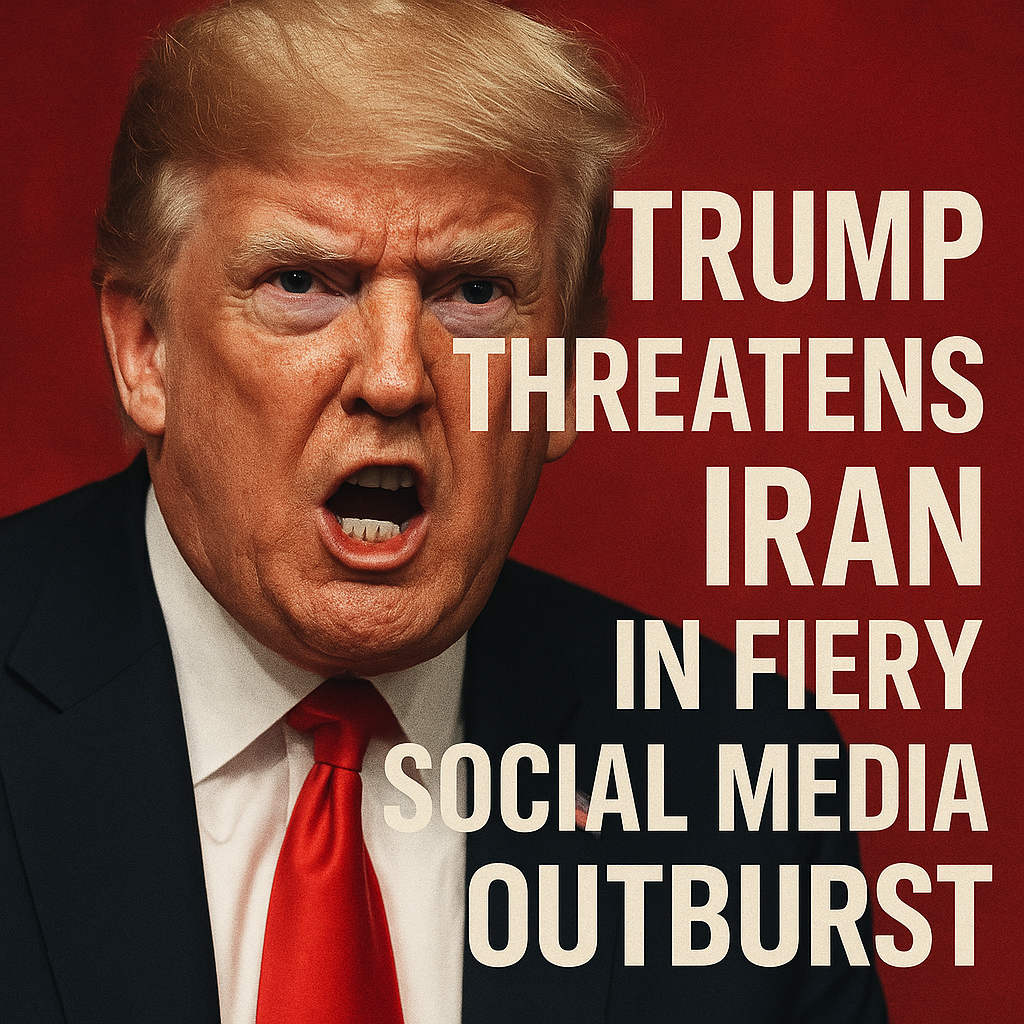
Trump Threatens Iran in Fiery Social Media Outburst

Trump Threatens Iran in Fiery Social Media Outburst
Former President Donald Trump has once again stirred controversy with a fiery social media post threatening Iran. This outburst raises key questions about the state of U.S.-Iran relations, the implications of Trump’s rhetoric, and what it signifies for future diplomatic efforts.

The Context of Trump’s Statement
Trump’s expletive-laden message directed at Iran follows a sequence of escalatory events, including tensions over nuclear activities and military posturing in the region. Reports from various news outlets reveal that Trump’s post was not just an impulsive reaction; rather, it reflects ongoing frustrations regarding Iran’s geopolitical maneuvers.


According to Al Jazeera, Trump’s message was filled with strong language and conveyed a sense of urgency, emphasizing that the U.S. would not tolerate any threats from Iran. This aligns with previous statements made by Trump during his presidency, where he often employed aggressive rhetoric to assert the U.S.’s stance in international disputes. Critics argue that such language can escalate tensions further, potentially jeopardizing diplomatic avenues.


Varied Reactions from News Sources
Responses from different news outlets illustrate the polarized views surrounding Trump’s tactics. For instance, RT (Russia Today) frames Trump’s comments as populist rhetoric aimed at galvanizing his base ahead of potential future political endeavors. They highlight that Trump’s fiery posts often serve dual purposes: energizing supporters while simultaneously reflecting broader insecurities about the threats posed by adversaries.
On the contrary, Sky News emphasizes the potential ramifications of such aggressive language, particularly in the delicate arena of U.S.-Iran relations. Their coverage calls attention to the importance of measured diplomacy, warning that incendiary remarks can lead to miscalculations and unintended escalations.
The Implications of Escalation
Aggressive rhetoric such as Trump’s presents a complicated dilemma for the Biden administration and international policymakers. Tensions between the U.S. and Iran have persisted since the U.S. withdrew from the Iran nuclear deal in 2018, and Trump’s statements could complicate efforts to re-establish diplomatic channels.
Risks Involved
1. Diplomatic Fallout: Escalatory language may alienate potential allies who prefer diplomacy over threats, complicating coalition-building efforts in addressing Middle Eastern stability.
2. Military Escalation: Increased military rhetoric can provoke aggressive actions from Iran, which may feel cornered and resort to military responses, risking broader conflict.
3. Domestic Political Consequences: Trump’s post also fosters debate within the U.S. on foreign policy direction, with some advocating for a tougher stance on Iran while others call for a return to diplomatic negotiations.
Navigating a Complex Landscape
In response to the complex dynamics unfolding, experts are divided on the best path forward. Some argue for a continuation of aggressive conditioning, believing that it might deter Iran from pursuing nuclear ambitions. Others caution against this approach, suggesting that it may hinder constructive dialogue essential for long-term peace.
Given the uncertainty surrounding U.S.-Iran relations, it’s crucial to promote inclusivity in discussions about policy decisions. The polarizing nature of Trump’s rhetoric serves as both a rallying cry for some and a cause for grave concern for others.
Conclusion: A Complex Future Ahead
As Donald Trump’s social media activity continues to generate significant attention and debate, the implications for U.S.-Iran relations remain unclear. The dual narrative from various news sectors underscores the need for a careful approach to international diplomacy. While strong rhetoric might resonate with certain voter bases, the potential consequences for global stability warrant a more balanced and nuanced perspective in diplomatic discussions.
Whether Trump’s statements will incite further tensions or spark a renewed emphasis on negotiation remains to be seen. In any case, staying abreast of developments from multiple sources will be crucial for understanding the complexities inherent in international relations today.















