
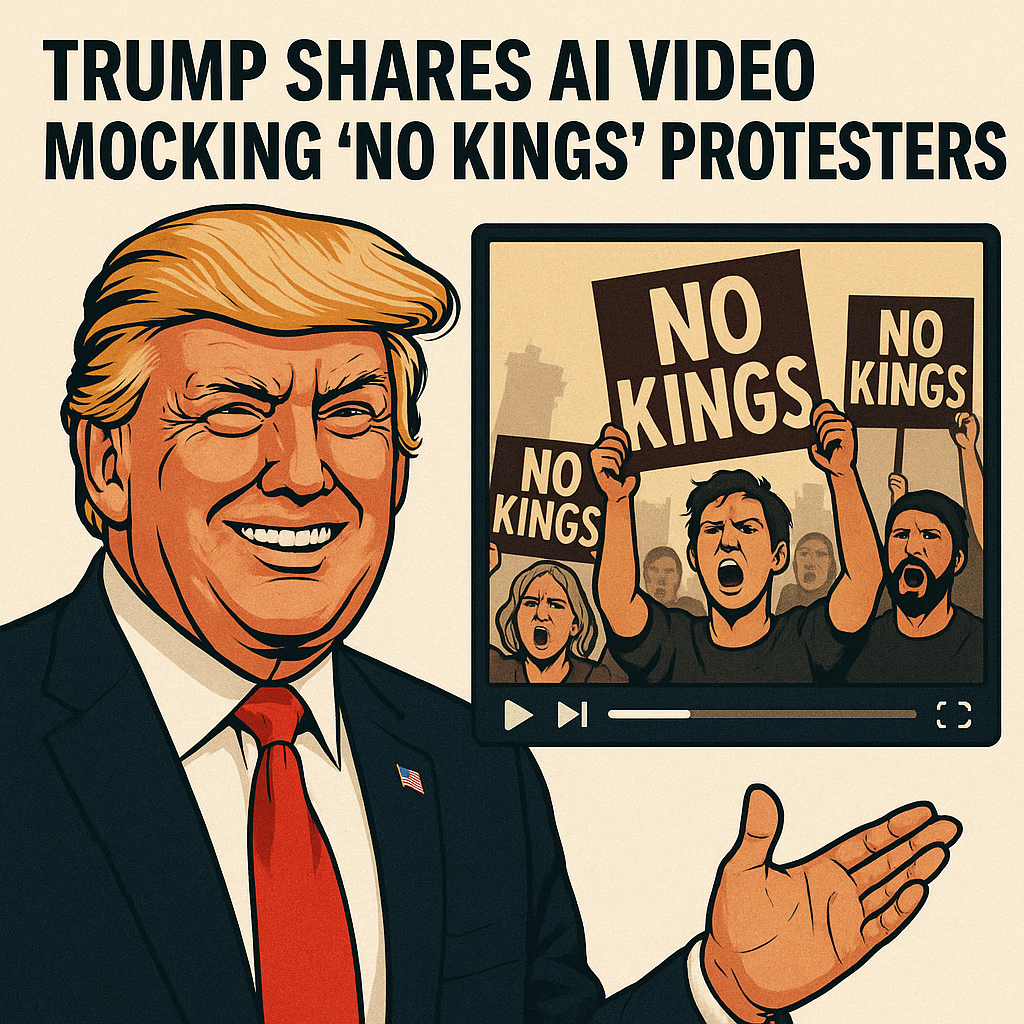
Trump Shares AI Video Mocking ‘No Kings’ Protesters

Trump Shares AI Video Mocking ‘No Kings’ Protesters
In a controversial move, former President Donald Trump recently shared an AI-generated video that pokes fun at the “No Kings” protesters—a group advocating against perceived authoritarianism and advocating for civil liberties. This incident has sparked widespread debate, shedding light on the intersections of artificial intelligence, political satire, and public discourse.

The Context of the ‘No Kings’ Movement
The “No Kings” protest movement emerged as a collective response to what many see as an erosion of democratic principles in various political climates. Supporters argue that they are standing against the rising tide of populism and authoritarianism, advocating for a governance model that emphasizes transparency and accountability. These concerns resonate in democratic societies where the balance of power is foundational.


The movement gained traction in multiple regions, particularly among youth and activists who utilize social media to amplify their message. Critics, however, argue that some factions within this movement tend to employ sweeping generalizations that can alienate potential allies. This complex backdrop makes Trump’s decision to mock the protestors using AI-generated content all the more significant.


AI Satire: A New Frontier
Artificial intelligence has woven itself into the fabric of modern discourse, with tools now capable of mimicking human expression and humor. Trump’s AI video, which features an exaggerated and satirical portrayal of the protestors, exemplifies this trend. Proponents of AI-driven satire argue that it can serve as a powerful tool for political commentary, allowing for hyperbole that can underscore real social issues. However, detractors worry that such representations can oversimplify complex narratives or fuel divisive sentiments.
A closer examination of the video reveals layers of complexity in its usage. While some commentators view this satire as harmless fun, others interpret it as an attack that undermines the sincerity of legitimate dissent. The former president’s actions also raise questions about the ethical implications of using AI in political contexts. Is it acceptable for political figures to weaponize such technology to distort perspectives or mock opposition?
The Reaction: Divided Opinions
Responses to Trump’s AI video have been varied, reflecting the polarized state of contemporary politics. Some individuals and outlets view the sharing of the video as a successful trolling of political opponents, a tactic that Trump has employed in numerous contexts. “He’s using humor to deflate a serious message,” commented one political analyst. This sentiment highlights a segment of society that finds value in using satire as a means to challenge narratives they disagree with.
Conversely, others express concern that such portrayals can further entrench divisions among different factions in society. Critics argue that satirical content can make constructive dialogue nearly impossible, as it tends to simplify multifaceted arguments into caricatures. A reader from a conservative outlet remarked, “While it may seem funny, this reduces complex issues to jokes, detracting from meaningful discussions about governance.”
In navigating this divide, the impact of AI-generated content cannot be understated. As we increasingly embrace technology in political dialogues, the responsibility lies not just with content creators but also with audiences to critically engage with this media rather than consuming it passively.
Looking Ahead: The Role of AI in Politics
As the political landscape continues to evolve, so too does the role of AI in shaping conversations. The incident with Trump underscores a vital aspect of this transformation: the potential for both positive and negative ramifications in how information is shared and consumed. Engaging with AI-generated satire or commentary demands a discerning audience that questions and seeks out deeper truths amid the noise.
Moreover, it’s crucial to consider regulatory frameworks concerning AI’s role in political discourse. How do we protect free speech while simultaneously preventing the dissemination of misinformation? This remains an open question that governments and organizations must grapple with as technology advances.
In conclusion, Trump’s use of an AI video to mock the “No Kings” protesters serves as a microcosm of wider societal debates on the intersections of technology, humor, and political expression. As the lines between civil dissent and satire blur, societies must remain vigilant and engaged, steering toward conversations grounded in empathy and understanding rather than division. In this era of quick-to-consume content, fostering a culture of critical thinking may be what keeps democracy alive and thriving.















