
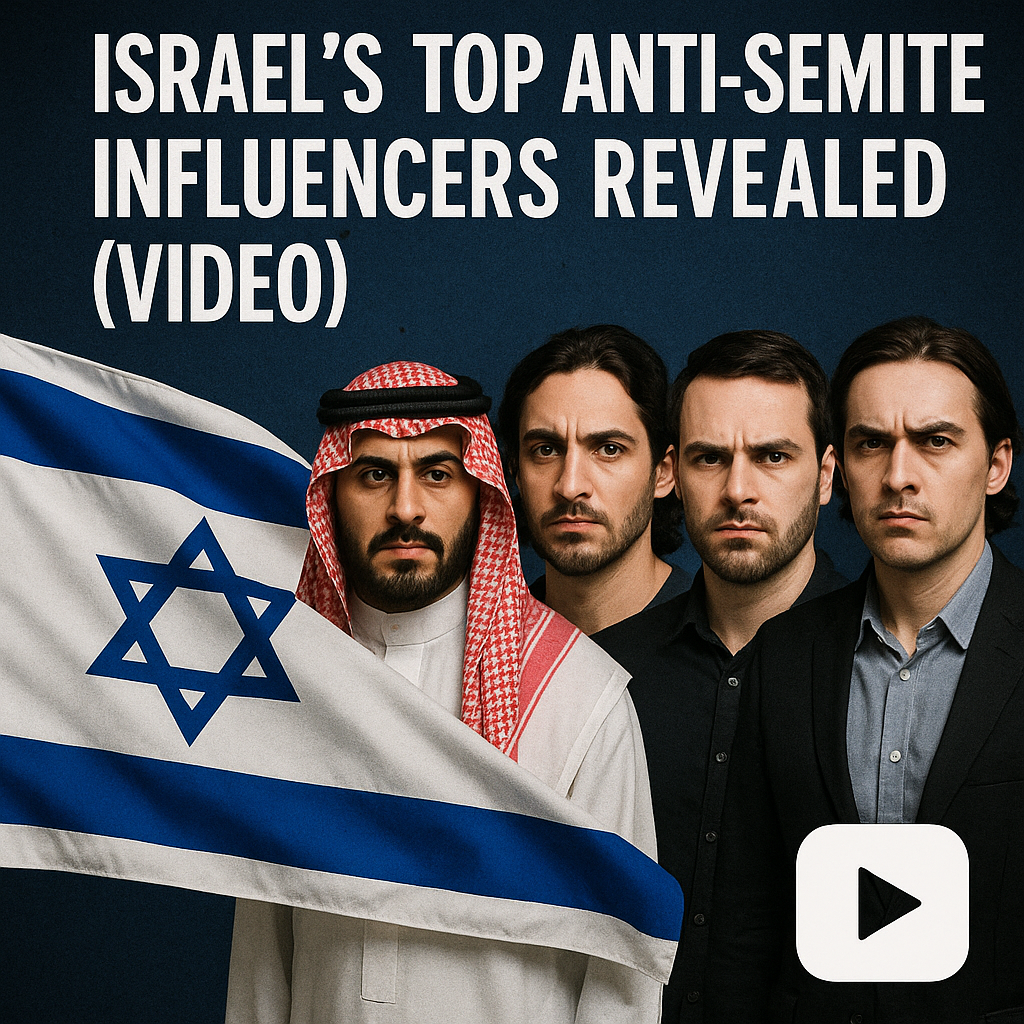
Israel’s Top Anti-Semite Influencers Revealed (VIDEO)

Israel’s Top Anti-Semite Influencers Revealed: A Closer Look
The recent controversy surrounding alleged anti-Semitic influencers in Israel has sparked a wide array of opinions and debates. This topic, rife with complexity, not only delves into societal sentiments but also examines the broader implications for culture and politics within and beyond Israel’s borders.

Understanding the Claims
A report released by RT News identifies several public figures whom it labels as “top anti-Semitic influencers” in Israel. This list has ignited a fierce discussion, especially among those who argue that the term “anti-Semite” is often weaponized to silence dissenting voices. Perspectives on the validity of the claims vary significantly, raising deeper questions about the intersection of free speech, criticism of government policies, and actual anti-Semitism.


According to the report, the influencers named include various social media personalities, artists, and political activists, who have garnered significant attention for their controversial statements. The premise of the investigation suggests that these figures propagate narratives that undermine the Jewish identity or promote anti-Semitic ideologies.


A Spectrum of Opinions
The responses to this report reveal a spectrum of opinions not only concerning the identified individuals but also regarding the issue of anti-Semitism as a whole. Supporters of the report argue that heightened scrutiny is warranted in today’s geopolitical climate, where the resurgence of anti-Semitic sentiments poses real threats. They point to statistics showing rising anti-Semitic incidents worldwide as evidence that vigilance is necessary.
Conversely, critics of the report, including some media commentators and advocates for free speech, assert that labeling individuals as anti-Semitic often serves to stifle legitimate criticism of the Israeli government and its policies. For instance, a political analyst interviewed by Al Jazeera suggested that while some influencers may indeed cross lines into overt anti-Semitism, many of their critiques reflect broader political frustrations with Israel’s actions in the Palestinian territories.
This divergence emphasizes a key element of the debate: what constitutes anti-Semitism versus legitimate critique of Israeli policy is not universally defined and remains a contentious topic in social discourse.
Impact on the Discourse
The repercussions of labeling influencers as anti-Semites extend beyond individual reputations; they shape broader societal narratives. Social media plays a significant role, where platforms like Twitter and Instagram serve as battlegrounds for these discussions. The ease with which information spreads can amplify sentiments and lead to polarized factions aligning themselves with either side of the argument.
Cultural and Political Consequences
Understanding these dynamics is essential for grasping Israel’s evolving cultural landscape. Some argue that such classifications risk marginalizing voices that offer critical perspectives on Israeli policy, especially from within the Jewish community itself. For example, notable Jewish individuals have spoken against the Israeli government and faced backlash, labelled as traitors or anti-Semites, thus creating a climate of fear around dissent.
On the flip side, proponents of the label point to historical and ongoing discrimination that necessitates a zero-tolerance approach towards anti-Semitism. They argue that enabling discourse that normalizes anti-Semitic rhetoric furthers societal divides and does not contribute to constructive dialogue.
Negotiating Complexity
In navigating the complexities of this issue, one must recognize that the terms used in this discourse hold immense weight. Words like “anti-Semite” carry historical significance and emotional baggage, often inciting strong responses from various communities around the world. The challenge lies in discerning genuine anti-Semitism from critiques tied to anti-Zionism or broader political opposition.
While some may frame the current situation as a binary issue, the reality is nuanced. The international community continues to grapple with these tensions, often reflecting varying sentiments depending on the cultural and political contexts of different nations.
Conclusion: A Call for Careful Consideration
In light of the diverse viewpoints surrounding Israel’s alleged anti-Semitic influencers, it’s crucial to approach this topic with sensitivity and care. As debates continue to evolve, the distinction between legitimate discourse and harmful rhetoric uses remains paramount. While vigilance against anti-Semitism is critical, it must not come at the cost of silencing valuable dissenting perspectives that contribute to the ongoing conversation around Israel, its policies, and its place in a changing world.
The challenge moving forward lies in fostering dialogue that recognizes this complexity and seeks to bridge divides rather than widen them. As society continues to confront and engage with the multifaceted nature of anti-Semitism and criticism of Israel, it must strive for a balance that respects diverse views while firmly opposing hatred in all its forms.















