
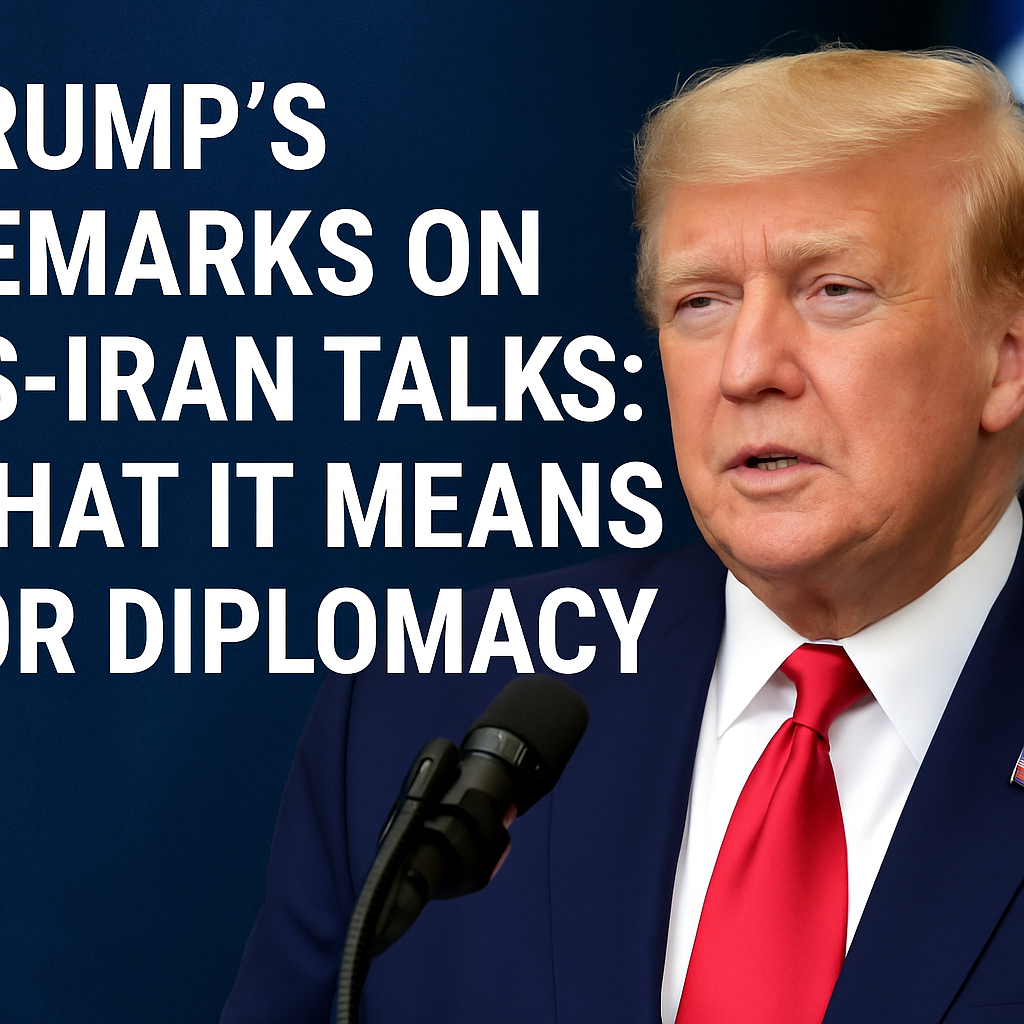
Trump’s Remarks on US-Iran Talks: What It Means for Diplomacy

Trump’s Remarks on US-Iran Talks: What It Means for Diplomacy
The recent comments made by former President Donald Trump regarding potential U.S.-Iran diplomatic talks have reignited discussions surrounding American foreign policy in the Middle East. As both nations navigate a complex landscape dominated by historical animosities and conflicting interests, Trump’s statements add another layer of intrigue—and uncertainty—to future diplomatic efforts.

The Landscape of US-Iran Relations
For decades, U.S.-Iran relations have been marred by tension stemming from the 1979 Iranian Revolution, the subsequent hostage crisis, and more recent conflicts involving nuclear agreements. Iran’s ambition to develop nuclear capabilities and its support for proxy groups in the region have only complicated matters further. The U.S., on the other hand, has employed sanctions and military presence as tools to exert influence, particularly under Trump’s previous administration.


Trump’s Remarks: A Shift or Continuity?
Trump’s recent remarks seem to suggest that a dialogue with Iran could be on the table, a notable shift from his prior stance when he pulled the U.S. out of the Joint Comprehensive Plan of Action (JCPOA) in 2018. During a press conference, Trump stated, “We could be talking to Iran very shortly,” indicating a willingness to resume discussions that have largely ceased since the breakdown of the nuclear deal. However, it’s essential to analyze whether these comments reflect a genuine change in strategy or are politically motivated.


1. Mixed Reactions from Experts:
– Some analysts perceive this as a potential thaw in relations, citing that any form of dialogue could pave the way for easing sanctions and ultimately stabilizing the region. The view is that engagement could discourage Iran’s nuclear ambitions while fostering regional cooperation.
– Conversely, other experts are skeptical, asserting that Trump’s history of abrupt foreign policy shifts raises questions about the reliability of his intentions. The chaos surrounding his administration’s earlier foreign policy decisions has created a deep sense of mistrust, making negotiations challenging.
Public Sentiment and Political Context
Trump’s remarks come against a backdrop of the upcoming presidential election, raising questions about his motivations. As highlighted in Al Jazeera, many voters remain concerned about the Biden administration’s handling of foreign relations and the ongoing tensions with Iran. Trump’s comments may be seen as an attempt to reclaim the narrative by posing as a potential peace-maker. However, the effectiveness of his strategy remains uncertain, especially considering his past and the geopolitical consequences that may follow.
Moreover, public sentiment on Twitter and other platforms indicates a polarized view. Supporters assert that engaging Iran is a necessary step toward peace, while detractors argue that any negotiations under Trump could be disingenuous given his confrontational approach to foreign policy. Polls show that a significant portion of Americans still view Iran with suspicion, complicating the potential for widespread public support for diplomatic efforts.
The Future of Diplomacy Between the U.S. and Iran
The questions surrounding the future of U.S.-Iran diplomacy remain complex. If serious talks were to occur, both sides would need to address fundamental issues:
– Nuclear Program: Iran’s pursuit of nuclear technology remains a sticking point. Any negotiations would likely need to address security guarantees and compliance mechanisms that ensure Iran’s nuclear ambitions do not lead to proliferation.
– Regional Influence: Iran’s involvement in conflicts across the Middle East, particularly in Syria and Iraq, raises concerns about its role as a regional power. Finding common ground on these issues will require careful negotiation and a willingness to compromise.
Weighing Pros and Cons
While the prospect of renewed diplomacy is appealing, the risks should not be overlooked:
– Pros:
– Opportunities for de-escalation could lead to greater stability in a volatile region.
– Diplomatic engagement may improve humanitarian conditions for millions affected by sanctions.
– Cons:
– Any negotiations could be perceived as appeasement, potentially undermining U.S. credibility, especially among allies in the region.
– The volatility of domestic politics could derail any agreements made during talks.
As it stands, the prospect of U.S.-Iran talks hinges not only on the willingness of both sides to engage but also on how effectively they can navigate the treacherous waters of historical grievances and modern geopolitical challenges. Given the intricacies involved, it is clear that the pathway toward meaningful dialogue is fraught with challenges.
Conclusion
Trump’s comments about possible U.S.-Iran talks embody the multifaceted nature of diplomacy in today’s world. While they open the door to renewed discussions, the intricacies of past relations, current political dynamics, and public sentiment create a complex backdrop that both countries must navigate carefully. As global citizens, our best hope rests in sustained dialogue that promotes peace and mutual understanding, even in the face of longstanding hostilities.















