
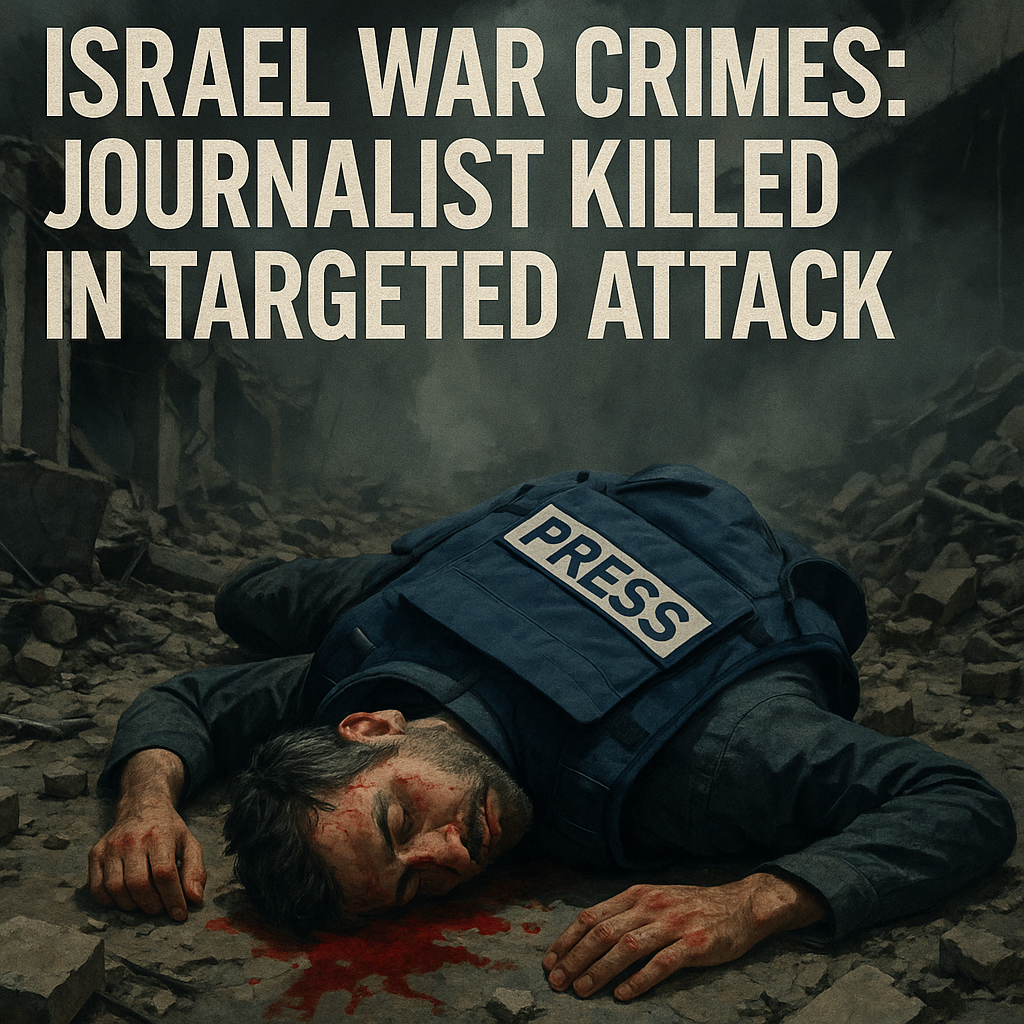
Israel War Crimes: Journalist Killed in Targeted Attack

Israel War Crimes: Journalist Killed in Targeted Attack
The recent death of a renowned journalist in Israel has reignited a complex debate surrounding alleged war crimes in conflict zones. The targeted killing has intensified scrutiny on military tactics used in areas marked by ongoing violence, provoking widespread outrage and calls for accountability.

Context of the Incident
On [date], the journalist, known for her bravely reported stories from conflict areas, was killed in a military operation that officials described as necessary for national security. The circumstances surrounding her death have raised serious ethical and legal questions. Media outlets have reported conflicting narratives—Israeli officials claim that she was inadvertently caught in crossfire, while eyewitness accounts and media analyses suggest otherwise.


According to Sky News, “Israel has been accused of war crimes following the targeted killing.” This statement encapsulates a growing international concern regarding the treatment of journalists in wartime scenarios. Al Jazeera echoes these sentiments, stating that “the incident has sparked calls for an independent inquiry into the actions of Israeli forces.”


Divergent Perspectives on Accountability
The interpretations surrounding the journalist’s death form a nuanced tapestry of viewpoints. On one hand, supporters of Israel’s military actions emphasize national security, arguing that measures were taken against identifiable threats within an ongoing conflict. A spokesperson for the Israeli Defense Forces noted that “care is always taken to avoid civilian casualties, and situations arise in complex urban environments.”
However, critics argue that this incident exemplifies a pattern of behavior where the killing of journalists is seen as collateral damage in a broader military campaign. The Committee to Protect Journalists has condemned the incident, stating that “the killing of journalists should never be considered acceptable under any circumstances.”
For many, the tension lies in the interpretation of “collateral damage.” Is it an unavoidable consequence of warfare, or does it represent a failure to uphold ethical standards and protect journalistic freedom? These points are at the heart of the ongoing discussions about war crimes and accountability.
The Broader Implications of Targeting Journalists
As new evidence and perspectives unfold, what do these events mean for the future of journalism in conflict zones? The safety of journalists is not merely a professional concern; it speaks to the principles of free speech and democratic accountability.
Reports from various organizations, including Al Jazeera, have cited that such targeted attacks can create a chilling effect on the media. Journalists may hesitate to operate in conflict zones, fearing for their safety and well-being. This can lead to a reduction in the diversity of voices reporting on critical humanitarian issues.
Moreover, the killing of journalists in war zones raises fundamental questions about the responsibilities of nations engaged in military operations. When governments are seen to act without transparency and accountability, they risk not only their legitimacy but also the trust of the international community. The Geneva Conventions mandate the protection of civilians and non-combatants, including journalists; thus, these attacks are not merely acts of violence but are also violations of international law.
Future Consequences and International Response
The international community has responded in varying degrees to this incident. Some nations have expressed strong condemnation and called for investigations into Israel’s military tactics, while others have stood by Israel, citing its right to defend itself against threats. Human rights organizations continue to push for an independent inquiry, emphasizing that without accountability, cycles of violence and retaliation persist.
The fallout from this tragedy may serve as a crucial litmus test for how governments prioritize the safety of journalists and uphold their commitment to human rights. If no consensus emerges, it raises serious concerns about the effectiveness of international law in protecting the vulnerable in conflict situations.
Conclusion
The tragic death of the journalist has brought to the forefront the urgent need for dialogue surrounding war crimes and the treatment of journalists in conflict zones. While some view this as a regrettable act of war, others see it as part of a broader pattern of disregard for non-combatants.
As debates continue and investigations unfold, the international community must reassess how we regard accountability, the role of journalism in armed conflict, and the implications of targeted attacks on the fabric of democracy itself. The memories of those who have lost their lives in the pursuit of truth must serve as reminders of the ongoing struggle for justice in conflict zones—a struggle that transcends borders, ideologies, and cultures.















