
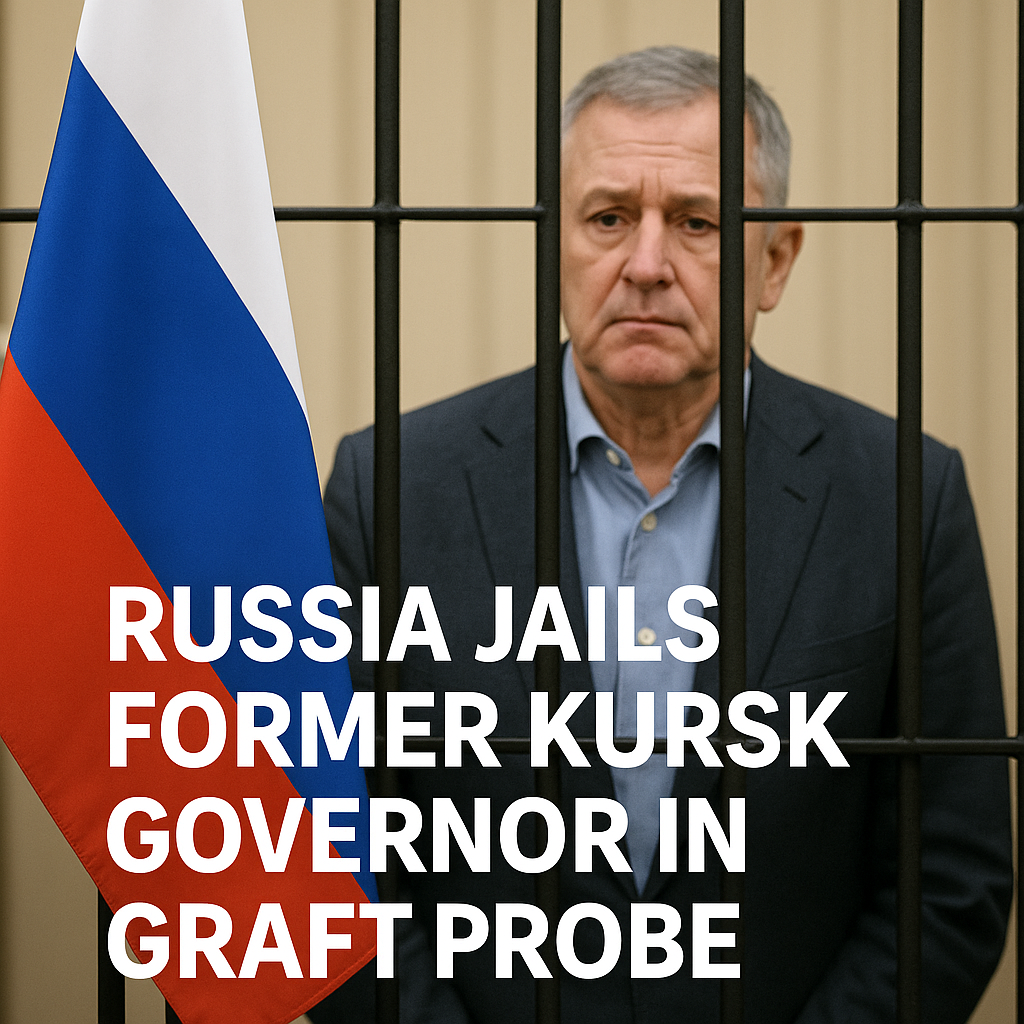
Russia Jails Former Kursk Governor in Graft Probe

Russia Jails Former Kursk Governor in Graft Probe
The recent jailing of a former governor in Russia’s Kursk region has reignited discussions on government corruption and the political climate surrounding recent events in Ukraine. This situation exemplifies the complexities associated with graft in Russia, particularly within the context of the ongoing geopolitical tensions.

Context of the Graft Probe
The legal troubles of the former Kursk Governor have drawn attention not only for the individual case but also for what it signals about corruption within the Russian government. The investigations tie back to allegations of financial misconduct related to the governor’s administration, which lasted from 2018 until his recent removal amid accusations of mismanagement of funds. Reports indicate that the former governor’s actions may have had implications for the regional budget during a time when the economic impact of the Ukraine conflict is profound.


According to Al Jazeera, the former governor was implicated in a scheme that involved inflated contracts and misappropriation of budgetary allocations, which closely aligns with other cases of high-profile corruption in Russia. Such incidents have raised concerns over accountability in governance at various levels, highlighting the necessity for systemic reforms.


Public Sentiment and Political Ramifications
Public sentiment regarding the corruption probe has been mixed. On one hand, there is a palpable desire among citizens for accountability. Many view the prison sentence as a sign that no one is above the law, even in a system often criticized for lack of transparency. On the other hand, skeptics argue that these actions are being used selectively to eliminate political rivals or gain favor amidst wider allegations regarding the handling of the Ukraine conflict.
RT provides a contrasting viewpoint by suggesting that the crackdown on such corruption is part of a broader initiative by the current administration to assert control and showcase a commitment to rooting out graft. They assert that the international sanctions and economic challenges stemming from the Ukraine war may be forcing an environment in which the government needs to demonstrate its seriousness in tackling internal issues, even if it appears to be a façade.
Implications for Governance
The implications of this graft probe extend beyond the fate of one individual. The repercussions may stretch into the governance framework of the wider Russian Federation. Experts opine that addressing corruption at higher levels of government may not only restore some degree of public trust but also strengthen the administration’s position in international relations.
However, many analysts caution against overly optimistic views of sudden change. The existing structures of governance in Russia have often integrated corruption into their operational fabric. As such, while this case may momentarily elevate conversations around transparency and anti-corruption measures, the long-standing systemic issues may remain largely intact unless significant institutional reforms are undertaken.
The Way Forward
Moving ahead, it would serve the Russian government well to engage in comprehensive reforms that not only address individual cases of graft but also tackle the broader culture of corruption that has permeated many levels of governance. International observers and analysts urge that this case should be a starting point for larger discussions on accountability and reforms.
While the jailing of the former Kursk governor captures the public’s attention, the real test lies in the ability of the Russian government to implement meaningful changes that resonate with citizens’ calls for justice and efficacy. Failure to do so risks further alienating a population grappling with economic uncertainty and widespread frustration over governance.
In summary, while the arrest of the former Kursk governor highlights important issues within Russia’s political landscape, it remains to be seen whether it will lead to genuine changes in governance or if it will merely serve as a symbolic gesture in navigating the complex interplay of power, accountability, and corruption.















