
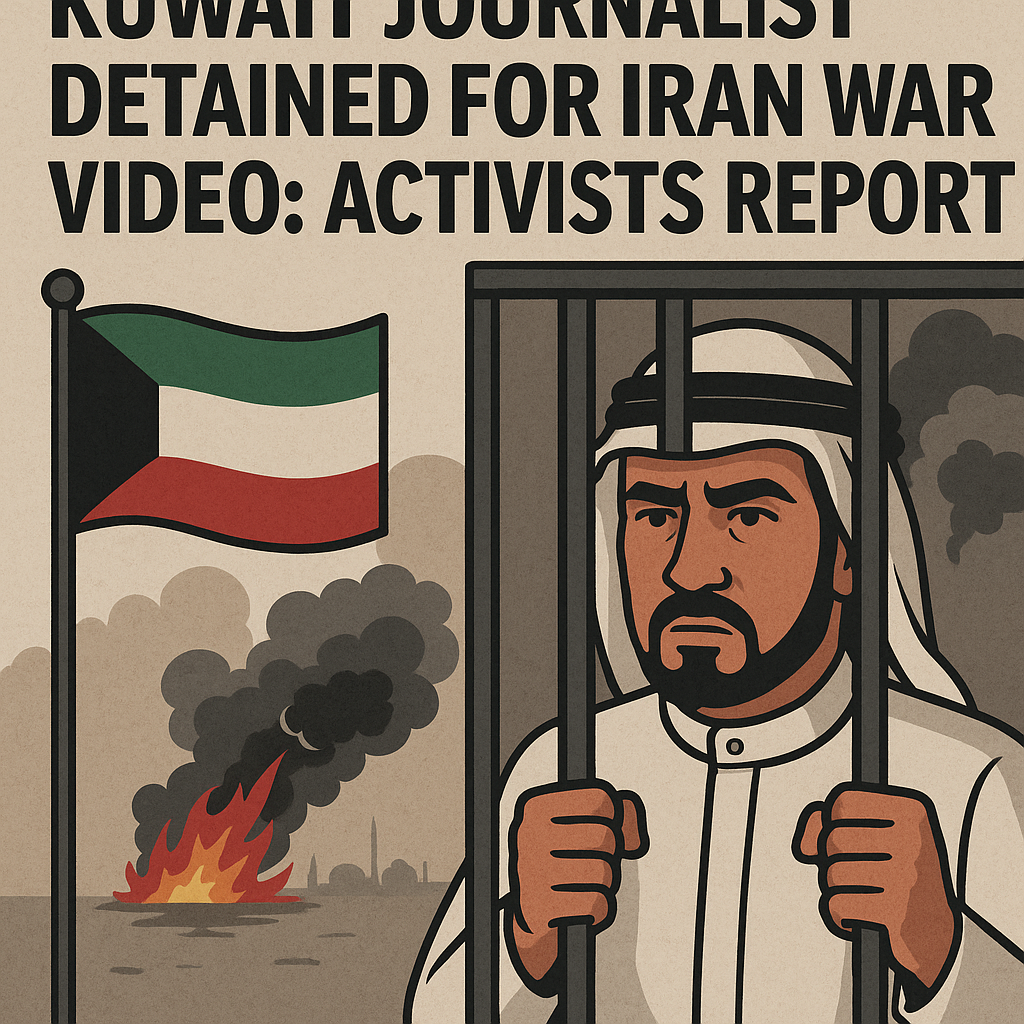
Kuwait Journalist Detained for Iran War Video: Activists Report

Kuwait Journalist Detained for Iran War Video: Analyzing the Implications
The recent detention of a Kuwaiti journalist for posting a video related to the Iran conflict has sparked international attention and debate, particularly concerning freedom of speech and government accountability in the Gulf region. This incident not only highlights the precarious environment for journalists in some countries but also indicates broader implications for media operations amidst geopolitical tensions.

Background on the Incident
According to reports from diverse sources, a Kuwaiti journalist has been apprehended allegedly for sharing a video that portrayed the ongoing conflict in Iran, raising alarms over censorship and freedom of expression. Activists have expressed concerns about the journalist’s detainment, framing it as part of a larger trend where government authorities suppress dissenting voices, particularly regarding contentious political issues.


Sky News reports that the video in question depicted the ramifications of the conflict in Iran, which many view as a critical and timely subject. The act of arresting a journalist for such a post underscores the fragile state of press freedoms in the region, where media outlets often walk a tightrope between reporting the truth and facing governmental backlash.


Perspectives on Press Freedom
The treatment of the detained journalist has drawn varied responses from both local and international activists. Organizations advocating for human rights are calling for his immediate release, asserting that journalists play a crucial role in informing the public, especially during times of conflict. They argue that censorship not only muzzles dissent but also contributes to misinformation, ultimately hindering the public’s right to know.
Conversely, some governmental perspectives defend such actions as necessary for national security. Officials claim that certain narratives around the Iran conflict can incite unrest or mislead the public about sensitive political dynamics. This dichotomy raises essential questions about where the line should be drawn between protecting national interests and ensuring freedom of the press.
The Role of Digital Media in Contemporary Journalism
The advent of digital media has transformed how information is disseminated and consumed globally. Journalists, activists, and citizens now have platforms to share their insights, allowing for greater diversity of voices. However, this has also led to increasing scrutiny from authorities who may feel threatened by unregulated information flow.
Social media platforms often become battlegrounds for different narratives, particularly concerning sensitive geopolitical issues. The detained journalist’s case illustrates the challenges faced by those attempting to report on contested regions where governmental oversight is pronounced. In Kuwait and neighboring nations, the relationship between media and state is fraught with tension, characterized by ongoing debates surrounding censorship and state control.
Global Reactions to the Detention
The international community has taken note of this incident, calling it a retrogressive step for press freedoms in the Middle East. Prominent human rights organizations and journalism watchdogs have released statements denouncing the act, framing it as a chilling reminder of the lengths to which some governments will go to silence opposing viewpoints.
Reports from RT News indicate that the incident has stirred conversation among journalists in the region regarding risk management and ethical reporting. Some journalists voice trepidation in covering sensitive subjects about their governments, reflecting a growing climate of fear that could stifle independent journalism.
While some commentators express skepticism regarding any immediate change in the Kuwaiti government’s stance on press freedom, the continued advocacy from various fronts keeps the conversation alive. The nuances of this case reflect wider issues—how press freedoms are managed in repressive environments and the need for accountability from governments regarding human rights.
Conclusion: The Path Forward
The Kuwaiti journalist’s detention serves as a pivotal example of the ongoing struggles faced by press members within contested political landscapes. As activists and organizations work tirelessly to advocate for his release, the situation brings to light larger conversations about freedom of expression, the role of media in society, and government accountability in regulating information.
While it remains uncertain what the future holds for the detained journalist or others in similar situations, it is crucial to maintain awareness and dialogue surrounding these themes. Press freedoms are not merely a local issue; they are a global concern that warrants support and advocacy from the international community. As the situation evolves, one can only hope it leads to a greater understanding of the importance of unimpeded journalistic inquiry—especially in regions where freedom of speech remains a battleground.















