
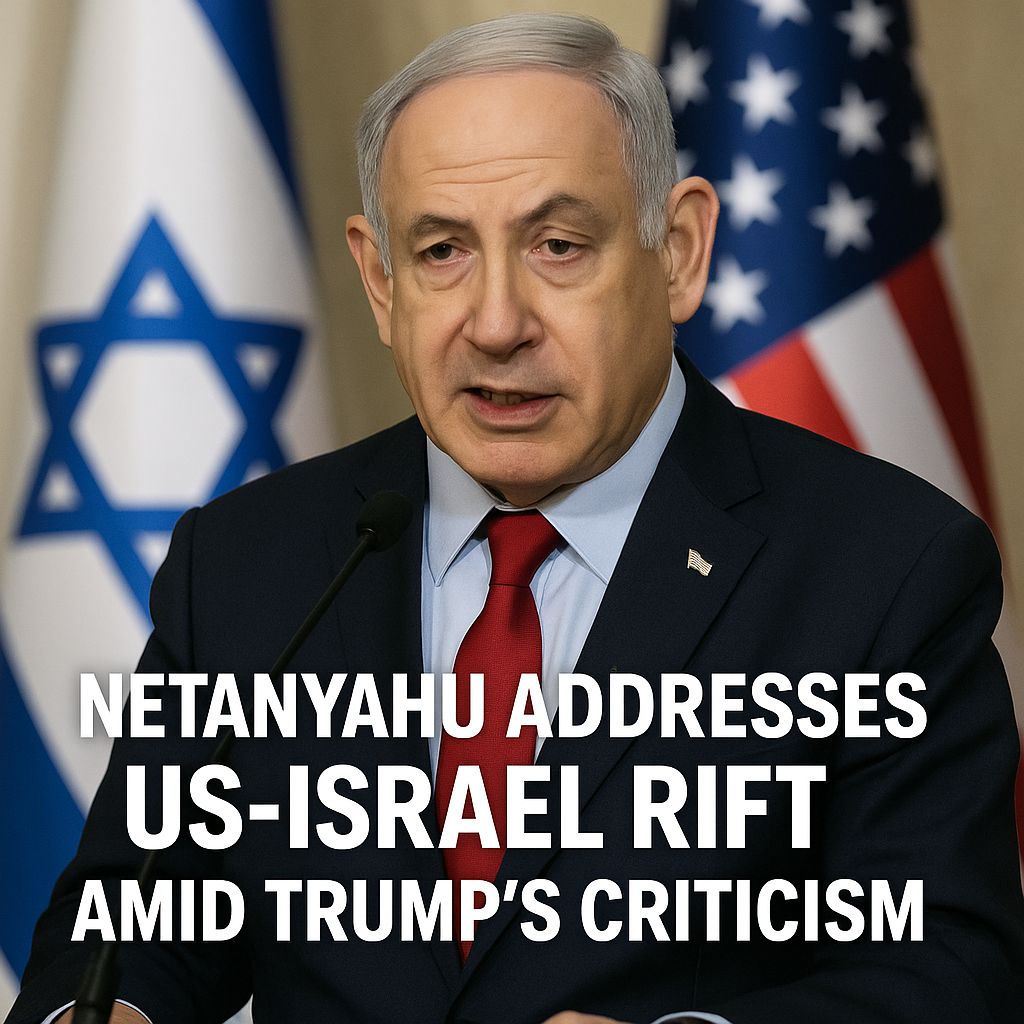
Netanyahu Addresses US-Israel Rift Amid Trump’s Criticism

Netanyahu Addresses US-Israel Rift Amid Trump’s Criticism
The ongoing geopolitical dynamics between the United States and Israel are once again under the spotlight, particularly following recent comments made by former President Donald Trump. Prime Minister Benjamin Netanyahu has sought to downplay what some see as a growing rift between the two nations, positioning himself amid a delicate landscape of shifting alliances and historical ties.

Assessing the Current Tensions
In his latest comments, Netanyahu emphasized the enduring bond between the U.S. and Israel. According to Al Jazeera, he expressed confidence that the relationship would remain strong despite Trump’s critical remarks about Israel’s government under his leadership. This stance appears to be a strategic move to calm tensions within various factions of Israeli politics while reassuring Israeli citizens of their nation’s steadfast ally.


On the other hand, Trump’s criticisms highlight a different perspective. The former president has pointed out perceived missteps in Israeli policy and hinted at a shift in American support for Netanyahu’s government, suggesting a potential pivot toward a more critical viewpoint on Israel’s approach to regional conflict and its dealings with Palestinians. This has generated a wave of speculation regarding how such sentiments might affect future U.S. assistance and diplomatic support.


Divergent Perspectives on the U.S.-Israel Alliance
The contrasting viewpoints reflected in the media coverage underscore the complexities inherent in international relations. While Netanyahu’s narrative promotes stability and mutual interests, Trump’s stance resonates with a segment of the American electorate that feels increasingly isolated from traditional foreign policy stances.
1. Netanyahu’s Perspective:
– Stability in the alliance is key to Israel’s security, especially amid ongoing regional threats.
– Current U.S. administration support is vital for military and financial aid.
– Negotiations with Palestine should not create a rift, according to Netanyahu.
2. Trump’s Critique:
– Expresses discontent with Netanyahu’s leadership and decisions regarding Palestinian relations.
– Raises questions about the current government’s handling of American support and diplomacy.
– Suggests that policy changes may be necessary to align with the interests of some Americans who feel less supportive of Israeli policies.
This rift raises questions about potential shifts in U.S. policy, depending on whether Trump or a similar figure gains traction in American politics now or in the future. There is an urgent need for Israel to maintain robust relations with the U.S. while navigating its internal politics effectively, especially given the divided opinions among American voters.
Navigating the Future: What Lies Ahead?
The U.S.-Israel relationship has historically been strong, supported by extensive historical, political, and cultural ties. However, as the political landscape shifts in both nations, Netanyahu’s approach and Trump’s criticisms could serve as a significant turning point.
The consensus among observers is that strong diplomatic and economic ties will likely remain intact, but the nuance lies in how they are managed. As the region faces increasing challenges—ranging from security threats to economic instability—the balance of support and critique could influence future negotiations not only between these two nations but also with neighboring Arab states.
In conclusion, while Netanyahu seeks to assure both his constituents and Washington of a united front, Trump’s criticisms reflect a nuanced and sometimes fractured perspective of the American electorate regarding Israel. It remains to be seen how this dialogue will evolve and whether it will lead to significant changes in diplomatic strategies or aid packages. The importance of an informed and balanced discourse remains paramount, as both nations navigate their complex relationship in the coming months.















