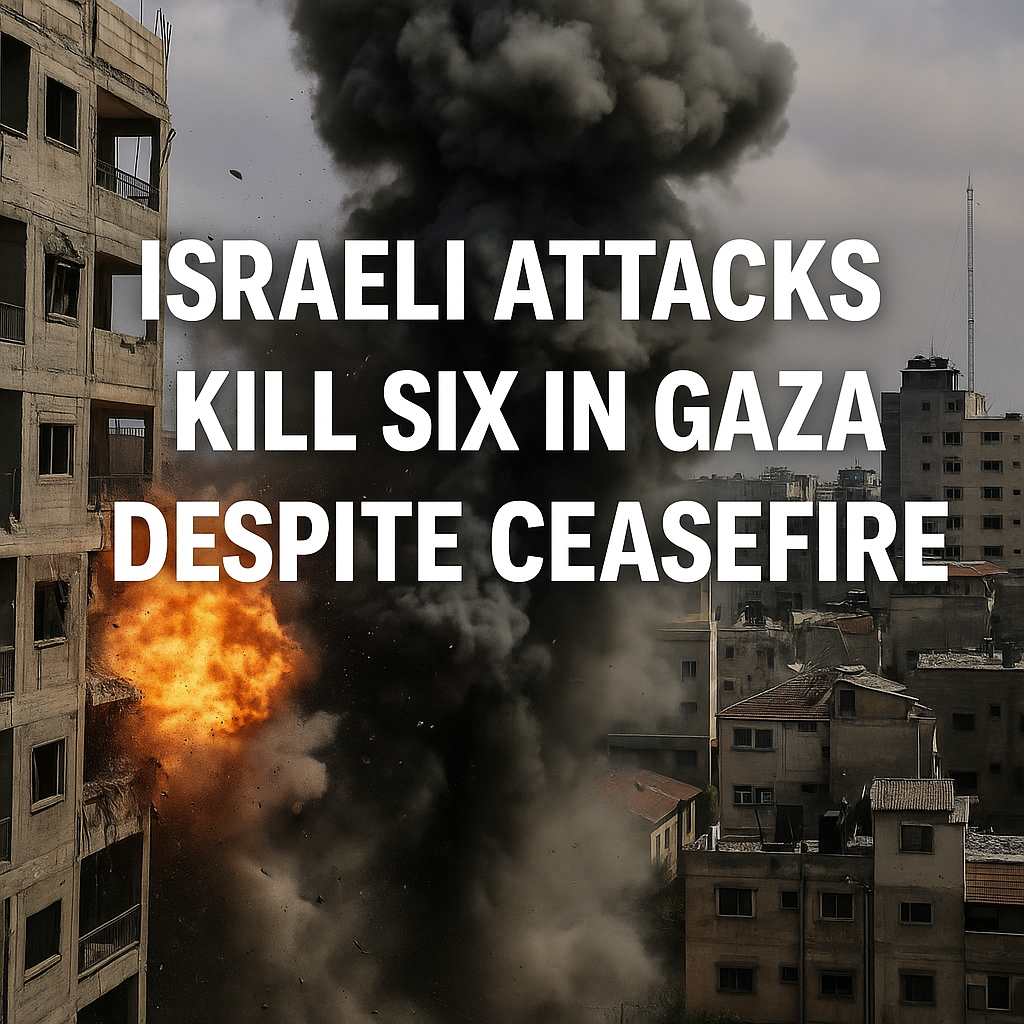
Israeli Attacks Kill Six in Gaza Despite Ceasefire

In a conflict marked by periods of tension and brief lulls, the recent Israeli attacks that resulted in six deaths in Gaza have elicited strong reactions from various stakeholders, despite an ongoing ceasefire agreement. This incident not only sheds light on the persisting volatility in the region but also raises complex questions surrounding the ceasefire’s efficacy and the underlying issues fueling this enduring conflict.

Rising Tensions Amid a Ceasefire
Despite a declared ceasefire aimed at reducing hostilities, the situation in Gaza remains precarious. Reports indicate that Israeli airstrikes targeted several locations across the territory, hoping to eliminate what they describe as imminent threats from militant groups. The Israeli Defense Forces (IDF) stated that their actions were a direct response to recent rocket fire emanating from Gaza, suggesting a cycle of retaliation that complicates the notion of a true ceasefire.


Al Jazeera reports that these airstrikes occurred in succession, resulting in the deaths of not just militants but also civilians, including women and children. Eyewitness accounts highlight the immediate aftermath of these attacks, portraying scenes of destruction and grief among the local population. In stark contrast, Israeli officials maintained their stance on the necessity of their military actions to ensure national security, emphasizing that their operations were conducted with precision to minimize civilian casualties.


Diverse Narratives and Perspectives
The disparity in narratives surrounding these events emphasizes the complexity of the Israeli-Palestinian conflict. On one hand, Israeli sources underscore the need for robust measures to address security threats, pointing to the rocket attacks as justification for their continued military presence. This perspective argues for an explicit understanding of the ongoing risks posed by militant factions within Gaza, thereby framing their actions as defensive rather than offensive.
On the other hand, Palestinian representatives and international human rights organizations argue that these attacks contravene the very spirit of the ceasefire, which was originally intended to foster peace and alleviate humanitarian suffering in Gaza. They lament the continuing cycle of violence, asserting that military actions lead only to suffering and exacerbate the humanitarian crisis affecting ordinary Gazans. Such viewpoints underscore the urgent need for dialogue and peaceful conflict resolution rather than military interventions.
The Humanitarian Impact
The human cost of these military engagements cannot be overstated. Reports indicate that the ongoing conflict has perpetuated a state of instability, with numerous civilians caught in the crossfire. Humanitarian organizations have raised alarms about the deteriorating living conditions in Gaza, emphasizing that the attacks disrupt vital services and exacerbate an already dire humanitarian crisis.
As many as 2 million residents face challenges ranging from limited access to clean water to inadequate healthcare. The continued violence only intensifies these issues, leading to growing frustration and hopelessness among the population. This humanitarian perspective demands that the international community not only acknowledge the immediate implications of military action but also engage in concerted efforts to address the root causes of the conflict.
Seeking Solutions in a Polarized Environment
The path forward appears more complicated than ever, with entrenched positions on both sides making meaningful negotiations challenging. Analysts contend that any sustainable solution must involve acknowledging the grievances of both Israelis and Palestinians. A balanced approach that prioritizes security for Israelis while ensuring dignity and basic rights for Palestinians is essential to move toward lasting peace.
In the current environment, where ceasefires are frequently tested and oftentimes broken, the foundational question remains: How can both parties engage in meaningful dialogue to de-escalate tensions? While regional powers and international actors have occasionally stepped in to broker peace, the efficacy of these interventions has often been called into question—leading to skepticism about the viability of future ceasefires.
Conclusion: A Fragile Balance
The recent Israeli attacks in Gaza, resulting in the tragic loss of six lives, highlight not only the fragility of current ceasefire agreements but also the urgent need for a reevaluation of strategies aimed at achieving lasting peace. While conflicting narratives abound, one common theme persists: the human cost of this ongoing violence is unsustainable. As both sides grapple with their histories and experiences, finding common ground remains imperative if authentic peace is to be realized.
Amid the turbulence, the voices of those affected—the civilian population of Gaza—serve as a poignant reminder that conflict resolution must prioritize dialogue, empathy, and an unwavering commitment to ending the cycle of violence that continues to plague the region. Only then can the path toward peace begin to unfold, creating a future where coexistence is not merely a dream but an attainable reality.