
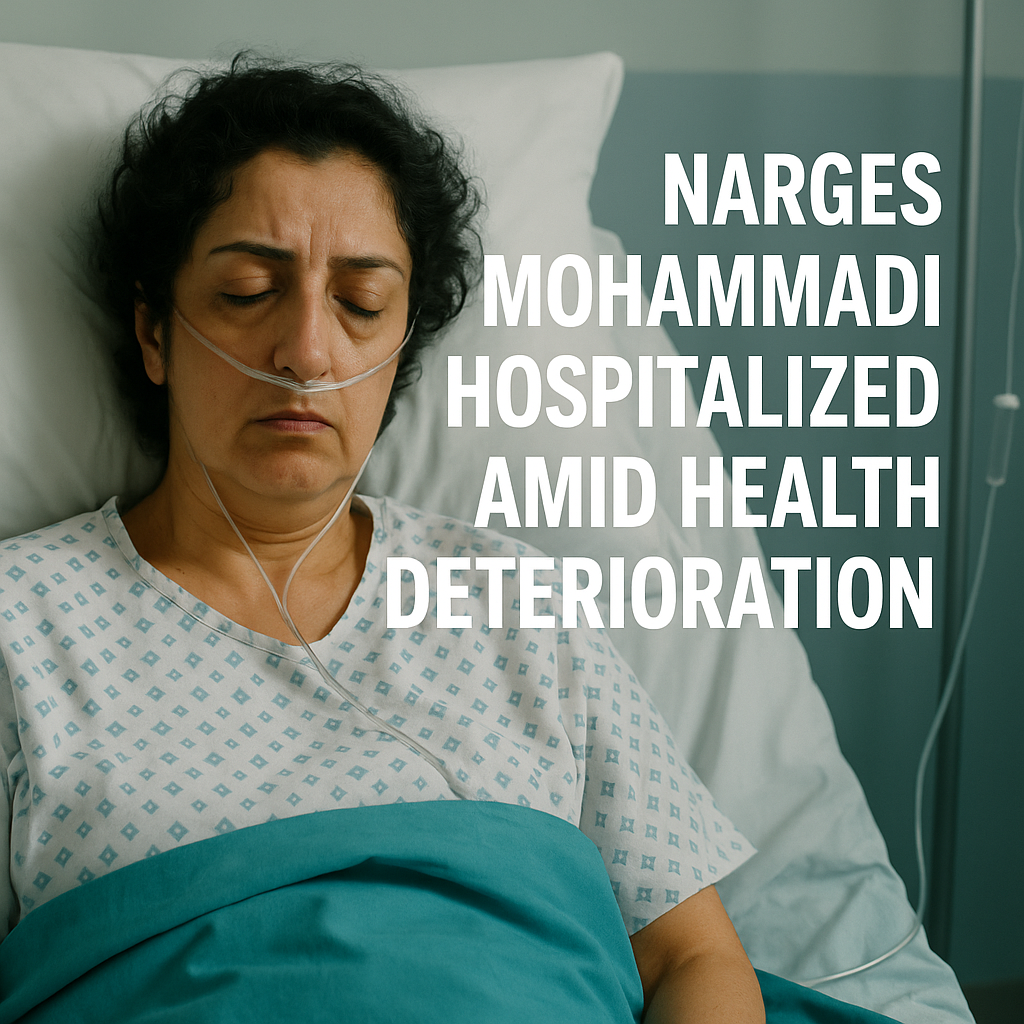
Narges Mohammadi Hospitalized Amid Health Deterioration

Narges Mohammadi Hospitalized Amid Health Deterioration
Narges Mohammadi, the renowned Iranian human rights activist and Nobel laureate, has recently been hospitalized due to a concerning decline in her health. This alarming news sheds light not only on Mohammadi’s personal plight but also on the broader issues of human rights and political repression in Iran.

The Circumstances of Her Hospitalization
Mohammadi has a long history of activism, advocating for women’s rights and political freedom in Iran. Reports indicate that her health has significantly deteriorated while she has been imprisoned. According to Al Jazeera, her most recent decline occurred amidst a backdrop of continuing reports of mistreatment in Iranian prisons, where conditions are often described as inhumane.


In an alarming update, her family has expressed deep concerns about her well-being in their communications with the media. They note that Mohammadi suffers from various health issues, exacerbated by the lack of adequate medical care in prison. Al Jazeera also reported that her hospitalization resulted from severe complications related to her pre-existing health conditions, including respiratory problems.


Divergent Perspectives on the Issue
While many human rights organizations and activists are vocal about Mohammadi’s situation, mainstream and state-run media within Iran present a markedly different viewpoint. For instance, domestic coverage often downplays her condition and characterizes her imprisonment as justified due to her supposed anti-government activities. Conversely, international perspectives generally highlight the Iranian government’s ongoing crackdown on dissent and their ramifications for human rights.
In recent statements, prominent human rights bodies have condemned her treatment, calling for immediate intervention. They argue that Mohammadi’s case is a glaring example of how the Iranian regime continues to suppress voices advocating for basic human rights. In contrast, Iranian officials typically frame such criticisms as foreign attempts to undermine the nation.
The Broader Implications
The implications of Mohammadi’s health crisis extend far beyond her individual circumstances; they signal an ongoing struggle for human rights and political freedoms in Iran. The reaction to her hospitalization has prompted renewed discussions about the international community’s role in addressing human rights violations in authoritarian regimes. Many human rights advocates argue that the global community must hold Iran accountable, especially when it comes to the treatment of imprisoned activists.
However, a nuanced discussion reveals that not all voices agree on how best to assist figures like Mohammadi. Some factions within the international community advocate for sanctions and isolation, while others promote dialogue and engagement as a means to induce change.
Advocates and Allies Speak out
In the wake of Mohammadi’s health issues, several global organizations and fellow activists have raised their voices in solidarity. They assert that Mohammadi’s case should shine a light on the broader plight of political prisoners in Iran. This is crucial, they argue, not only for Mohammadi’s sake but for all those who risk intolerance for the sake of human rights.
Given Mohammadi’s stature as a Nobel laureate, there is a heightened sense of urgency in her case. Advocates believe that her condition should catalyze more substantial international actions against Iran’s systemic oppression of dissenters. According to Sky News, some international leaders are pressing for immediate access to proper medical care for Mohammadi, emphasizing that her situation makes it imperative to revisit global policies regarding Iran.
Conversely, some policymakers remain cautious, wary of escalating tensions or miscalculating the repercussions of direct interference in Iran’s domestic affairs. This sentiment underscores the delicate balance required in responding to human rights crises; a balance that risks being overwhelmed by geopolitics and strategic interests.
Conclusion: The Future of Activism in Iran
The situation surrounding Narges Mohammadi highlights a complex narrative woven from personal struggle and broader societal issues. As this situation unfolds, it leaves many questions in its wake: What can the international community do to ensure the protection of human rights activists in oppressive regimes? How will Mohammadi’s condition influence the global discourse on Iran? The answers remain as layered and intricate as the narrative itself.
In observing Mohammadi’s plight, one can’t help but hope that her story will resonate as a rallying cry not only for her immediate release but also for an enduring commitment to justice and change within Iran. The ongoing dialogue must encompass a wide array of perspectives to navigate this complicated landscape effectively, ensuring that human rights remain at the forefront of international priorities.















