
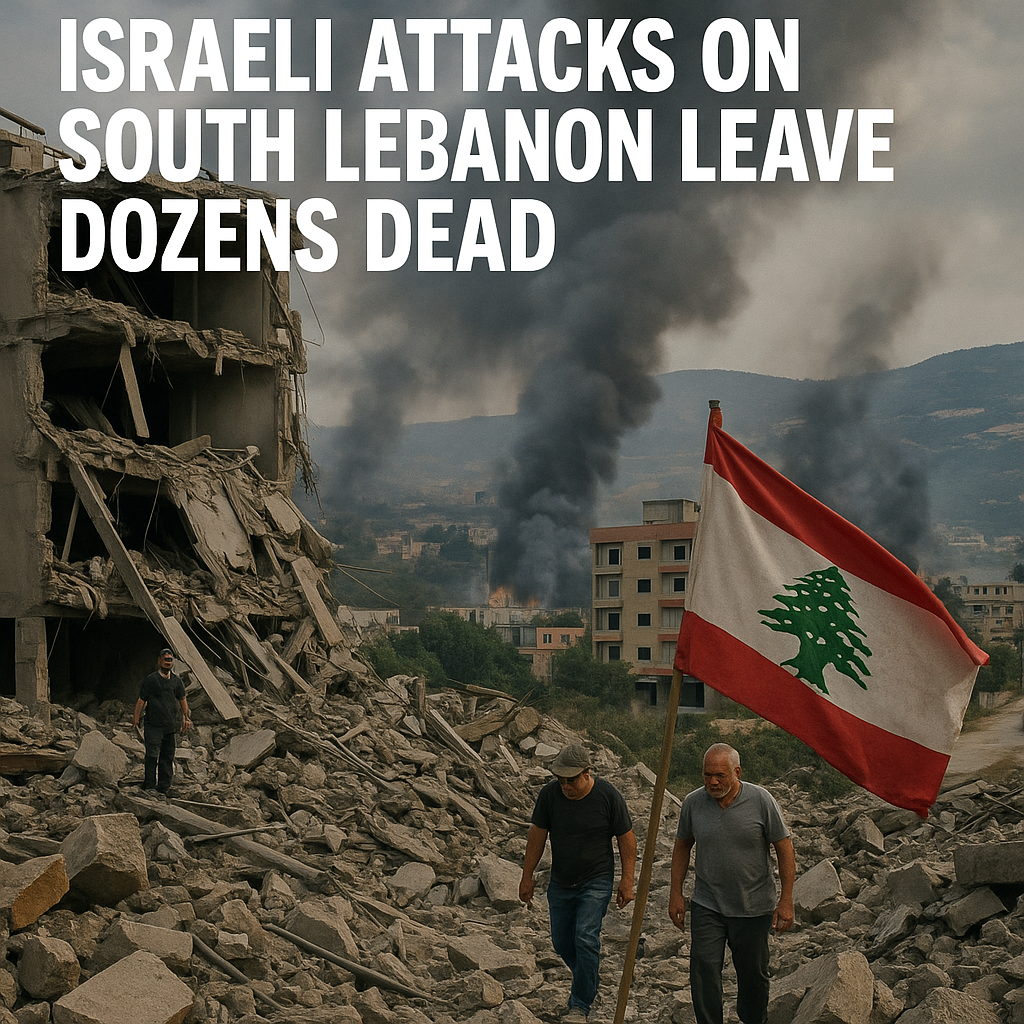
Israeli Attacks on South Lebanon Leave Dozens Dead

The Impact of Israeli Attacks on South Lebanon
The recent Israeli attacks on South Lebanon have left dozens dead, sparking widespread outrage and concern. This violent escalation not only highlights the precariousness of peace in the region but also raises critical questions about the long-term implications for both Israel and Lebanon.

A Complex Situation Unfolding
In the immediate aftermath of the attacks, reports indicate that casualties are mounting. Al Jazeera reported more than a dozen deaths, with local sources suggesting that civilian areas were significantly impacted. Images emerging from the region depict destruction and chaos, revealing the human cost of these military actions. The Israeli military has justified its operations as necessary to target militant positions, underscoring a longstanding narrative of self-defense in response to perceived threats from groups like Hezbollah.


However, this viewpoint faces substantial criticism. Opponents argue that the scale of destruction inflicted on civilian infrastructure raises ethical concerns and questions about proportionality in military response. International human rights organizations have called for investigations into potential violations, emphasizing that while states have a right to defend themselves, this right must be balanced against the impact on innocent lives.


Diverging Perspectives on Accountability
Despite the assertions of self-defense by Israeli officials, a range of responses from various stakeholders reveals deep divisions. Proponents of Israel’s action point to the need to deter rocket attacks emanating from Hezbollah-controlled areas, linking them to broader security concerns in a region fraught with instability. They argue that such military interventions are key to maintaining national security.
Contrastingly, critics highlight the humanitarian ramifications. The human rights community has voiced alarm over the increasing toll on civilians. Sky News pointed out that the current violence exacerbates an already dire humanitarian situation in Lebanon, where many are struggling with the consequences of economic collapse and a healthcare system on the brink of failure. According to a humanitarian worker quoted in the report, the airstrikes have not only resulted in immediate loss of life but also threaten to destabilize Lebanon further, stirring tensions among communities and leading to a cycle of retaliation.
The Quest for a Long-term Solution
Amidst the ongoing violence, regional analysts emphasize the necessity for dialogue and conflict resolution strategies. While military action may provide a temporary sense of security for some, it does not address the root causes of the ongoing conflict. Engaging local communities in meaningful conversations about peace, tolerance, and coexistence may be integral to breaking the cycle of violence.
Additionally, the international community plays a crucial role in mediating these tensions. The United Nations has called for restraint from both sides, urging Israel to consider the broader implications of its actions on regional stability. However, the effectiveness of international diplomatic efforts often comes into question in situations laden with historical grievances and entrenched animosities.
The Uncertain Future
As the situation develops—a tension-filled state that intertwines military action with humanitarian crises—uncertainty looms large. Different narratives and perspectives complicate the possibility of a clear solution, and with each attack, the potential for lasting peace appears to diminish. The voice of the civilian population caught in the middle of these hostilities remains critical. Voices calling for peace and stability echo loudly amidst the noise of conflict, highlighting the urgent need for a coordinated effort to address the multifaceted issues contributing to the ongoing violence.
In conclusion, the recent Israeli attacks on South Lebanon serve as a stark reminder of the ongoing conflicts that characterize the region. With a multitude of perspectives emerging, it remains crucial to weigh the evidence and consider the broader implications of military actions, particularly concerning innocent lives. The road ahead may be fraught with challenges, but the pursuit of understanding, accountability, and ultimately, peace is essential for the future stability of both Israel and Lebanon.















