
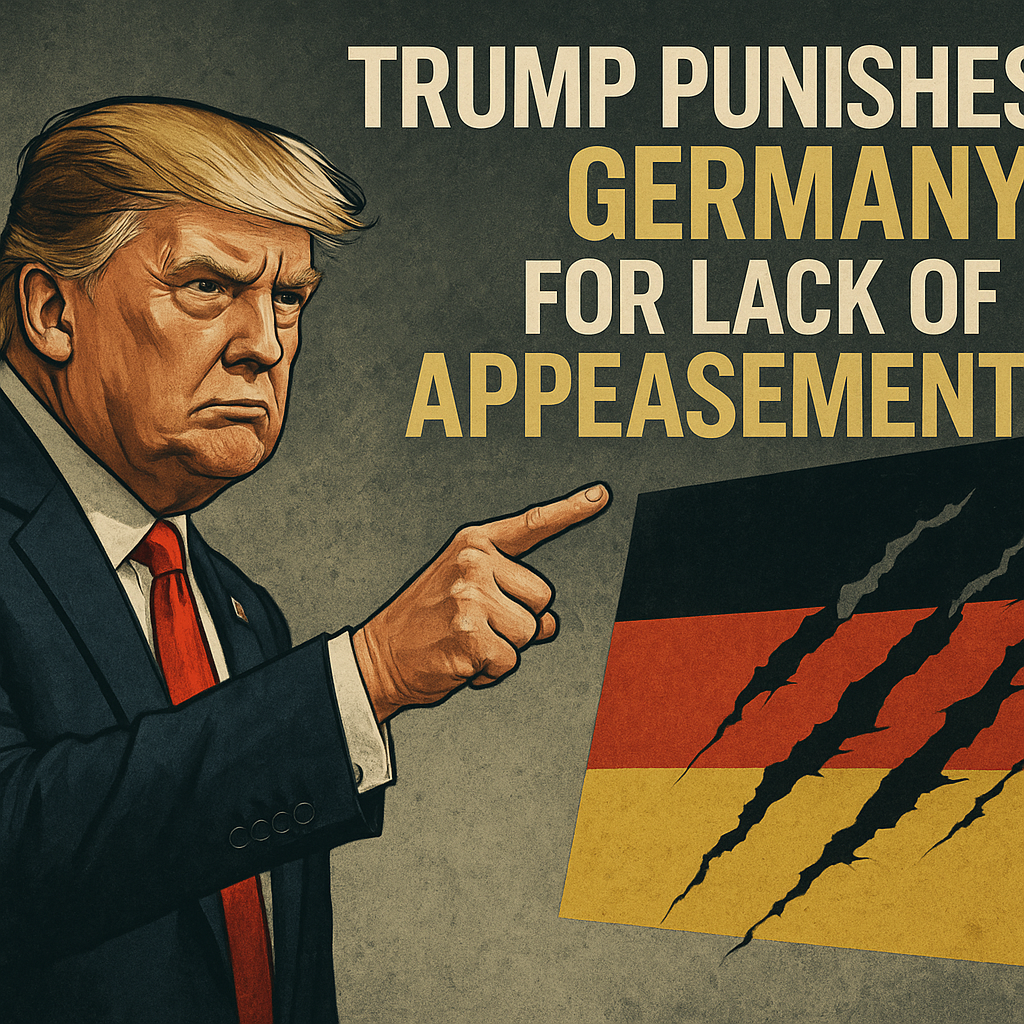
Trump Punishes Germany for Lack of Appeasement

Analyzing Trump’s Stance on Germany: A Response to Lack of Appeasement
In recent statements, former President Donald Trump has taken a firm stance against Germany, accusing the nation of insufficient appeasement regarding various geopolitical issues. This article delves into the complexities of Trump’s criticisms, exploring the interplay between U.S.-Germany relations and broader international policies.

The Historical Context of U.S.-Germany Relations
U.S.-Germany relations have been characterized by a robust partnership since World War II, evolving into a strong alliance within NATO. However, these ties have not been without tension. Trump’s assertion that Germany has failed to meet its obligations—particularly in terms of defense spending—echoes sentiments shared by various experts and commentators. According to NATO guidelines, member countries are expected to spend at least 2% of their GDP on defense, a target that Germany has consistently fallen short of.


Trump’s focus on Germany’s defense spending issues is not entirely misplaced; as of 2021, Germany’s defense budget hovered around 1.5% of its GDP. This discrepancy has fueled accusations from Trump and other U.S. leaders that Germany is not doing enough to contribute to collective defense efforts. Critics of Trump’s approach argue that while his concerns are valid, his methods of addressing them often exacerbate tensions rather than resolve them.


An Inconsistent Approach: The Varied Responses to Trump’s Criticism
The traditional view among many U.S. and European leaders has been to advocate for dialogue and collaborative solutions. However, Trump’s method has generally favored public reprimands, which can be seen as punitive rather than constructive. For example, the former president’s earlier threats to impose tariffs on German automobiles were widely viewed as a stark shift from diplomatic engagement to economic punishment.
Various news outlets offer contrasting viewpoints regarding Trump’s assertions. For instance, while RT highlights the perceived failure of Germany to align more closely with U.S. interests, citing Trump’s viewpoint as justified in the context of global security dynamics, Al Jazeera provides a more skeptical lens. It emphasizes the underlying complexities of NATO commitments, suggesting that financial contributions to defense cannot fully encapsulate a nation’s dedication to collective security.
The Broader Implications for International Relations
Trump’s rhetoric towards Germany raises broader questions about the future of U.S.-European alliances. The tone of his criticisms may lead to a fracturing of trust amidst allies. Many argue that public humiliation of allied nations could cultivate negative sentiments, pushing countries like Germany further away from cooperative positions and into a more nationalist stance—that is, relying on self-defense rather than collective NATO resources.
The potential for Germany to pivot towards other alliances, including with nations that are less favorable to U.S. interests, is a concern echoed by some analysts. These dynamics could reshape the geopolitical landscape, especially in Europe. Trump’s stance may reflect a wider inclination within parts of the U.S. to reevaluate long-standing international alliances, bringing domestic political pressures into play.
Navigating the Future: A Call for Diplomacy
As we gaze into the future, the need for a balanced approach cannot be overstated. Germany’s contributions to NATO and global security are not merely monetary but rooted in political and logistical support. Sustaining a productive relationship hinges on constructive dialogue that goes beyond mere monetary metrics.
Trump’s punitive rhetoric presents serious implications on several fronts. On one hand, it successfully captures attention and raises critical questions about defense commitments. On the other hand, it undermines the solidarity that is essential for effective multilateral responses to global challenges, such as cybersecurity, climate change, and regional instability.
In summary, while Trump’s criticism of Germany’s defense spending reflects legitimate concerns, the approach of punishment risks alienating a key ally. Only through fostering open dialogue and recognizing the complexities of international relations can a more cohesive and secure partnership be achieved moving forward.















