
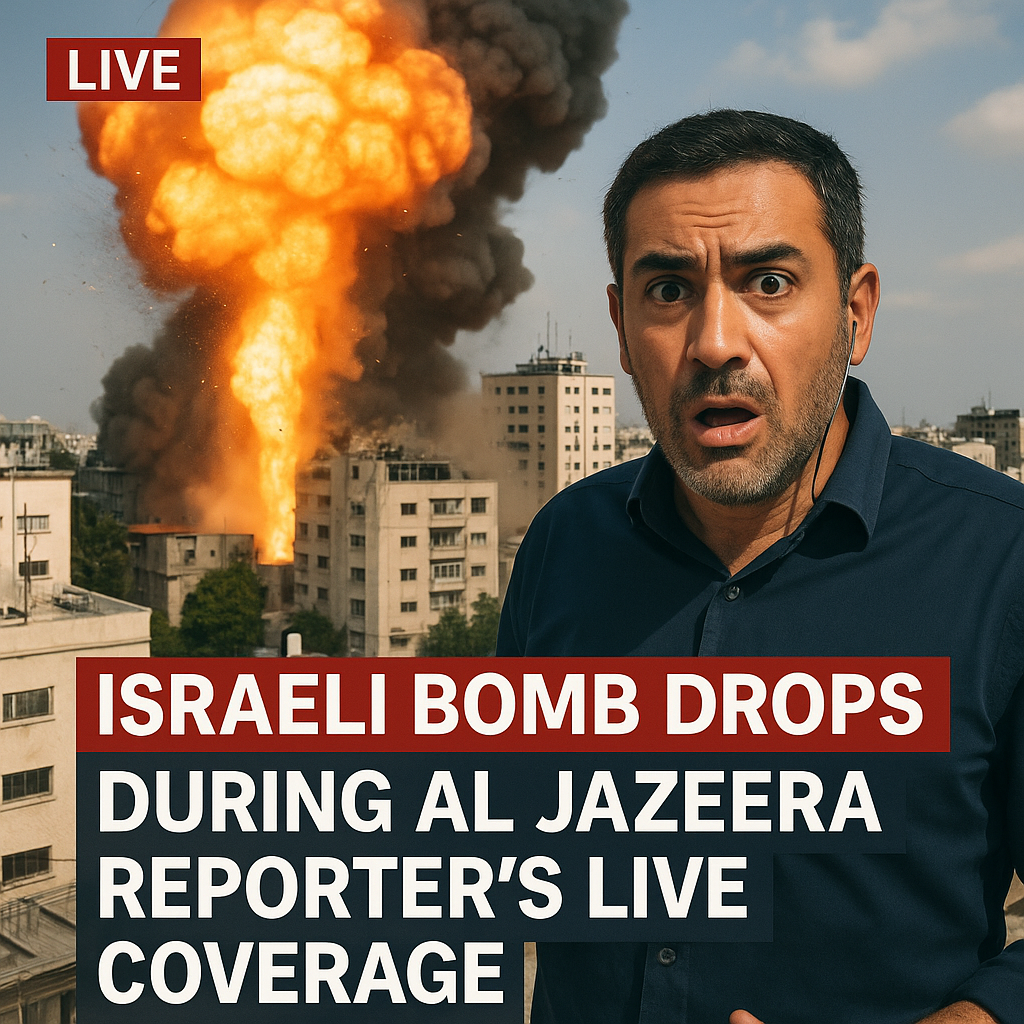
Israeli Bomb Drops During Al Jazeera Reporter’s Live Coverage

Israeli Bomb Drops During Al Jazeera Reporter’s Live Coverage
On September 13, 2025, a significant incident unfolded when an Israeli bomb dropped during a live broadcast by an Al Jazeera reporter. This incident not only disrupted the news coverage but also raised heightened concerns about the ethical considerations of reporting from conflict zones. Analyzing the complexities surrounding this event requires understanding the layers of media, military operations, and the essence of journalistic integrity.

The Incident: A Moment of Tension in Conflict Reporting
During the live report, viewers witnessed, in real time, the chaos induced by military operations—an experience intended to provide insight into the realities faced by those within conflict zones. The Al Jazeera reporter was covering the ongoing conflict between Israel and Palestinian forces in Gaza when the bomb dropped nearby, creating a moment of palpable tension.


This incident is significant not only for its immediate impact but also for what it represents regarding the risks journalists face in war zones. According to Al Jazeera, the situation was chaotic, and the network condemned the irresponsible targeting of civilians and media personnel alike, emphasizing that the presence of reporters should not negate their safety.


Diverse Perspectives on Coverage and Safety
Responses to this incident varied widely across news outlets and commentators. Some emphasized the risks reporters take to shed light on critical humanitarian issues. The RT network highlighted how live broadcasts can sometimes lead to sensationalism, questioning if the media’s role in such environments serves to elevate both awareness and risk.
While Al Jazeera condemned the danger faced by their reporter, other news sources picked up on this phenomenon as well, noting the blurred lines between media coverage and military actions. The conflict poses ethical questions: To what extent does media presence influence military strategy? Is there a regulatory or moral obligation to ensure the safety of journalists operating in volatile regions?
The Impact of War Reporting: Balancing Act Between Informing and Endangering
Responsibility of Media Outlets
The broader implications of live war reporting extend beyond daily news coverage. The delicate balance between delivering real-time information and respecting the safety of reporters and civilians is one of the most pressing challenges in modern journalism.
Media outlets must consider their responsibilities not only to their audiences but also to the personnel in the field. As noted in various reports, incidents such as the recent bombing during a live broadcast amplify debates about ethical standards in war reporting. Many argue for stricter protocols to protect journalists, calling for enhanced transparency regarding military operations, especially in urban areas where civilian populations are at risk.
The Audience’s Role in Perception
Audiences, too, play a crucial role in shaping the narrative surrounding conflicts. The lens through which viewers perceive war reporting can greatly influence public opinion and policy. In this case, the virality of the incident on social media platforms led to a powerful audience reaction, with viewers expressing outrage at both the aggression displayed in the bombing and the risks faced by journalists.
Some argue that sensationalized coverage can lead to desensitization to violence, while others believe that eyewitness reports are essential to understand the gravity of the situations in conflict zones. This discord illustrates a pressing reality: the public’s appetite for real-time news may inadvertently place journalists in harm’s way.
A Broader Investigation Required
Despite differing viewpoints, there is a pressing need for a constructive dialogue about ensuring the safety of journalists in conflict areas. Both media organizations and military entities must collaborate to foster an environment where reporting can occur without the imminent threat of violence.
It is imperative to push for regulations that prioritize the safety of reporters while supporting their essential role as eyewitnesses to history. International conventions about media safety during armed conflicts still require refinement in practice and enforcement.
Conclusion: Complexities Ahead
In conclusion, the bombing incident during the Al Jazeera reporter’s live coverage serves as a potent reminder of the complexities of war reporting. As the line between journalism and danger continues to blur, it is essential for media houses, governmental agencies, and audiences to engage constructively in discussions about ethics, safety, and accountability.
While there may not be a clear consensus on how to navigate these challenges, the urgency of the matter cannot be overstated. The need for real-time news remains, but so does the necessity of protecting those who bring us these stories, ensuring that the pursuit of truth does not come at the expense of lives.















