
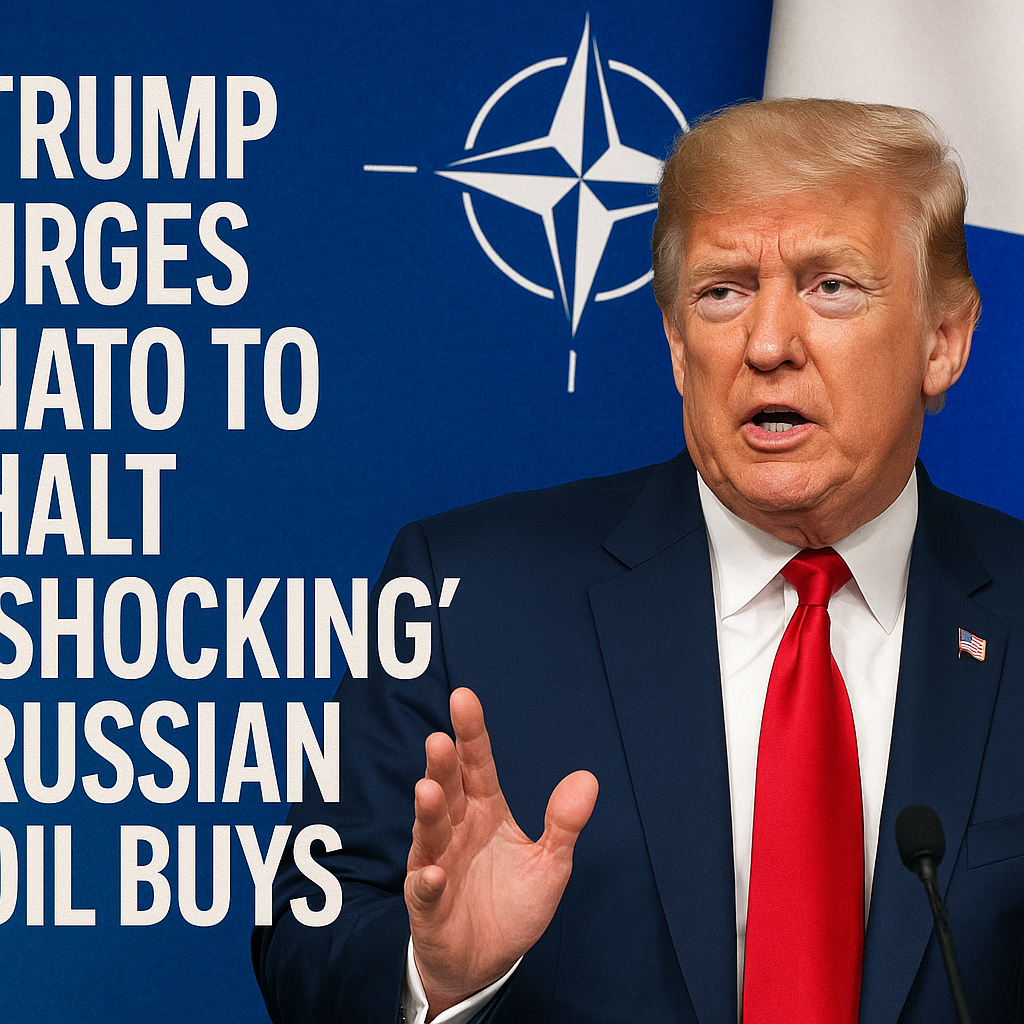
Trump Urges NATO to Halt ‘Shocking’ Russian Oil Buys

Trump Urges NATO to Halt ‘Shocking’ Russian Oil Buys
In a world marred by geopolitical conflicts, the statement made by former President Donald Trump urging NATO nations to halt ‘shocking’ Russian oil purchases has reignited discussions surrounding energy dependency and international diplomacy. Amidst ongoing tensions from the Russia-Ukraine conflict, Trump’s remarks point to a critical intersection of energy politics and military strategies, underscoring the complex dynamics at play in global relations.

The Context of Trump’s Statements
Trump’s comments come in the wake of prolonged discussions regarding Europe’s reliance on Russian energy resources. Amid the ongoing war in Ukraine, many European nations have been grappling with the implications of continuing to purchase oil from Russia, despite global calls for sanctions. In recent years, Europe’s energy dependence on Russia has been scrutinized, especially since it not only affects energy prices but also raises questions about national security.


Trump’s call to action highlights a growing frustration among some U.S. policymakers and NATO members alike who view continued purchases as funding the Russian war machine. According to reports from Al Jazeera, he interpreted the purchase of Russian oil as not merely an economic transaction, but as a form of complicity in Russia’s aggression against Ukraine. Trump’s proposition was clear: stopping these transactions could significantly weaken Russia’s financial backbone and ultimately contribute to ending the violence in Ukraine.


However, the economic realities for European nations seeking alternatives reveal complexities that Trump’s assertions may overlook. Many European countries, particularly those in Eastern Europe, rely heavily on Russian oil imports. For instance, the Baltic states and several Central European countries have been vocal about their dilemmas, citing a lack of immediate alternatives that would not drastically harm their economies or energy security.
Diverse Perspectives on Energy Dependency
The arguments surrounding energy dependency often highlight a significant divide among NATO allies. On one hand, countries like Poland and the Baltic states advocate for a complete halt to Russian oil purchases, viewing such steps as a moral necessity and a strategic imperative. They argue that a cessation of oil purchases would not only weaken Russia but also serve to support Ukraine in its fight for sovereignty.
Conversely, nations like Germany have expressed caution. As noted in a report from Sky News, Germany has been particularly dependent on Russian oil, and any sudden halt could lead to severe energy shortages and inflation. In light of this, German leaders have called for a more gradual approach to sanctions on Russian energy exports, highlighting the need for viable alternatives to ensure energy security and economic stability.
This debate extends beyond individual nation-states, with some analysts suggesting that Trump’s approach oversimplifies the nuances involved in European energy markets. As reported by RT News, experts warn against the immediate cessation of Russian oil imports without a robust plan to replace lost supply. The necessity of a transitional phase—leveraging renewable energy, increasing imports from non-Russian sources, and investing in energy infrastructure—is often emphasized.
The Potential Path Forward
Given the complexities illustrated by differing national interests, a collaborative strategy among NATO allies is essential. While the urgency to act against Russia is universally recognized, concerted diplomatic efforts must accompany energy policies to ensure that nations can maintain their economic integrity while supporting Ukraine.
One potential solution involves NATO reinforcing its commitment to diversify energy sources beyond Russian oil. This may include increasing investments in renewable energy, promoting energy independence, and encouraging cooperative agreements among nations to share resources. By pooling resources, NATO countries can work collectively to mitigate the impacts of transitioning away from Russian oil.
Moreover, dialogues surrounding energy must also acknowledge broader social and economic impacts. The transition away from such a significant energy supplier could lead to job losses and economic instability in various sectors. Thus, it is crucial for NATO and EU countries to devise comprehensive strategies—balancing environmental, economic, and geopolitical considerations.
Conclusion: A Call for Nuanced Approaches
As the geopolitical landscape continues to evolve, Trump’s call to action underscores the urgent need for NATO allies to reevaluate their energy strategies. While his remarks resonate with those championing a stand against Russian aggression, the diverse perspectives among allies illustrate the necessity of a multifaceted approach to energy dependency.
The path forward requires collaboration, vision, and a commitment to sustainable energy solutions that respect both the urgency of conflict and the realities of economic dependence. Moving beyond short-term actions and engaging in long-term strategies may pave the way for a more secure and independent European energy future. As NATO countries navigate these turbulent waters, the stakes are high, with global stability now more than ever reliant on careful decision-making and unified action.















