
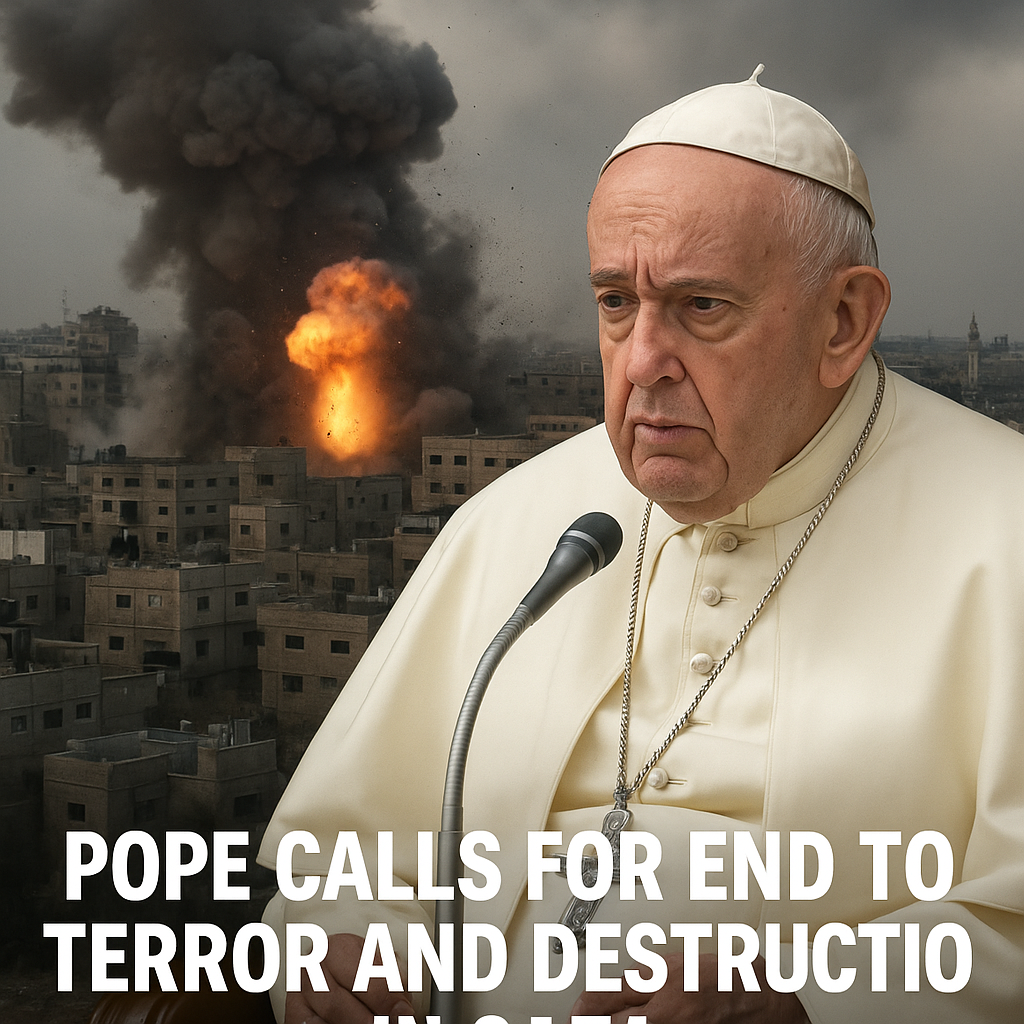
Pope Calls for End to Terror and Destruction in Gaza

Pope Calls for End to Terror and Destruction in Gaza
In a heartfelt plea that resonates deeply amid ongoing turmoil, the Pope has called for an immediate end to terror and destruction in Gaza. His message underscores the urgent need for humanitarian efforts and dialogues aimed at resolving the longstanding conflict that has caused immense suffering for countless individuals.

The Pope’s Plea: A Call for Compassion
In his recent address, the Pope emphasized the necessity of compassion and understanding in the face of violence. He urged world leaders to engage in diplomacy rather than aggression, stressing that true peace can only be achieved through dialogue and mutual respect. The Pope’s call for an end to terror is not just aimed at stopping the immediate violence but also seeks to foster a long-term resolution to the entrenched issues plaguing the region.


Various reports indicate that his remarks were timed to coincide with the escalating humanitarian crisis in Gaza, where continued bombardments have devastated infrastructure and resulted in significant civilian casualties. Organizations like the United Nations have echoed the Pope’s concerns, highlighting the dire humanitarian needs of the population in Gaza, which has been suffering from a lack of basic services, food, and medical supplies. According to Al Jazeera, the situation has deteriorated to a point where children and families are living in constant fear, making the humanitarian crisis even wilder.


Diverse Perspectives: Reactions from Different Corners
While the Pope’s statements have received widespread attention, reactions from global audiences and leaders vary, painting a complex picture of the situation.
Support for the Pope’s Message
Supporters of the Pope’s call argue that his stance is crucial in promoting peace in a region fraught with long-standing tensions. Many international humanitarian organizations lauded his remarks, suggesting that such high-profile appeals can lead to greater awareness and engagement in seeking resolutions. As seen in recent statements by various humanitarian groups, the Pope’s appeal fosters a spirit of solidarity that could mobilize resources and diplomatic efforts to assist those in urgent need.
Criticism and Skepticism
Conversely, critics often express skepticism about the effectiveness of such calls. Some commentators argue that while the Pope’s intentions are noble, mere words are insufficient to address the entrenched political and military dynamics at play. A report from RT pointed out that past peace efforts have often broken down due to deeper disagreements and a lack of trust among the parties involved. Critics contend that without actionable steps and commitments from both sides, the Pope’s appeal risks being seen as another voice in a chorus of pleas that have thus far failed to yield meaningful change.
The Role of Global Leaders
The divide in responses highlights a broader issue concerning the role of global leaders in facilitating peace in Gaza. The Pope’s call urges these leaders to step up and engage actively, bringing pressure to bear on parties involved in the conflict. The Sky News coverage posits that only through collective international effort can sustained peace be realized.
Weighing Evidence and Sentiments
While the Pope’s call resonates for its compassion and urgent plea for humanity, the complexities of geopolitical realities cannot be ignored. The situation requires more than just compelling speeches; it demands strategic international engagement, the willingness to compromise, and the prioritization of human rights. The Pope serves as a moral compass, encouraging leaders to reconsider their approaches to a crisis that has resulted in unimaginable suffering.
Amidst differing opinions on the impacts of humanitarian calls for peace, it’s clear that a multifaceted approach is necessary. Should global leaders take earnest steps to foster dialogue, it could pave the way towards meaningful progress. Yet, without consensus and commitment from all involved parties, optimism remains cautious.
Conclusion: The Path Forward
The Pope’s call for an end to terror and destruction in Gaza emphasizes a universal truth: compassion and understanding are vital to resolving conflict. As the humanitarian crisis continues to unfold, it is imperative for all stakeholders—including global leaders, humanitarian organizations, and the public—to align their efforts toward peace-building.
Ultimately, while the Pope’s words can serve as a guiding light in these dark times, actionable and sustained commitments from the global community will be critical. The road to peace is often long and fraught with challenges, but it is essential that all parties remain steadfast in their pursuit of justice, dignity, and life for the people of Gaza and beyond.















