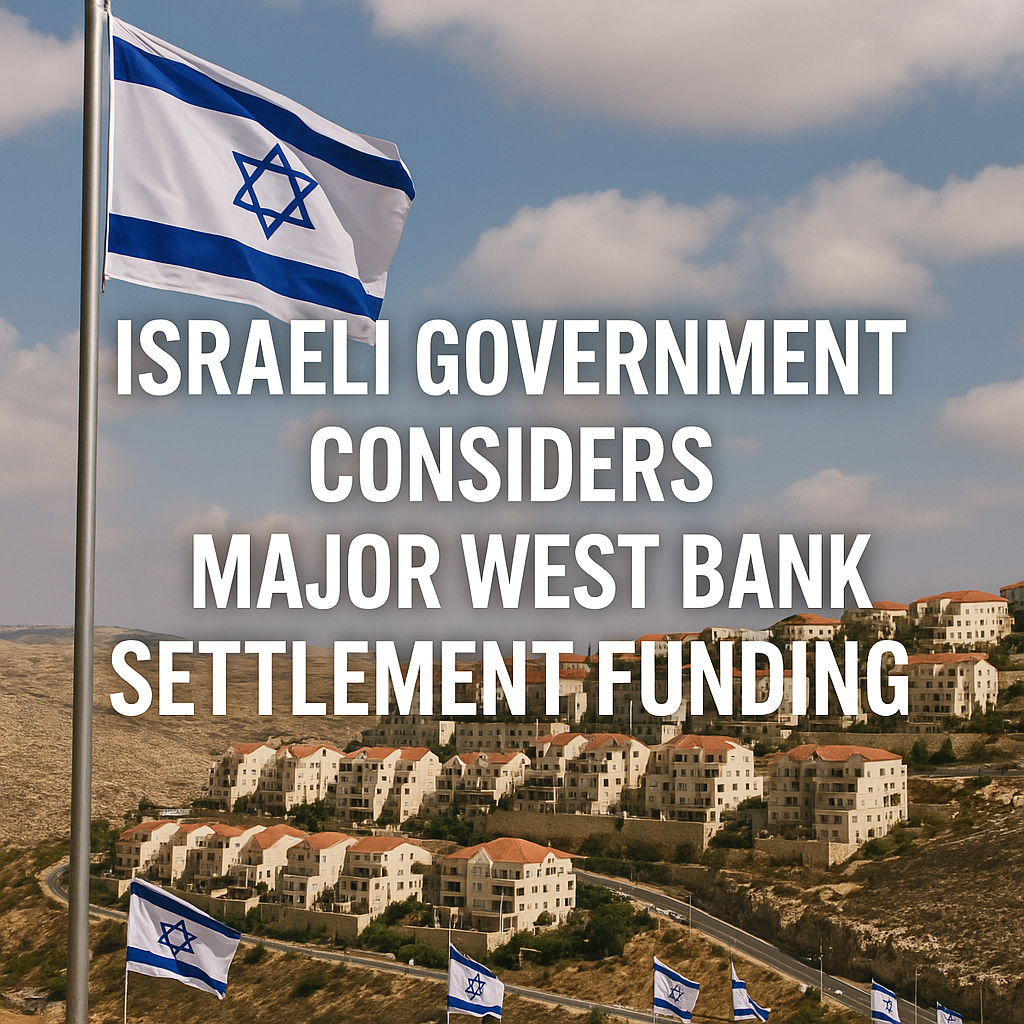
Israeli Government Considers Major West Bank Settlement Funding

Israel’s recent discussions around substantial funding for West Bank settlements have ignited a complex debate that reflects deep-seated geopolitical, social, and ethical considerations. As the Israeli government contemplates as much as $100 million dedicated to bolster these settlements, reactions both domestically and internationally are sharply divided.

A Closer Look at Settlement Expansion
The Israeli government’s initiative to allocate funds for settlement expansion has been framed by supporters as a necessary step for national security and economic development. Proponents argue that enhancing settlements will enhance Israel’s presence in the region and foster economic growth through job creation and infrastructure improvements. A report from Al Jazeera highlights that many in the government view settlements as essential for Israel’s long-term security strategy amid persistent tensions with Palestinian groups.


However, this perspective is heavily critiqued by critics who assert that such moves further complicate already fraught relations with Palestinians and the international community. RT underscores that the expansion of settlements is seen as a direct violation of international law, which deems such actions illegal in territories occupied since the Six-Day War in 1967. Critics argue that bolstering settlements only exacerbates the ongoing conflict, undermines the peace process, and creates skepticism regarding Israel’s commitment to a two-state solution.


Diverse Perspectives on Funding Decisions
Economic Arguments and Security Concerns
Advocates of the settlement funding, including some Israeli officials, point to the potential economic benefits and a strengthened civilian presence in strategically vital areas. They argue that increased funding can lead to infrastructure that fosters growth and security for Israeli citizens. This narrative is supported by some parliamentary factions who prioritize national unity and claim that enhancing settlements is crucial to preserving their ideological foundations. As noted by Sky News, the Israeli government is facing mounting pressure from right-wing factions that advocate for aggressive settlement policies.
Nonetheless, many voices within both the local and international communities urge caution. There are fears that settlement expansion could lead to an escalation of violence, as land disputes frequently ignite tensions between Jewish settlers and Palestinians. Al Jazeera highlights the sentiment from Palestinian leaders that continued expansion could extinguish any hope for future negotiations. The absence of a viable Palestinian state is a critical concern, yet voices promoting settlement funding seem to sidestep the profound implications for Palestine’s right to self-determination.
International Implications and Reactions
Global responses to Israel’s potential settlement funding reflect a divided international community. Some countries, particularly those aligned with the U.S., maintain support for Israel’s right to conduct its domestic policies. However, many Western nations have reacted negatively to the news, stressing that expansion undermines the prospects for peace. The United Nations has repeatedly warned against settlement activities in occupied territories, and global human rights organizations have condemned the Israeli government’s stance.
This juxtaposition raises vital questions about the future of the Israeli-Palestinian conflict. The radical differences in perception surrounding the settlements contribute to a larger narrative that is challenging to decipher. While supporters insist on the necessity of settlement expansion for security, detractors point to the moral and legal implications. Neither side appears willing to concede even a little ground, perpetuating a cycle of mistrust and hostility.
Navigating a Complex Conflict
As discussions progress over funding and expansion of West Bank settlements, it is critical to consider the multifaceted implications of such actions. Settlements have long been a contentious issue, symbolizing deeper historical grievances that affect not only Israelis and Palestinians but the broader geopolitics of the Middle East.
The Israeli government’s potential commitment of significant resources to these settlements is not merely a policy issue; it is a reflection of shifting power dynamics within Israel, challenger voices on both sides of the border, and significant international scrutiny. The unresolved questions surrounding the legitimacy of settlements and their impact on peace efforts remain paramount.
Conclusion: Seeking a Balanced Future
In an environment where policies can turn heated overnight, approaching the issue of West Bank settlement funding requires a nuanced understanding of the competing narratives surrounding security, peace, and humanity. Stakeholders invested in the region’s future must engage in dialogue that acknowledges the breadth of perspectives while actively seeking pathways for coexistence. As the situation evolves, it will be vital for both Israeli and Palestinian leaders to confront the realities of their decisions and their profound impact on future generations. This is not merely a political issue—it’s about the lives of those who inhabit this contested land.