
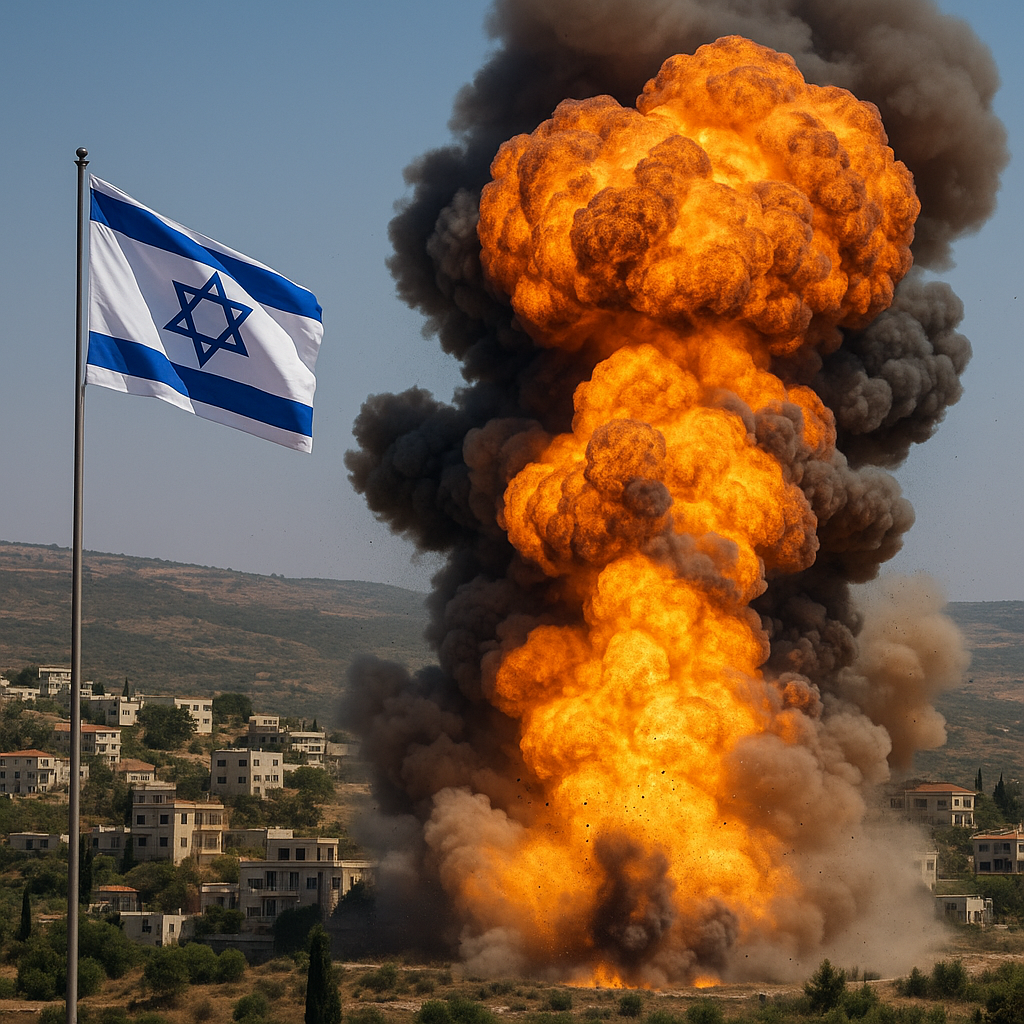
Israeli Operation Triggers Massive Explosion in Southern Lebanon

Israeli Operation Triggers Massive Explosion in Southern Lebanon
A recent Israeli military operation has led to a significant explosion in southern Lebanon, drawing attention and concern from various stakeholders in the region and beyond. This incident encapsulates the ongoing tensions between Israel and Hezbollah, while also raising questions about broader regional stability.

Understanding the Incident
The explosion, observed as part of an Israeli operation, reportedly leveled buildings and caused extensive damage in the vicinity. Eyewitness accounts highlight the enormity of the blast, describing it as unprecedented in its scope. According to reports from Al Jazeera, the operation seemed targeted, with military objectives unclear yet potentially tied to ongoing skirmishes between Israeli forces and Hezbollah militants.


In stark contrast, RT News offers a narrative suggesting that Israel’s actions reflect a strategic effort to assert dominance in the region. Analysts commenting on the incident perceive this as part of Israel’s broader stance against perceived threats from Lebanon’s militant groups. They argue that such operations are routine responses to Hezbollah’s military activities and serve to reinforce Israel’s deterrent posture.


Diverse Reactions and Perspectives
The explosion has incited a spectrum of reactions. Supporters of Israeli military actions posit that these operations are defensive, aimed at curtailing Hezbollah’s capacity to launch attacks. They emphasize the persistent threat posed by Hezbollah, which Israel regards as a terrorist organization. A senior Israeli official stated, “This is a necessary action to maintain our security,” reaffirming the government’s justification for military strategies.
On the flip side, critics—including Lebanese officials and international observers—decry the operation, labeling it excessive and dangerous. They argue that such actions escalate tensions and risk a new cycle of violence. A spokesperson from Hezbollah condemned the explosion, stating, “This will not go unpunished,” suggesting a potential retaliatory measure could be on the horizon.
Moreover, Sky News highlights the potential humanitarian impact of the explosion. Local communities are already grappling with the aftermath, as displaced families seek shelter and essential services become strained. Such consequences illustrate the human cost of military operations, extending beyond just the immediate vicinity of conflict.
Implications for Regional Stability
This incident sheds light on the precarious balance of power in the Middle East. The continued military confrontations predominantly between Israel and Hezbollah illustrate the entrenched nature of their conflict. Moreover, there is a palpable concern about the intensifying cycle of violence, which could spread beyond Lebanon’s borders. Neighboring countries and global powers closely monitor this situation, cognizant of its potential to ignite broader hostilities.
Reactions from international leaders have been cautious. Many urge restraint from both sides, recognizing the volatility of the region. Diplomatic efforts to mediate between the involved parties are essential yet fraught with challenges due to the complexities of national interests and ongoing hostilities.
Conclusion: A Moment of Reflection
The explosion resulting from the Israeli operation in southern Lebanon serves as a stark reminder of the fragile peace that exists in the region. As opinions diverge on the justification and consequences of such military actions, it is crucial to recognize the human element often overshadowed by political narratives. Balancing national security interests with humanitarian needs remains a delicate challenge, underscoring the importance of constructive dialogues to foster lasting peace.
The incident is not just another chapter in the annals of conflict—it reflects the ongoing struggle for security, sovereignty, and stability in a region marked by deep-rooted hostilities. Moving forward, the choices made by both Israel and Hezbollah will be critical in determining the future trajectory of their conflict and, potentially, the tranquility of the region.















