
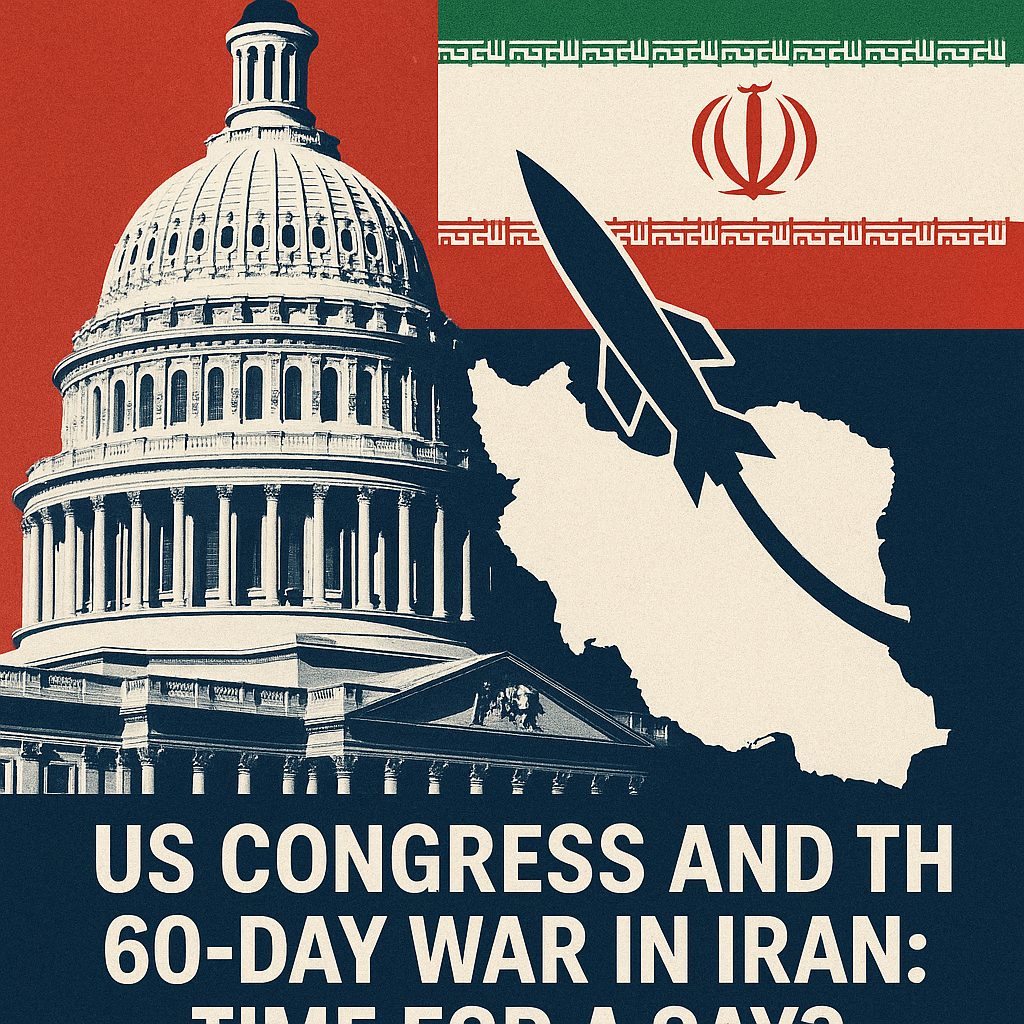
US Congress and the 60-Day War in Iran: Time for a Say?

US Congress and the 60-Day War in Iran: Time for a Say?
The ongoing war in Iran has ignited a vital debate about the role of the US Congress in decisions of military engagement. As the conflict stretches into its sixtieth day, questions surrounding congressional oversight and intervention have come to the fore, igniting a complex discussion about power dynamics between the executive and legislative branches.

The Growing Call for Congressional Engagement
In recent weeks, multiple voices within Congress have amplified calls for a more substantial role in shaping U.S. foreign policy in Iran. Notably, a faction of lawmakers from both parties has argued that President Biden’s administration has bypassed essential checks and balances outlined in the War Powers Resolution, which mandates that Congress must be consulted before extensive military engagement.


Democratic Senator Tim Kaine has been vocally critical of the perceived executive overreach, stating that “it’s time for Congress to do its job and weigh in on this conflict.” This sentiment echoes broader concerns among lawmakers that without congressional approval, the U.S. risks entrenching itself in a protracted conflict that could escalate into a broader regional war.


On the flip side, some lawmakers claim that quick responses to military threats necessitate a degree of executive autonomy. They argue that particularly volatile situations, such as the one in Iran, require rapid decision-making that Congress may hinder. Thus, the tension between the need for a swift military response and the constitutional necessity of legislative oversight remains a focal point in the discussions.
Diverging Perspectives on Congressional Authority
As lawmakers grapple with their roles in this conflict, varied opinions highlight the complexity of the situation. On one side, proponents of stronger congressional involvement argue that democratic accountability is paramount. Congress’s constitutional mandate includes the power to declare war, and they assert that circumventing this process could undermine democratic norms.
A recent editorial from Al Jazeera confirms this sentiment, noting that “the very foundation of American democracy is at stake when Congress is sidelined in critical military decisions.” Critics of unilateral executive action echo this concern, fearing that ignoring legislative input could lead to a slippery slope of endless military engagements without adequate oversight.
Conversely, other sources, including those from RT, defend the executive’s prerogative in matters of national security. They argue that Congress’s lengthy deliberations can jeopardize national interests, especially when immediate military actions are required to safeguard American lives and allies. This view stresses a pragmatic approach, suggesting that Congress often lacks the immediacy needed for decisions pertaining to national security.
The Complexity of War Powers
The discourse surrounding the U.S. engagement in Iran encapsulates larger issues related to the War Powers Resolution. This 1973 legislation was crafted in the aftermath of the Vietnam War to ensure Congressional participation in military decisions, but its effectiveness has been increasingly questioned.
Critics highlight the Resolution’s vagueness, leading to divergent interpretations about what constitutes military action that warrants Congressional approval. In the case of the Iran conflict, the executive branch’s interpretation appears to lean toward maintaining operational flexibility, citing that actions deemed necessary for national security do not warrant full legislative scrutiny. This has left many lawmakers feeling frustrated and sidelined.
Furthermore, the current geopolitical climate complicates the situation even further. With various regional actors engaging in escalating tensions, the threats on the ground can evolve rapidly. Some lawmakers suggest that clearer guidelines and a more structured dialogue between branches of government might improve oversight without sacrificing the need for agile responses.
Conclusion: A Call for Dialogue
As the 60-day mark of the conflict in Iran approaches, the question of whether Congress should exercise its authority in military matters is not black and white. It encompasses a range of arguments regarding democratic participation, national security, and executive power.
Moving forward, fostering a healthy dialogue between the executive and legislative branches is crucial. As tensions in Iran continue to escalate, finding a balanced approach to military engagement that honors the democratic processes central to U.S. governance will be essential. Only through mutual engagement can the United States navigate the complexities of military action while ensuring that the voices of the American populace, represented by Congress, are heard and considered in these critical decisions.















