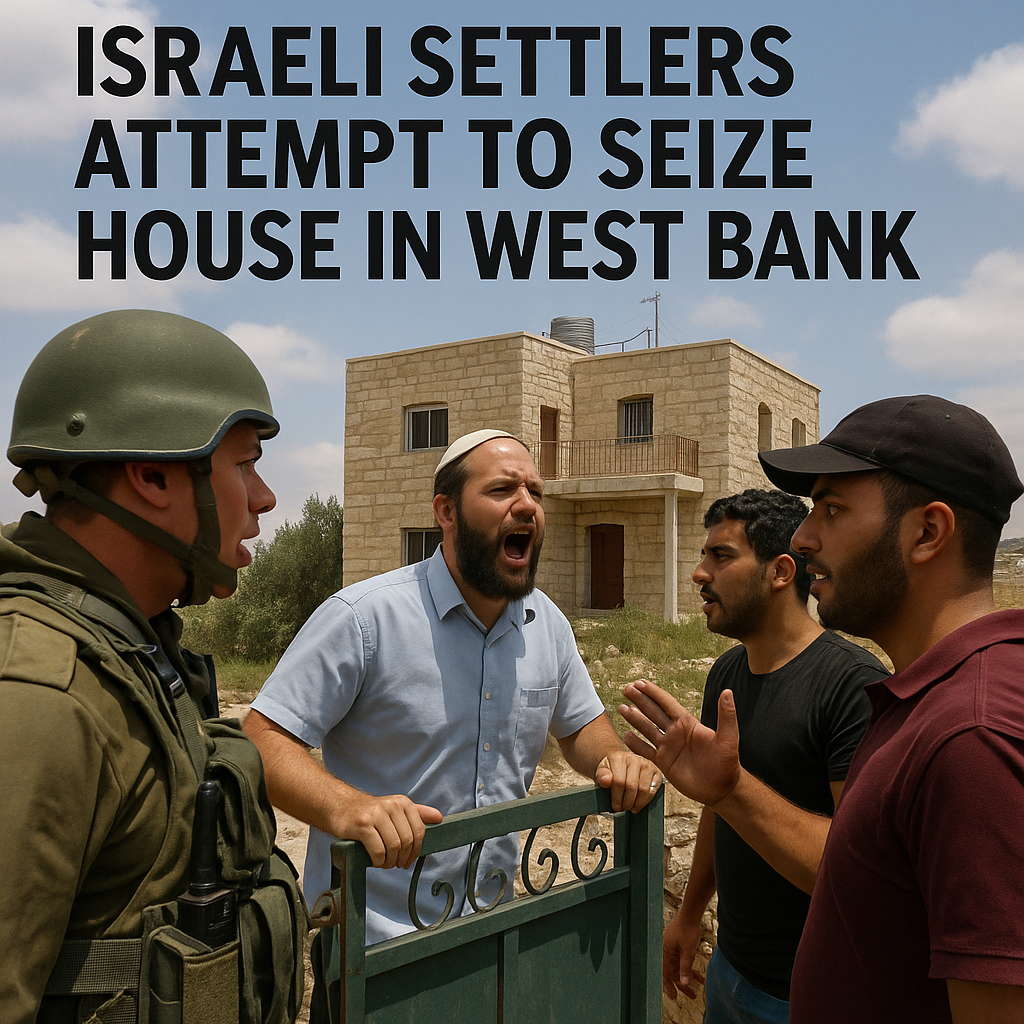
Israeli Settlers Attempt to Seize House in West Bank

Israeli Settlers Attempt to Seize House in West Bank
The ongoing tension in the Israeli-Palestinian conflict has escalated recently with reports of Israeli settlers attempting to take over a Palestinian house in the occupied West Bank. This incident serves as another reflection of the complex dynamics that characterize life in one of the most contentious regions in the world.

The Context of the Seizure Attempt
The attempt by Israeli settlers to seize property in the West Bank is not an isolated incident but part of a broader trend that has seen increasing tensions and violence in the area. The recent attempt, captured in videos that have circulated widely on social media, shows settlers forcibly trying to take possession of a dwelling believed to belong to Palestinian residents. Al Jazeera reported that these actions were met with resistance from local Palestinians, further escalating an already volatile situation.


Historically, the West Bank has been marked by disputes over land and housing, with property ownership often at the heart of conflict. The Israeli government has supported the expansion of settlements in the region, which many consider illegal under international law, while settlers argue they are reclaiming ancestral land.


The implications of such seizure attempts extend beyond the immediate confrontation. They contribute to broader feelings of insecurity among Palestinian populations and can provoke violent confrontations. Local human rights organizations have criticized these actions, citing a systematic approach to displacing Palestinian families as a tactic employed by settlers.
Diverging Perspectives on the Issue
Reactions to the incident have varied significantly, reflecting the polarized views on the Israeli-Palestinian conflict.
On one side, many Israeli settlers and right-leaning governmental officials view these actions as an extension of their rights to settle in what they perceive as their historic homeland. They argue that the Israeli presence in the West Bank is necessary for national security and view the settlements as justified, maintaining that they occupy land that was uninhabited prior to their arrival.
Conversely, Palestinian advocates and various international observers strongly condemn the seizure attempts. They argue this behavior is emblematic of a broader policy of dispossession aimed at displacing Palestinians and eradicating their presence in the region. Reports from organizations such as Amnesty International highlight how these actions exacerbate the humanitarian crisis faced by Palestinians, further entrenching divisions and hindering the prospects for peace.
The United Nations has also weighed in, calling for the protection of Palestinian residents and stating that the ongoing expansion of settlements violates their rights. However, the Israeli government has often brushed aside these criticisms, viewing them as politically motivated attacks against their sovereignty.
The Implications of Property Seizures
The continued attempts to seize homes lend a narrative of ongoing crisis to the Israeli-Palestinian conflict. Each incident, while specific in its events, symbolizes a broader struggle over land, identity, and self-determination. The fear and resentment generated by such actions can lead to violent outbursts, further degrading the fabric of daily life for both Israelis and Palestinians.
Additionally, the international community continues to grapple with how to respond effectively. The complexities of the political landscape make it challenging to broker a solution that satisfies both sides. As stories of property disputes and settlement expansions make headlines, the need for dialogue and a renewed commitment to peace becomes palpable.
While many initiatives aimed at reconciliation have faltered, some believe that grassroots movements among both populations may provide a pathway forward. Initiatives promoting coexistence and partnership present alternatives to the narrative of division and conflict, suggesting that mutual interests do exist amid the chaos.
In conclusion, the attempt by Israeli settlers to seize a house in the West Bank is a stark reminder of the persistent and multifaceted challenges that define the Israeli-Palestinian conflict. Understanding the diverse perspectives surrounding this issue is essential for a more comprehensive view and, ideally, a peaceful resolution to the ongoing tensions. As events continue to unfold, observers remain watchful for shifts in the dialogue that may finally lead to a more stable coexistence.