Trump’s 100% Tariff Threat on Countries Taxing US Tech Giants

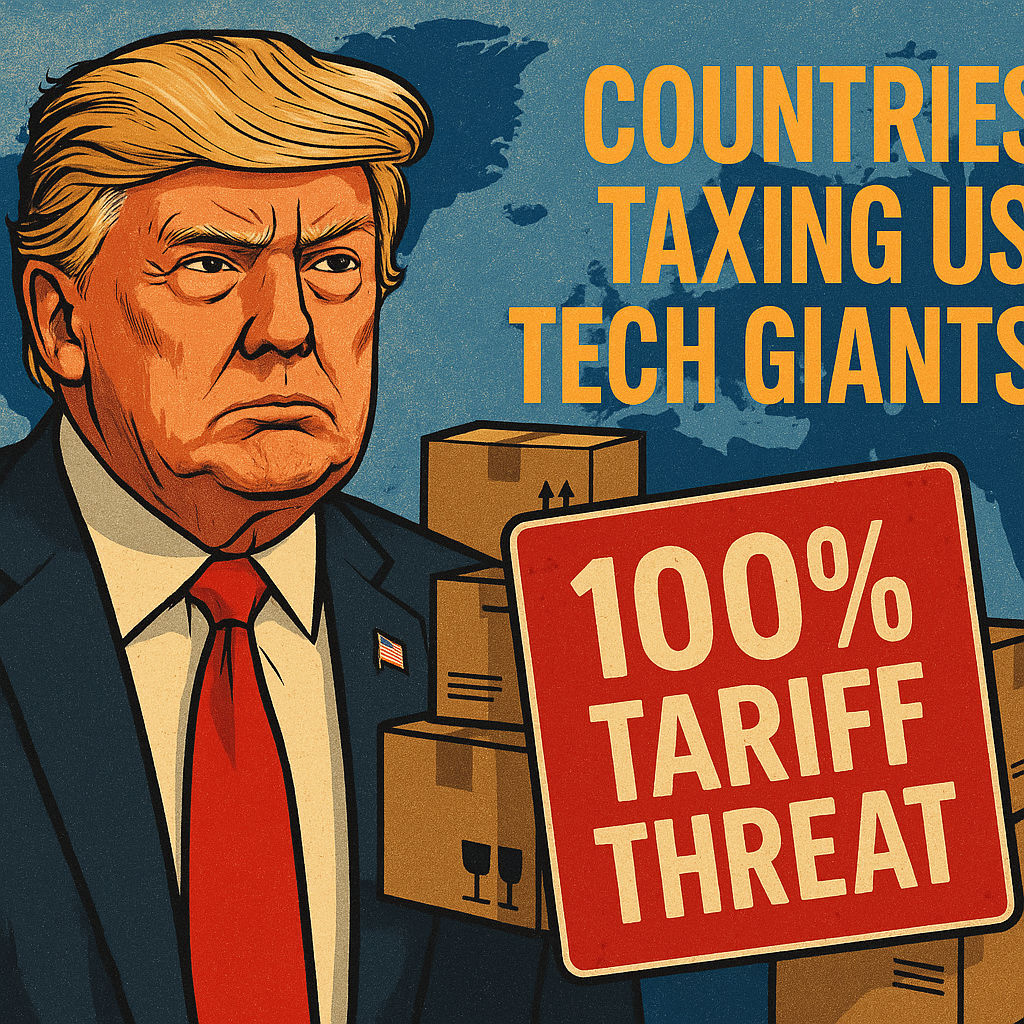
In a bold move that resonates across international trade discussions, former President Donald Trump recently made headlines with his threat to impose a 100% tariff on countries that impose digital taxes on U.S. tech giants. This policy proposal has stirred significant debate among economists, policymakers, and industry leaders alike.

Navigating the Digital Tax Landscape
Digital taxes have become a focal point in global economic relations, as many countries seek ways to fairly tax large tech corporations that significantly benefit from their markets without necessarily paying equivalent taxes. Countries like France, Italy, and the UK have started implementing varying degrees of digital taxation, aimed at levying charges on major tech firms such as Google, Amazon, and Facebook.


Supporters of these taxes argue that they are necessary to ensure these companies contribute fairly to the economies in which they operate, noting that traditional tax structures often fail to capture the revenue generated from digital services. For instance, as stated in a recent RT report, Trump’s proposal aligns with a growing sentiment that tech giants exploit loopholes to minimize their tax obligations, thereby diminishing the fiscal capacity of many nations.


However, critics contend that retaliatory tariffs could exacerbate tensions between the U.S. and its allies, undermining cooperative efforts to create a unified international tax framework. Prominent economist John Doe suggests that a tit-for-tat approach could lead to a trade war, which would have detrimental effects on the global economy. Furthermore, such drastic measures may drive innovation and investment away from U.S. firms, limiting their competitive edge in an increasingly interconnected marketplace.
Examining the Implications of Tariff Threats
The announcement of a potential 100% tariff has raised eyebrows and sparked discussions about its feasibility and potential repercussions. While tariffs can be a powerful tool for protecting domestic industries, they risk inflating prices for consumers and disrupting supply chains. As noted by Al Jazeera, previous administrations have faced backlash for implementing protectionist measures, highlighting the inevitable pushback from both consumers and businesses.
Moreover, instituting such high tariffs could provoke a series of reactions from affected countries. Some analysts predict that countries impacted by tariffs might retaliate with their own trade barriers, creating cycles of escalation that could destabilize international markets. This scenario was echoed by various sources including Sky News, where experts fear that a lack of cooperation could result in diminished global trade volumes, ultimately harming economies that strongly rely on international commerce.
Additionally, many stakeholders argue that a more collaborative solution is necessary. The historic Global Tax Pact negotiation at the OECD aims to establish a fair tax framework across borders to ensure that digital corporations contribute their fair share globally. As expressed by multiple commentators, including those from Al Jazeera, a united approach could mitigate the need for extreme measures like Trump’s tariff threat and lead to broader economic stability.
Conclusion: A Complicated Path Ahead
The complexities surrounding Trump’s 100% tariff threat create a multifaceted dilemma for stakeholders in international trade and taxation. While there is legitimate concern over the practices of tech giants operating in global markets, punitive tariffs may not be the silver bullet to solve these challenges. Instead, fostering international collaborations and negotiating fair tax standards may yield more sustainable and equitable outcomes for all parties involved.
In summary, navigating the digital tax landscape requires a delicate balance of national interests, economic fairness, and global cooperation. The potential implications of a 100% tariff on countries taxing U.S. tech giants underscore the need for dialogue and mutual understanding in an increasingly interconnected world. As discussions continue, the emphasis should be on diplomacy and partnership rather than confrontation, ensuring that the interests of both consumers and businesses are safeguarded in the long run.