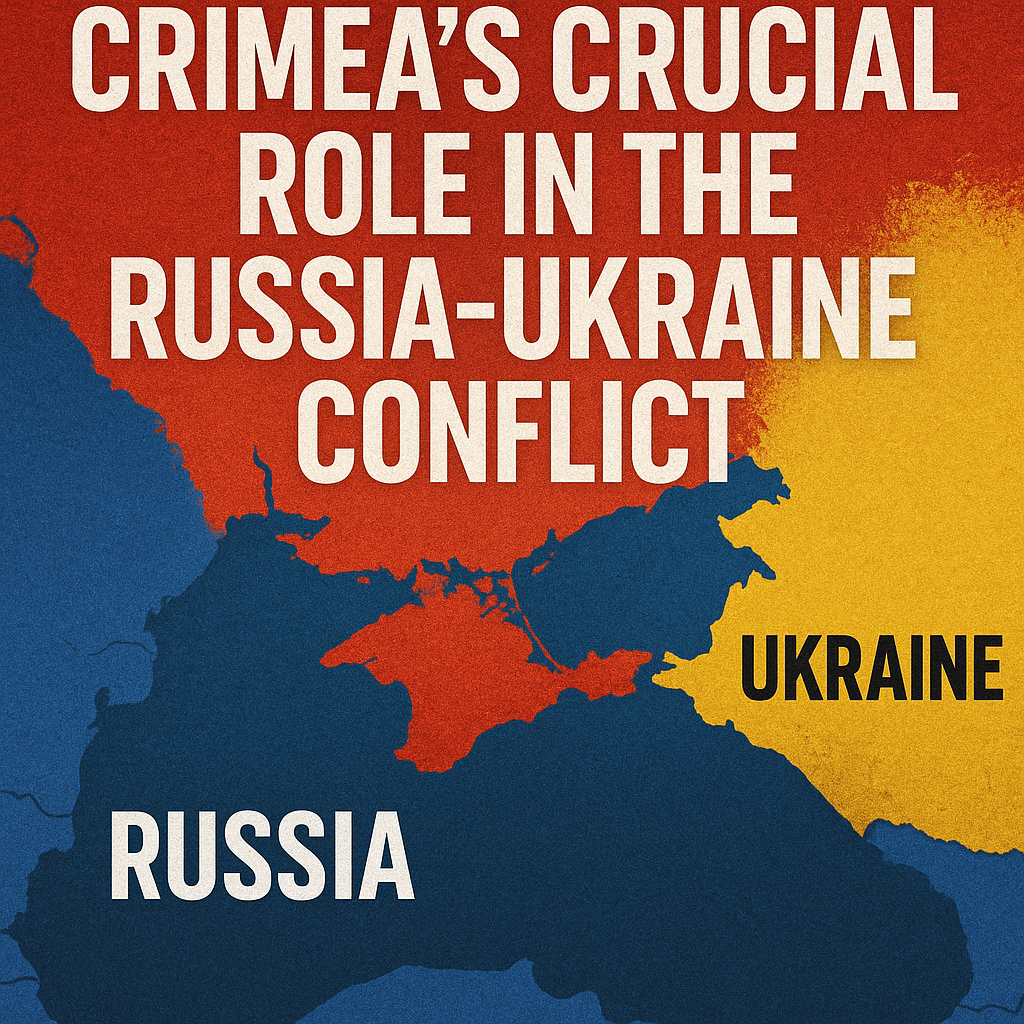
Crimea’s Crucial Role in the Russia–Ukraine Conflict

Crimea’s Crucial Role in the Russia–Ukraine Conflict
The strategic importance of Crimea in the ongoing Russia–Ukraine conflict cannot be overstated. This peninsula, which has been a flashpoint for tension between the two nations, holds not only geographical significance but also political and historical implications that continue to shape the dynamics of the region.

Historical Context and Geopolitical Importance
Crimea’s history reflects its tumultuous role in the fabric of Eastern European politics. After a brief period as part of Russia, Crimea was transferred to Ukraine in 1954 during a time when both were part of the Soviet Union. Following the collapse of the USSR in 1991, Crimea became part of an independent Ukraine. However, the region’s majority Russian-speaking population has led to complex allegiances and identity issues, making it a site of contention for both nations.


The 2014 annexation of Crimea by Russia marked a significant escalation in the conflict. The Kremlin justified its actions by claiming the need to protect ethnic Russians and Russian speakers in the region. Meanwhile, Ukraine and much of the international community viewed this annexation as a violation of Ukrainian sovereignty and international law. This divide illustrates the deep-seated historical grievances and the power struggle inherent in Crimea’s status.


Strategic and Military Considerations
From a strategic standpoint, Crimea offers Russia several advantages. The peninsula is home to the Black Sea Fleet, which serves as a vital naval base for Russia, providing access to key shipping routes. Control of this region enables Russia to project its military power not only across the Black Sea but also into the Mediterranean Sea. Experts note that Crimea acts as a critical point for Russian security, allowing for quick deployment of military assets to various fronts.
In contrast, Ukraine aims to regain control over Crimea not only as a matter of national integrity but also to secure its own maritime access and economic resources in the Black Sea. The peninsula is rich in natural resources, including oil and gas reserves, which add another layer of complexity to the conflict. The tug-of-war over Crimea highlights the interplay between military might and economic interests; both sides leverage these factors in their broader strategies.
Diverging Perspectives and Future Implications
The perspectives regarding Crimea’s role in the conflict vary significantly. On one hand, Russia maintains that its actions in Crimea were a response to legitimate security concerns. “Safeguarding our compatriots abroad is a fundamental principle of our foreign policy,” stated a Russian official, underlining the Kremlin’s justification for the annexation. This viewpoint emphasizes the narrative of protecting Russian nationals and ethnic Russians.
On the other hand, Ukraine—backed by Western allies—views its sovereignty as non-negotiable. International reactions to the annexation included economic sanctions against Russia and a bolstered military presence in Eastern Europe by NATO allies. Ukrainian President Volodymyr Zelensky has expressed that any negotiations regarding Crimea must respect Ukraine’s territorial integrity, suggesting that a peaceful resolution requires the restoration of Ukraine’s control.
The international community remains divided on this issue, with some nations recognizing the annexation and others supporting Ukraine’s claims. This division complicates any efforts at diplomatic resolution, leading to a prolonged stalemate.
The Bigger Picture: Implications for Global Stability
The ongoing tensions over Crimea have broader implications for global stability. The conflict has initiated a resurgence of military alignment and a re-evaluation of national security strategies among NATO countries. Ongoing military exercises and support for Ukraine signal a renewed commitment to deterrence against perceived Russian aggression.
Moreover, the situation in Crimea serves as a microcosm of wider geopolitical struggles, including the balance of power in the post-Cold War world. As nations grapple with questions of sovereignty, national identity, and foreign intervention, Crimea remains a focal point that underscores the challenges of navigating a multipolar global landscape.
Conclusion
Crimea’s position in the Russia–Ukraine conflict is a complex and evolving issue influenced by historical grievances, military strategy, and international relations. As both nations continue to assert their claims over the peninsula, the quest for peace hinges on recognizing the intricate interdependencies of history, culture, and geopolitics. Understanding these factors can offer invaluable insights into not only the future of Crimea but also the broader implications for regional and global security.