
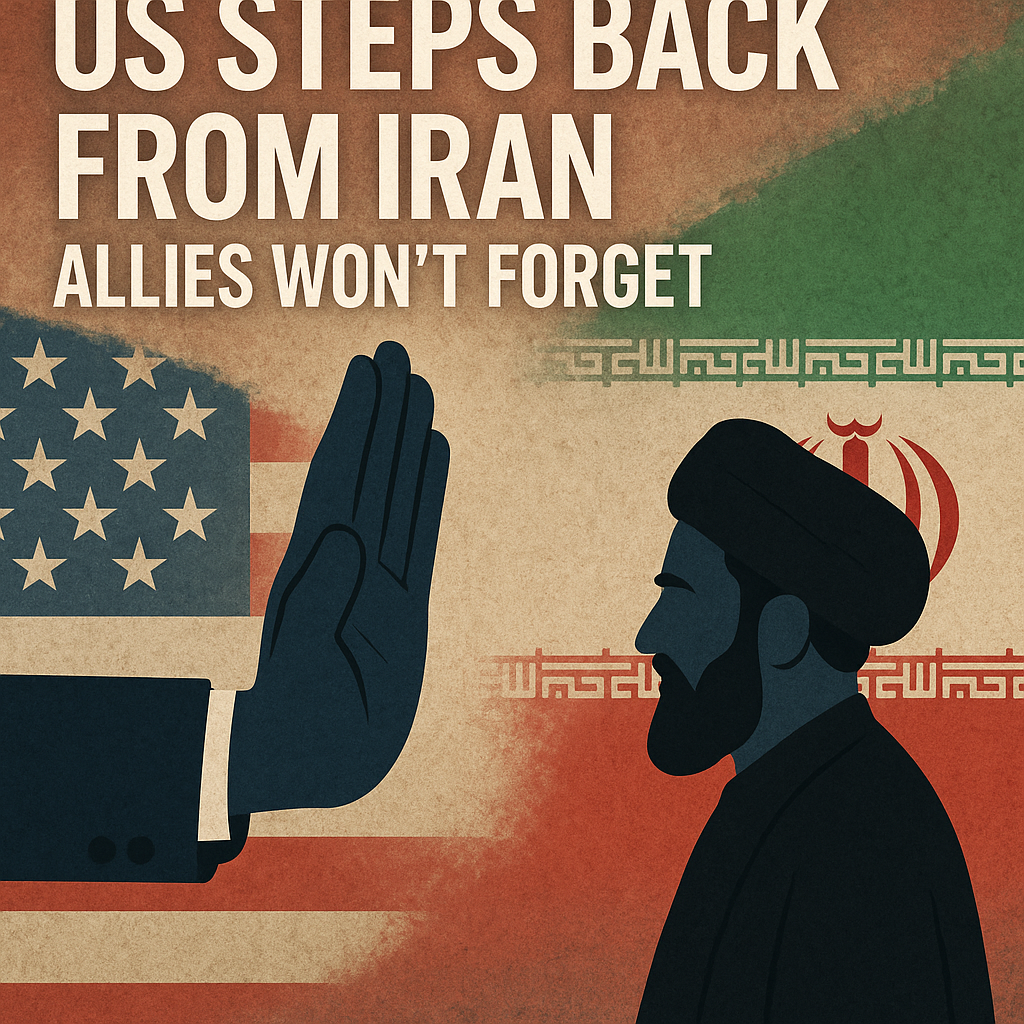
US Steps Back from Iran: Allies Won’t Forget

US Steps Back from Iran: Allies Won’t Forget
The evolving relationship between the United States and Iran is of critical importance not only to regional stability but also to the perception of U.S. leadership among its global allies. As the U.S. reassesses its position on a variety of fronts, the implications for its alliances in the Middle East are significant—many of which may not be easily forgotten.

Shifting Dynamics in US-Iran Relations
Recent developments indicate a notable shift in the U.S. attitude toward Iran, particularly as nuclear discussions falter. Leading voices in the political sphere argue that the U.S.’s pullback from negotiating a nuclear deal has caused ripples among its allies in the region, who depended on American diplomacy to counter Iranian influence. Both Al Jazeera and RT highlight how Gulf States, traditionally aligned with the U.S., have begun to reevaluate their strategies in light of what seems like a reduction in American engagement and commitment.


Diverging Perspectives Among Allies
A striking aspect of this evolving scenario is the varied reactions from U.S. allies. For example, Gulf nations like Saudi Arabia and the UAE have demonstrated a sense of urgency to forge their own pathways in dealing with Iran. As per RT, one expert mentioned that these countries are now actively pursuing their own diplomatic channels to negotiate with Iran, showcasing a pivot from relying entirely on U.S. leadership.


In contrast, Al Jazeera emphasizes a more cautious approach among allies, pointing out that while countries may seek direct engagement with Iran, they are simultaneously hoping for more robust U.S. support in the unconventional warfare arena against Iranian proxy groups. This duality illustrates the complexity of the relationships, as allies navigate the course of their national interests while still hoping for U.S. backing.
The Consequences of Perceived Abandonment
The apparent withdrawal of the U.S. government from aggressive policy-making towards Iran raises questions about long-term implications. Allies in the region are not only concerned about Iran’s nuclear ambitions but also its regional proxy wars, particularly in Yemen and Syria. A sense of betrayal has begun to brew among those who relied on the U.S. as a stabilizing force.
Many observers assert that the U.S.’s absence will create a vacuum that Iran could exploit, potentially spreading its influence further across the Middle East. Certainly, the consensus from several reports indicates that regional nations are scrambling to recalibrate their military and diplomatic strategies in response to what they perceive as an unreliable ally.
The Reality of a Multipolar World
One notable trend is the increasing complexity of international alliances. As U.S. engagement wanes, other powers like China and Russia are stepping into roles historically held by the Americans. These nations are keen to capture the loyalty of Middle Eastern states wary of American commitment.
For instance, various analyses across the sources reveal that Iran has been fortifying its ties with China, which is an alarming development for nations traditionally aligned with the U.S. Experts warn that if Iran secures a stronger foothold through cooperation with these emerging superpowers, the balance of power in the region could shift dramatically.
The Path Ahead
As the U.S. steps back from direct engagement with Iran, the region braces itself for a period of uncertainty. Allies are beginning to question the dependability of American intervention, pushing them to explore independent avenues for both diplomacy and defense. The shared sentiment among analysts is that while the U.S. retreats, the consequences will be felt well beyond Iran’s borders.
It’s also worth noting that, while some nations may choose to engage directly with Iran, a deep-seated wariness persists. For example, the fear of Iranian influence destabilizing domestic political landscapes remains a lingering concern for many Gulf nations.
A Cautious Reflection
In conclusion, as the U.S. navigates its complex relationship with Iran, it is clear that the ramifications will extend well beyond immediate diplomatic outcomes. The sense of abandonment felt by allies is palpable and will likely shape their responses and alliances for years to come. In this environment, the lesson is clear: trust and reliability are paramount in international relations, and the U.S.’s current trajectory may have lasting effects that are difficult to reverse.
Ultimately, the situation continues to evolve, leaving many wondering how the balance of power might shift in an increasingly multipolar world, where alliances can be as fragile as they are essential.















