Israeli Soldier and Settlers Assault Two Palestinians: Video Exposed

Exposing Violence: Israeli Soldier and Settlers Assault Two Palestinians
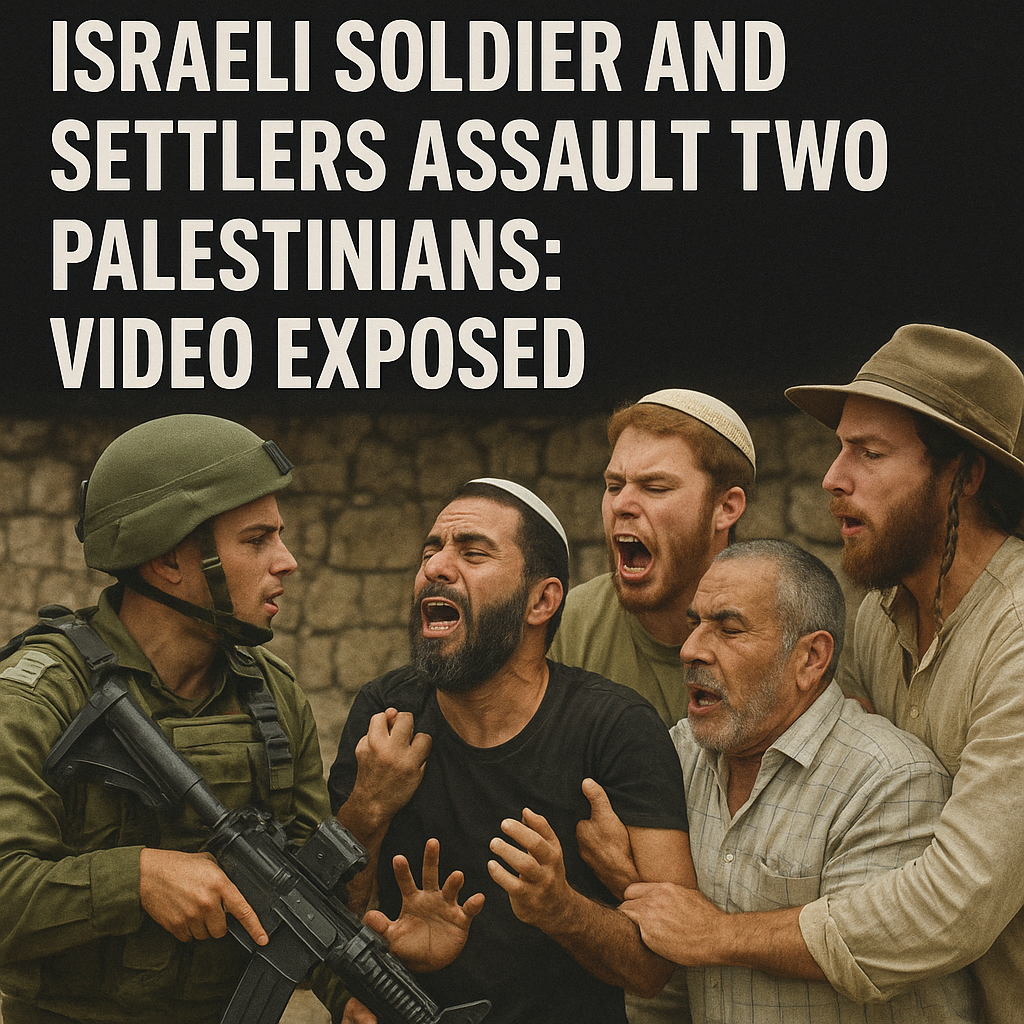
In recent days, an alarming video depicting an Israeli soldier along with settlers assaulting two Palestinians has surfaced, capturing the attention of the international community. This incident has once again stirred discussions around the escalating tensions in the region and the effect of violence on both communities.

Context of the Incident
The video, which has circulated widely on platforms like Al Jazeera, shows a chaotic encounter where a Palestinian man is violently struck by an Israeli soldier while settlers look on and participate in the aggression. The footage sparked immediate outrage, inciting condemnation from human rights groups and citizens alike. Al Jazeera has highlighted that this incident is not an isolated one, but part of a larger pattern that has seen heightened acts of aggression against Palestinians, particularly in West Bank territories.


Reports indicate that tensions have surged in recent months, often triggered by settler expansion in areas that Palestinians consider their land. According to various sources, settler violence has increased significantly, with Palestinian communities frequently reporting instances of harassment, assault, and property damage. The latest video serves as stark evidence of these ongoing confrontations, revealing a troubling status quo.


Diverse Reactions and Perspectives
The reactions to the video highlight the polarized nature of narratives surrounding Israeli-Palestinian relations. On one side, Palestinian advocates are utilizing the footage to emphasize the urgent need for international intervention and a reassessment of policies that enable such violence. Activists and human rights organizations call for accountability, demanding that those responsible face consequences for their actions.
Conversely, some Israeli officials and settlers advocate that such incidents are misrepresented or taken out of context. This viewpoint argues that Palestinians often provoke violence by engaging in acts viewed as hostile towards Israeli settlements. They emphasize the complexities of security concerns that Israeli soldiers face in volatile situations. This dichotomy in perspectives illustrates that the realities on the ground are fraught with historical and political nuance.
Broader Implications of Violence
The ramifications of these violent encounters extend beyond individual incidents. Reports have noted an increase in fear and tension within Palestinian communities, affecting livelihoods and daily life. Residents often live in apprehension of potential assaults, altering their interactions and movements in their own neighborhoods. This climate of fear can have long-term psychological impacts on both Palestinians and Israelis, feeding into cycles of violence that are difficult to rectify.
Moreover, international responses to such incidents raise questions about efficacy and bias. Critics argue that the global community has often exhibited a reluctance to hold Israeli settlers and soldiers accountable for violent acts against Palestinians, contributing to a culture of impunity. This perception can further complicate peace efforts, as it may deter Palestinians from trusting negotiations or resolutions proposed by third parties.
Conclusion: A Call for Reflection and Action
The disturbing footage of the assault on the two Palestinians serves as a grim reminder of the complexities and brutal realities of the Israeli-Palestinian conflict. As both sides grapple with deep-seated grievances and aspirations, understanding the many layers of this relationship is crucial. Observers must consider the broader historical context and the lived experiences of those affected by violence.
For any meaningful progress, voices advocating for justice and accountability should be amplified, regardless of political affiliations. The need for a collaborative approach that acknowledges human rights and dignity for all individuals in the region remains vital to paving the way for peaceful coexistence. Only through concerted reflection and action can there be hope for a future that prioritizes peace over violence.