
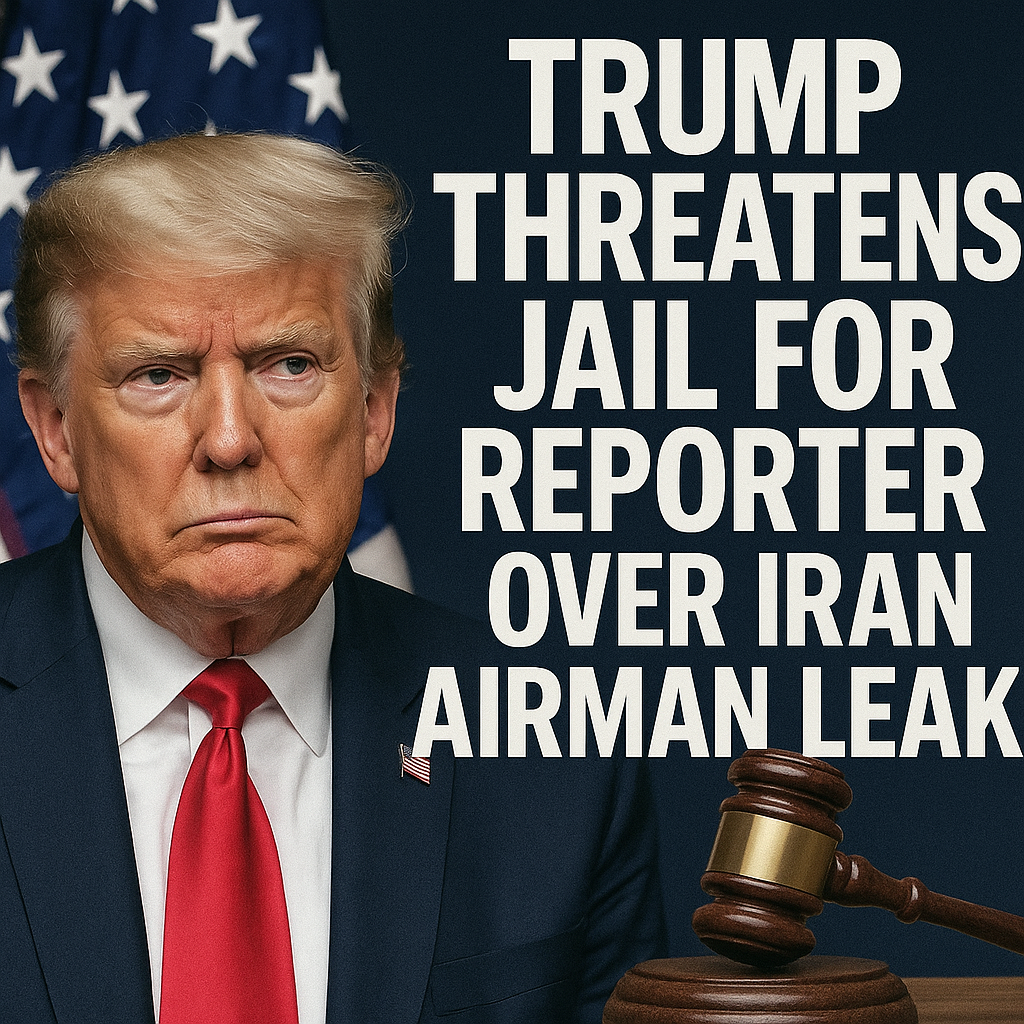
Trump Threatens Jail for Reporter Over Iran Airman Leak

Trump Threatens Jail for Reporter Over Iran Airman Leak
Former President Donald Trump has made headlines once again, this time not with his usual policy debates, but over a threatening remark directed at a journalist. This incident, revolving around a leaked narrative concerning the rescue of an Iranian airman, has sparked considerable debate about press freedoms and national security.

The Background of the Incident
The controversy began when a report outlining details of an operation intended to rescue an Iranian airman surfaced in the media. While the specifics of such operations are conventionally kept under wraps for security reasons, the leak has raised serious concerns among officials, including Trump himself. Responding to the report, Trump did not hold back, suggesting potential jail time for the responsible reporter.


This stance taken by Trump is not unprecedented. He has a lengthy history of criticizing the media, often labeling unfavorable coverage as “fake news.” The current situation, however, highlights a more troubling aspect of his rhetoric, which some argue threatens the foundation of free journalism.


Responses from the Media Community
The reactions to Trump’s comments have been multifaceted. On one side, press freedom advocates have condemned the former president’s threats as an infringement on journalistic integrity. Organizations such as the Committee to Protect Journalists (CPJ) have asserted that such statements create a chilling effect, inducing self-censorship among reporters. The fear of potential legal ramifications can be paralyzing for those who strive to report truthfully.
Conversely, some might argue that national security takes precedence over press freedom in certain circumstances, particularly when the information released could compromise the lives of individuals involved in sensitive operations. This perspective posits that journalists must exercise discernment when handling intelligence-related material, especially in a rapidly changing global landscape.
Weighing National Security Against Press Freedom
The essence of the debate hinges on the delicate balance between national security and press freedoms. On one hand, journalists play a crucial role in holding those in power accountable and informing the public. The First Amendment offers strong protections for this essential function within a democracy. However, national security implications can complicate this relationship, leading to a gray area that is challenging to navigate.
In the specific case of the Iranian airman, officials argue that releasing operational details can have serious repercussions, potentially endangering lives and diminishing trust in governmental operations. Reports suggest that intelligence agencies are concerned about the ramifications of such leaks, particularly given the ever-evolving threats that arise from geopolitical tensions in the Middle East.
However, critics assert that labeling a journalist as a criminal for reporting on potentially significant events weakens public trust in the freedom of the press. As Laura G. Adams, a media law expert, remarked in a recent article, “The threat of imprisonment for journalists only serves to stifle open dialogue about national concerns.”
Ongoing Challenges for Journalists
This incident sheds light on an increasingly challenging environment for journalists who attempt to report on sensitive subjects. Aside from threats from political figures, journalists around the world face various forms of censorship, harassment, and violence. According to CPJ, more than 1,400 journalists have been killed in the line of duty since 1992, a grim reminder of the dangers that come with the profession.
As technology evolves and the dissemination of information becomes ever more rapid via social media and online platforms, the dialogue surrounding press freedom will likely intensify. For many journalists, the responsibility of navigating between uncovering the truth and adhering to ethical considerations continues to loom large.
Conclusion: The Path Ahead
The interplay between press freedom and national security is complex and often contentious. Trump’s comments regarding the potential jailing of a reporter reveal the fraught nature of this relationship. As we move forward, it is crucial for society to engage in constructive dialogue around these issues, fostering a climate in which press freedom is upheld while acknowledging the legitimate concerns surrounding national security.
While there may not be a clear consensus on how to handle situations like this, the discussion brought forth by such incidents is crucial for maintaining a balanced approach. It is vital for both journalists and the public to have the space to reflect on these complexities as we navigate an increasingly complicated media landscape.















