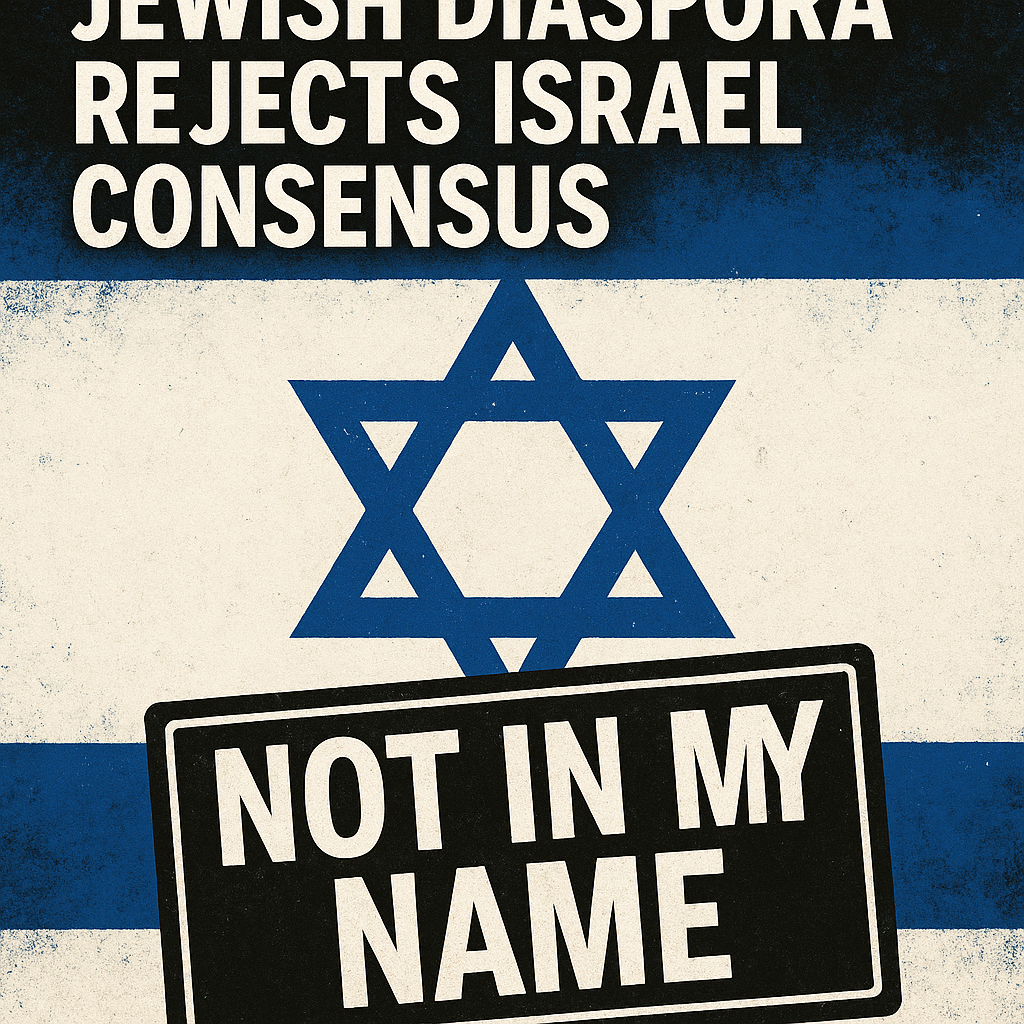
Jewish Diaspora Rejects Israel Consensus: ‘Not in My Name’

Jewish Diaspora Rejects Israel Consensus: “Not in My Name”
The phrase “Not in my name” has emerged as a powerful rallying cry among members of the Jewish diaspora who dissent from the prevailing consensus regarding Israel’s politics. This rising sentiment underscores a growing division within global Jewish communities about their relationship with the state of Israel and its policies, particularly in relation to the ongoing Israeli-Palestinian conflict.

The Context of Dissent
In recent years, public sentiment has shifted significantly among Jewish communities internationally, as many have expressed their discontent with actions taken by the Israeli government. As reported by Al Jazeera, this dissent is often fueled by concern over human rights violations and the treatment of Palestinian people. The adverse policies conceived under the banner of Israeli nationalism have led many Jews, particularly younger generations, to question the alignment between their own values and those of the Israeli state.


Many Jews involved in this movement are adamant that their criticism of Israel is not rooted in antisemitism but rather in a moral obligation to stand against injustice. This has allowed for increased dialogue about complex issues surrounding Jewish identity, anti-Semitism, and what it means to be a supporter of Israel. While traditional views may lean towards unconditional support for the state, dissenters argue that true support should involve accountability and compassion for all people affected by the conflict.


Diverse Voices Within the Diaspora
Members of the Jewish diaspora hold a range of opinions that reflect the complexities of their respective communities. Organizations like Jewish Voice for Peace and the recently formed “Not in My Name” movement are gaining traction and give voices to those who wish to publicly denounce the actions of the Israeli government.
Conversely, some Jewish leaders firmly uphold the current government policies, emphasizing the necessity of a strong Israel amid perceived threats from surrounding nations. They argue that this unity is essential for the state’s survival, especially in light of historical persecution. Critics of this viewpoint highlight that dedication to Israel should not come at the cost of human rights for Palestinians, emphasizing that safety and morality must be inseparable.
This polarization within the Jewish community is a microcosm of wider global conversations about nationalism, identity, and morality. While supporters of the Israeli government argue against external interference in its affairs, critics advocate for a more nuanced approach to solidarity with the oppressed.
Bridging the Divide
Addressing these differing opinions poses considerable challenges but also opportunities for dialogue. Open discussions that respect multiple perspectives can promote understanding, potentially easing the fractures that are emerging within Jewish communities worldwide.
Such dialogue must be accompanied by meaningful actions aimed at advocating for a just resolution to the Israeli-Palestinian conflict—one that recognizes the rights of both parties. For instance, proponents within the diaspora are advocating for initiatives that support Palestinian communities, aiming to provide humanitarian aid and promote equality.
Furthermore, as more voices emerge with the narrative of “Not in My Name,” a consensus is forming around the idea that Jewish identity can encompass a wide array of beliefs and political views while still remaining critically engaged with the state of Israel.
The Path Forward
The response from Jewish communities across the globe to Israel’s policies illustrates the complexities of identity, solidarity, and ethical responsibility. It also demonstrates the necessity for varied discourse and engagement within the Jewish diaspora.
While consensus regarding Israel may have prevailed for decades, the evolution of thought among Jews around the world signifies a substantial change in dynamics. Many are striving for an identity that can hold Israel accountable while sustaining a commitment to justice for all. The challenges are significant, but they also present an opportunity for a revised understanding of both Jewish identity and support for Israel.
In conclusion, the movement encapsulated by “Not in My Name” signifies a transformative moment within the Jewish diaspora. By embracing diversity in viewpoints and engaging in meaningful conversations, communities can navigate this complex landscape while striving for a future of peace and coexistence that honors both Jewish histories and Palestinian rights.