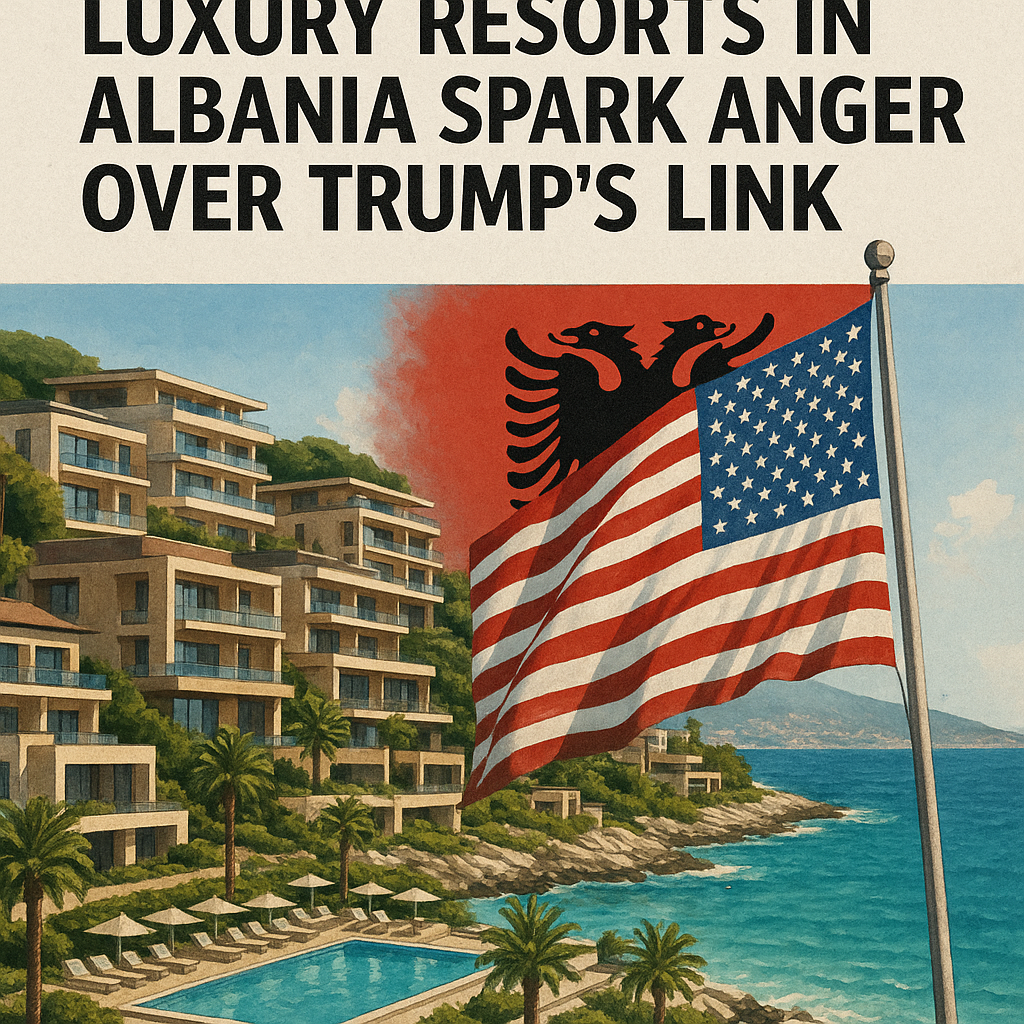
Luxury Resorts in Albania Spark Anger Over Trump’s Link

The Controversy Surrounding Luxury Resorts in Albania
The development of luxury resorts in Albania has ignited widespread anger, particularly due to a project associated with Jared Kushner, former President Donald Trump’s son-in-law. These plans have raised eyebrows and sparked protests among locals, who fear that the commercialization of their coastal heritage threatens to overshadow the region’s natural beauty and cultural significance.

Local Sentiment and Environmental Concerns
Residents of Albania, particularly in coastal cities like Tirana and Saranda, have expressed deep concerns about the proposed resorts. Many local citizens feel that these projects prioritize profit over community welfare and environmental sustainability. Protests have erupted, with demonstrators voicing their frustrations about the potential destruction of pristine beaches and the displacement of local communities. As one protestor eloquently stated, “We do not want to see our coastline turned into a playground for the wealthy, while locals are pushed aside.”


Environmentally, the projects pose significant risks. Local activists argue that the construction of large-scale resorts can lead to irreversible damage to ecosystems. Issues such as increased waste, pollution, and strain on local resources have been highlighted by environmental watchdogs. A recent report from Greenpeace pointed out that luxury developments exemplify broader global trends where economic interests often overshadow ecological concerns.


Moreover, the historical context of Albania’s tourism is rich. For decades, the country has sought to balance development with the preservation of its natural landscapes and cultural heritage. The proposed luxury resorts represent a pivot towards mass tourism that many believe could undermine the very allure that draws visitors to Albania in the first place.
Diverse Viewpoints on Development
While local sentiment largely skews negative, not all perspectives on these luxury resorts are critical. Proponents argue that such developments can stimulate the economy, create jobs, and attract foreign investment. The Albanian government, supporting these initiatives, believes that luxury tourism can pave the way for broader economic advancement. According to an official statement, “These projects will herald a new era of prosperity for our country, placing Albania on the global tourism map.”
Further, advocates highlight the potential for increased tax revenues from tourism that can be reinvested into local infrastructure and community services. They posit that carefully managed luxury resorts could bring sustainable economic benefits without significantly harming local environments. However, this viewpoint often intersects with debates about the actual implementation of such measures, raising questions about accountability and governance.
The Involvement of Jared Kushner’s Interests
The Kushner connection to the Albanian luxury resorts adds another layer of complexity to the discussion. His involvement is seen by detractors as emblematic of elite interests exploiting emerging markets for personal financial gain. Critics allege that these developments may have expedited planning processes and funding due to political connections, undermining democratic practices within Albania.
Interestingly, the U.S. investment climate has significantly shifted since Kushner left office, raising questions about long-term commitments to these projects. As other investors either distance themselves from Kushner or align with more community-focused approaches, the fate of these luxury resorts remains uncertain. Some local voices suggest that there’s a risk such associations could tarnish Albania’s international standing, potentially discouraging other investors who prioritize ethical considerations.
Conclusion: Balancing Development with Community Needs
The situation surrounding the luxury resorts in Albania showcases the nuanced interplay between economic development and community interests. As tensions flare, the dialogue must navigate the complexities of globalization, environmental stewardship, and cultural preservation.
The ultimate outcome—whether it leads to sprawling luxury resorts or fosters community-driven alternatives—will significantly influence the future of Albania’s tourism landscape and its socio-economic fabric. What is clear is that the voices of local residents must be integral to the conversation as the country grapples with these multifaceted challenges. Balancing development with authenticity and respect for the environment and local traditions will be critical in determining how Albania is represented on the world stage.