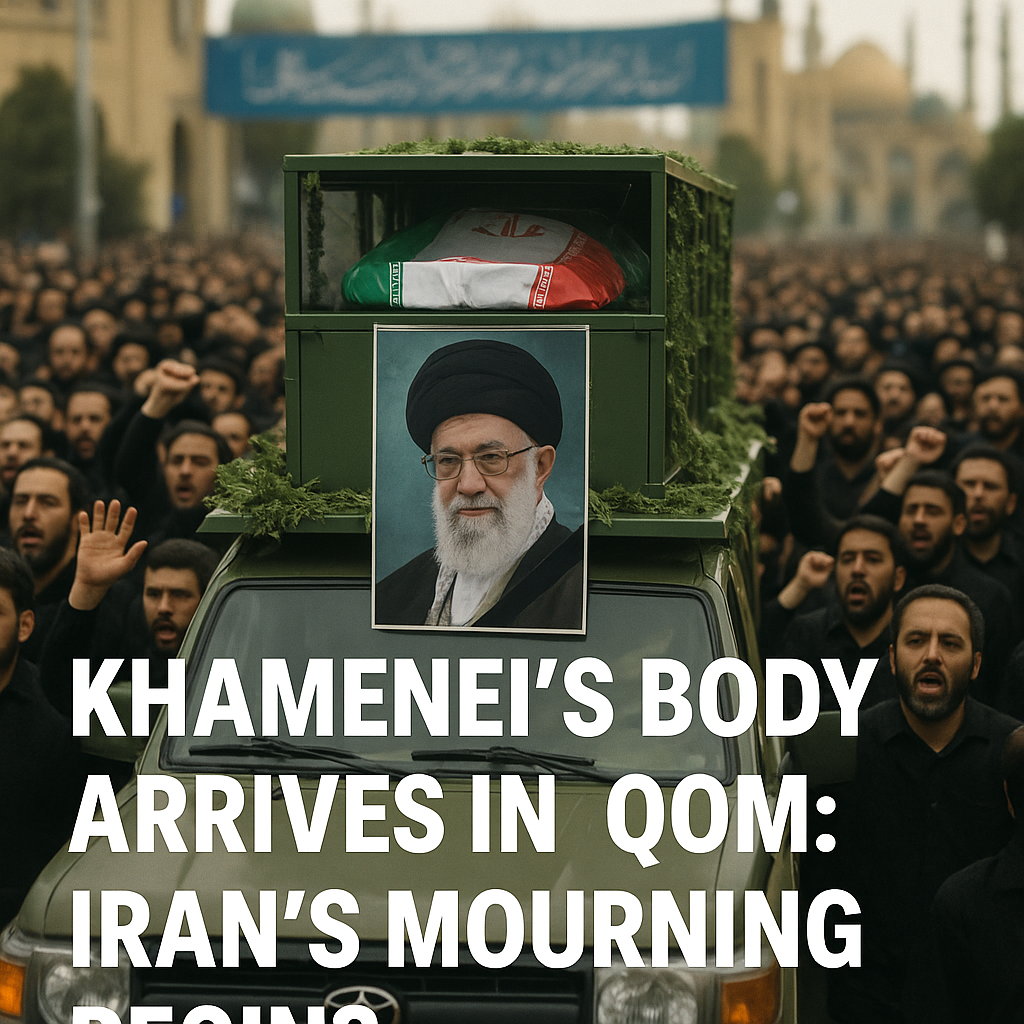
Khamenei’s Body Arrives in Qom: Iran’s Mourning Begins

Khamenei’s Body Arrives in Qom: Iran’s Mourning Begins
The recent arrival of Supreme Leader Ali Khamenei’s body in Qom has marked the beginning of a profound period of mourning in Iran. This event not only underscores the significance of Khamenei’s role in Iranian politics but also reveals the depth of emotional investment that many Iranians have in their leadership.

The Reaction Across Iran
The reaction to Khamenei’s passing has varied across different sectors of Iranian society. Many Iranians, particularly those aligned with the conservative and religious factions, have expressed profound sorrow and respect. Memorials and public gatherings are taking place across the country, reflecting a collective grief for a leader who has been central in shaping Iran’s political landscape over the past few decades.


Contrastingly, there remains a significant portion of the population that has voiced relief or indifference regarding Khamenei’s death. A segment of younger Iranians and reform-minded citizens has criticized his long-standing governance, linking it to the current economic grievances and social restrictions felt throughout the nation. This polarization highlights the complex relationship many citizens have with their leader, balancing between reverence and resentment.


According to Al Jazeera, hundreds have poured into the streets of Qom to pay their respects, conscious of the historical impact Khamenei had on Iran’s direction. However, the mood is not uniform, and some younger voices on social media have questioned the sincerity of widespread public mourning, indicating a generational divide in the perception of Khamenei’s legacy.
The Political Implications
The implications of Khamenei’s death extend far beyond mourning; they pose serious questions about the future political landscape of Iran. Khamenei’s leadership spanned over three decades, during which he solidified a unique form of governance combining religious authority with political power. His absence could create a power vacuum at the top levels of government, leading to potential instability as various factions within Iran vie for the leadership post.
RT News highlights that the future leader will likely be a pivotal factor in determining Iran’s stance on global issues, particularly nuclear negotiations, and its relationships with countries such as the United States. Analysts note that the forthcoming leadership change could either exacerbate existing tensions or potentially lead to new diplomatic avenues, depending on how the successor approaches domestic and international challenges.
Additionally, as pointed out in reports, the leadership struggle may reveal the underlying rifts within the ruling elite. Individuals from different factions may push for divergent agendas, reflecting their priorities, whether they be economic reform, maintaining the status quo, or pursuing a more aggressive foreign policy.
Time of Reckoning or Reflection?
As citizens gather to mourn and remember Khamenei, many observers worldwide are questioning whether this moment will lead to a genuine reckoning within Iranian society. Will Khamenei’s death serve as a powerful impetus for political and social change, or will it further entrench existing divisions? The upcoming weeks and months will be critical in observing how the Iranian populace responds to both their grief and the changing political landscape.
While many are paying their respects, the historical and emotional weight of this moment is juxtaposed sharply with the aspirations of those seeking reform and change. Iranians will now navigate this nuanced phase of mourning, combining their memories of Khamenei with their yearnings for the future.
As this new chapter in Iran’s history unfolds, the convergence of grief, political uncertainty, and the quest for change will undoubtedly shape the nation’s next steps. In a nation where loyalty and dissent often coexist uncomfortably, the reactions and reflections during this mourning period could offer a glimpse into the evolving identity of Iran in the years to come.