Trump’s Meme Attack on Italy’s Meloni: What’s Next?

Trump’s Meme Attack on Italy’s Meloni: What’s Next?
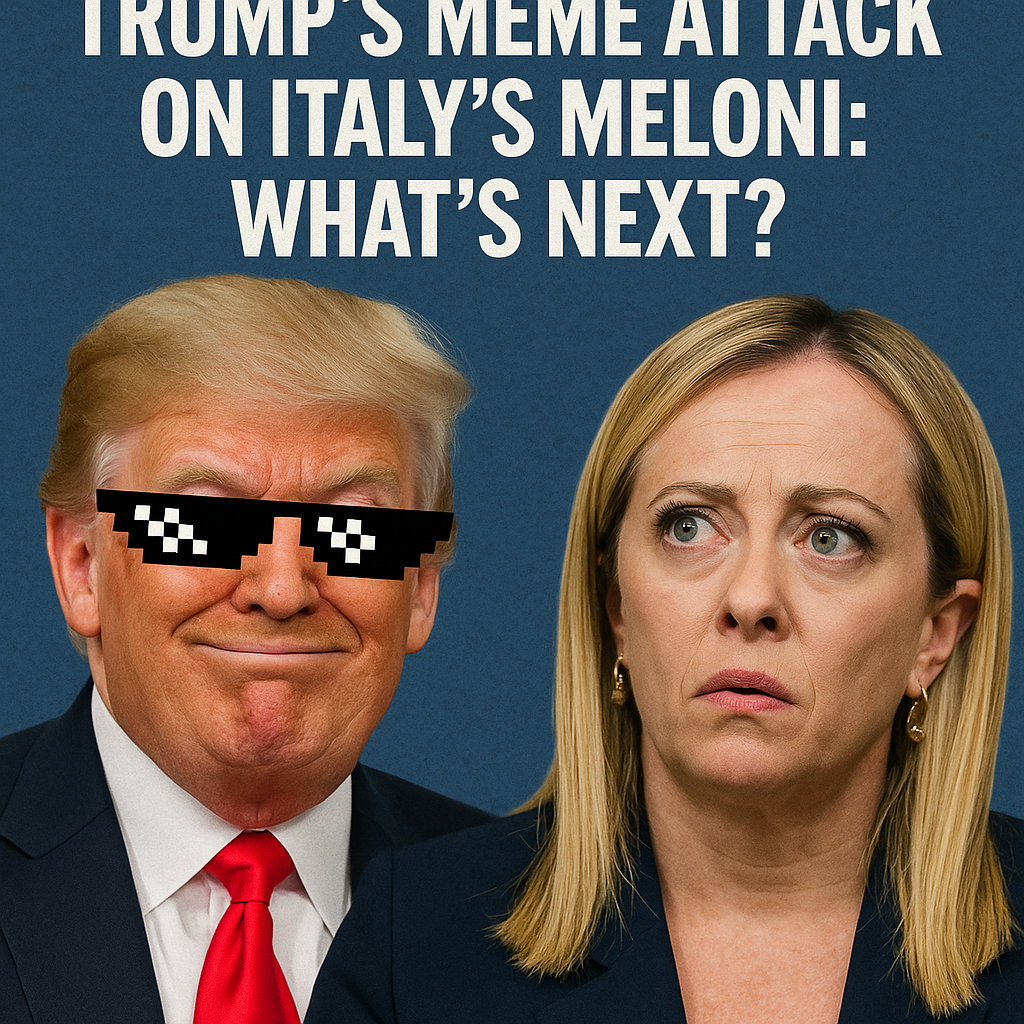
In recent months, former President Donald Trump has initiated a strategic meme-based critique targeting Italy’s Prime Minister Giorgia Meloni, raising questions about his intentions and the implications for U.S.-Italy relations. This unusual tactic, blending humor with political critique, reflects a broader trend in digital politics where memes are increasingly wielded as tools for influence and commentary.

The Context of the Meme Attack
Trump’s foray into meme warfare appears to have picked up momentum after Meloni’s government exhibited a Eurosceptic stance and emphasized traditional values, aligning closely with Trumpian ideals. His memes often caricature her as an authoritarian figure, juxtaposing her policies with mockery reminiscent of how he engages with political rivals. This approach serves not only as personal jabs but also as a way to rally his domestic base by reinforcing a narrative of defending Western conservative values against progressive politics.


According to some analysts, this tactic can be understood within the larger context of political polarization, where humor and irony act as vehicles for serious criticisms. As noted in a report from Al Jazeera, such forms of digital discourse can stimulate direct engagement from supporters while discrediting opponents in a manner that is accessible and shareable on social media platforms.


However, this digital engagement has its risks. Critics argue that Trump’s method may backfire in specific international contexts. Meloni’s government has garnered a strong nationalist following, leaving room for her to effectively counteract Trump’s memes by framing them as foreign meddling. This could serve to bolster her support among her constituents, persuading them that they are under attack from external influences, much like Trump himself often conveys in his narratives about American politics.
Evaluating the Reactions
Responses to Trump’s memes have varied widely, showcasing a spectrum of opinion both in Italy and the U.S. On one hand, Trump loyalists praise the move, seeing it as a clever play in a larger geopolitical chess game that elevates their agenda. On the other hand, there are rising concerns about the potential consequences of such antics on diplomatic relationships.
According to a report from Sky News, political experts warn that while memes may resonate with certain demographics, they often oversimplify complex issues. A notable perspective from an Italian political analyst emphasizes the historical significance of U.S.-Italy relations, suggesting that turning them into fodder for memes risks trivializing serious diplomatic engagements. The perception of external interference may exacerbate nationalist sentiments, complicating bilateral relations even further.
The Future of Trump-Meloni Dynamics
As Trump’s meme warfare unfolds, it remains to be seen how these digital skirmishes will influence real-world politics. On one hand, placing Meloni under the meme microscope could lead to either strengthening or weakening her position domestically. Should it galvanize her party’s nationalist base, it might create challenges for U.S. interests in Europe, further polarizing the political climate.
Moreover, the long-term implications of such meme-centric politics signal a transformative phase in communications that transcend traditional media. With the rise of digital engagement, political figures may increasingly rely on such tactics to shape narratives. Observers must remain vigilant as this evolution may redefine the ways political discourse is conducted on a global scale.
In conclusion, Trump’s meme attack on Meloni exemplifies a complex interplay of humor and political rhetoric in the digital age. The outcomes of such strategies have yet to fully materialize, bearing significant weight on both personal careers and international relations. As the political landscape continues to evolve, the onus will be on leaders to navigate these uncharted waters with caution and awareness of the sentiments they evoke.