
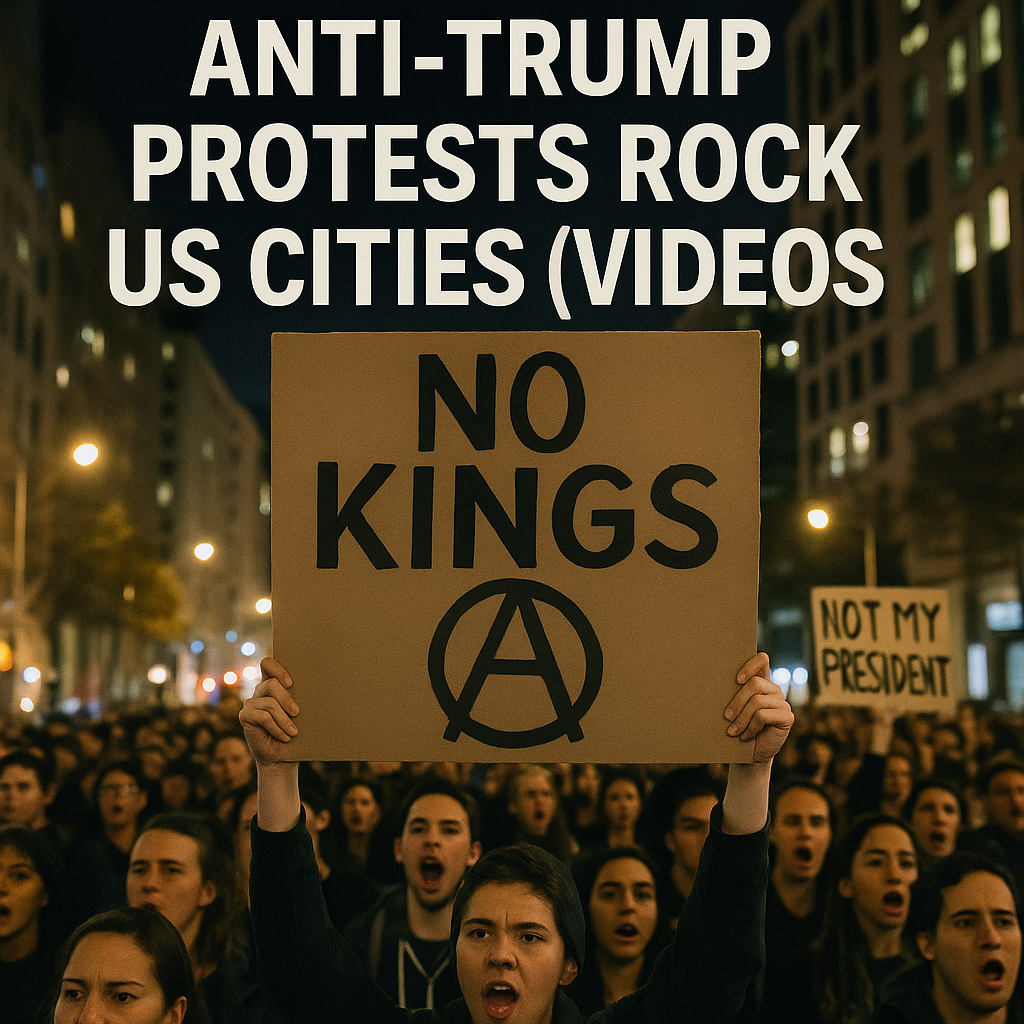
No Kings: Anti-Trump Protests Rock US Cities (VIDEOS)

No Kings: Anti-Trump Protests Rock US Cities
In recent weeks, cities across the United States have witnessed a wave of protests under the banner “No Kings,” marking a significant response to Donald Trump’s potential candidacy in the 2024 presidential elections. These demonstrations reflect a diverse array of sentiments, capturing the frustrations and hopes of various communities, as activists rally against perceived threats to democracy and individuality.

The Rise of “No Kings” Protests
The “No Kings” protests have emerged as a reaction to rising frustration with authoritarian tendencies in politics. Following Trump’s indictment and potential run for office, activists are mobilizing to signify their discontent. The effort, which gained momentum in several cities, features a broad coalition of groups, ranging from seasoned political activists to everyday citizens who feel marginalized by the current state of politics.


Diverse Voices and Perspectives
While protests are often viewed through a singular lens, the motivations behind the “No Kings” movement illustrate the complexity of public sentiment. Reports highlight various perspectives:


– Social Justice Advocates: Many participants emphasize the urgency of preserving democratic principles. According to a participant quoted in an Al Jazeera article, “We are here fighting for our future, our voices need to be heard above the noise of tyranny.” This sentiment is echoed by various social justice groups, who argue that Trump’s rhetoric undermines hard-won rights and freedoms.
– Political Disenfranchisement: Another viewpoint arises from those who express feelings of disenfranchisement. As seen in protests across key cities, individuals articulate a sense of betrayal by a political system that seems to favor the elite. A report from RT highlighted how these frustrations have galvanized people across demographics, with many feeling that a return to Trump in a leadership role could set back progress made in civil rights and equality.
Despite these focused perspectives, some media sources indicate a diverse array of motivations among protest participants. As such, it becomes essential to view these rallies not merely as anti-Trump demonstrations but as a broader commentary on the American political landscape.
The Impact of Protest on Political Discourse
The “No Kings” protests have thrust significant issues into public discourse, centering discussions around democracy, accountability, and civic engagement. As activists utilize social media to share videos and messages, the movement gains traction, inspiring similar actions in other regions. Videos circulating online show crowds chanting, waving signs, and employing provocative slogans that capture the urgency of their cause.
A Complex Political Landscape
Interestingly, while these protests predominantly focus on anti-Trump sentiment, they also incorporate critiques of the broader political system. The divide between progressive and more centrist factions within the Democratic party, as reported by Sky News, complicates the narrative of a unified opposition. Some voices from within these protests advocate not only against Trump but also against what they perceive as a failure of other political leaders to effect real change.
Further complicating the issue is the varying public perceptions of Trump’s actions and statements. While some see him as a significant threat to democracy, others defend his style of governance, viewing his blunt rhetoric as necessary disruption in a stagnant political landscape. This polarization highlights the challenges facing protesters who aim to unify disparate groups under one banner.
The Future of Protests
Looking ahead, the impact of the “No Kings” protests may resonate well beyond this election cycle. As diverse voices come together to express their discontent, the potential for a more engaged electorate could rise. However, whether this engagement translates into significant political change remains to be seen. The constitutional principles of free speech and assembly allow individuals to voice their grievances; yet their effectiveness in swaying political outcomes is often questioned.
In summary, the “No Kings” protests reflect a complex interplay of discontent, hope, and desire for change. Activists are mobilizing not merely against one individual but in pursuit of a larger vision for American democracy. As public sentiment continues to evolve, the ongoing dialogues initiated by these protests will undoubtedly shape the political landscape in the coming years—no matter who sits in the highest office.
In conclusion, the sentiments surrounding the “No Kings” protests illustrate the complexities of democracy in action. From calls for accountability to broader challenges against systemic issues, these protests capture a critical moment in American political history, inviting all voices to join in the conversation about the future of governance in the country.















