
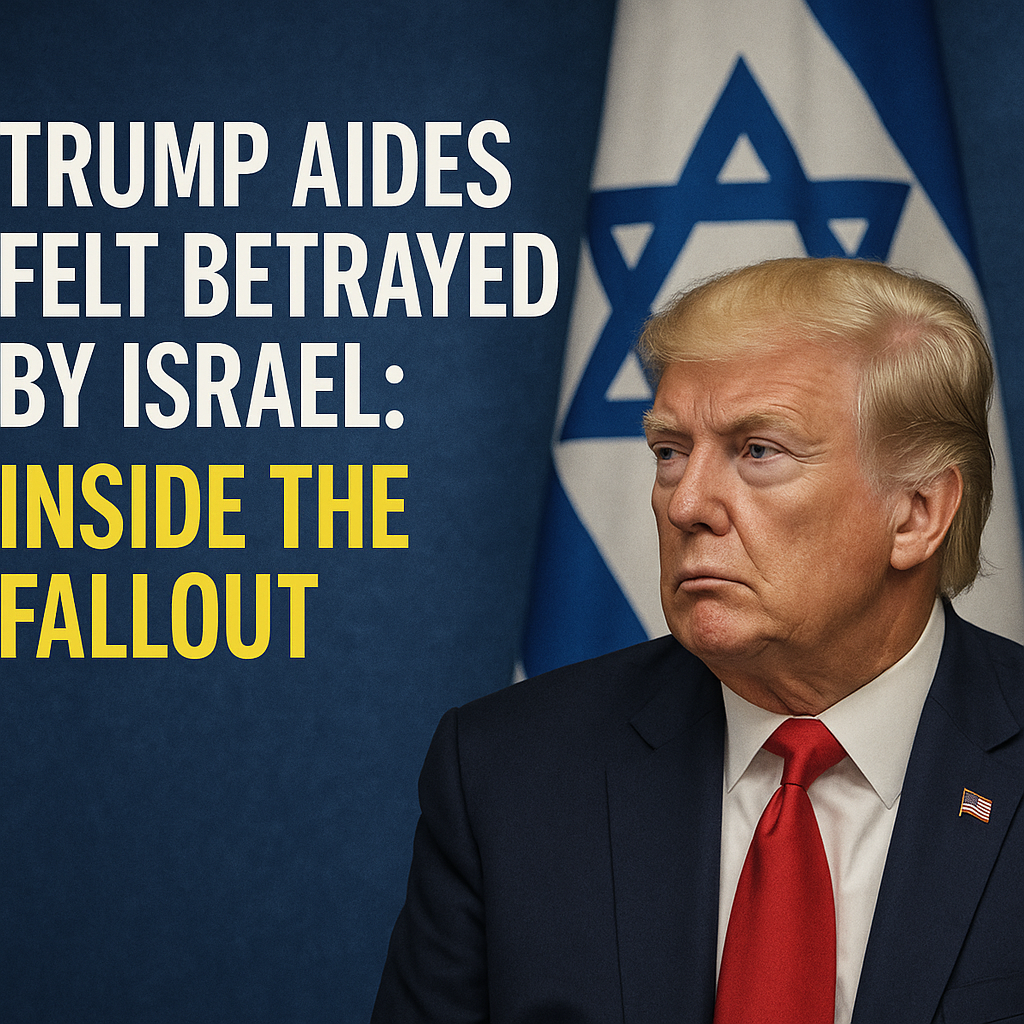
Trump Aides Felt Betrayed by Israel: Inside the Fallout

Trump Aides Felt Betrayed by Israel: Inside the Fallout
In recent months, former President Donald Trump’s aides have expressed feelings of betrayal by Israel, particularly in the wake of significant political developments. This sentiment stems primarily from Israel’s shifting political landscape and its impacts on U.S.-Israel relations. By analyzing diverse viewpoints and facts, it’s possible to gain a deeper understanding of the complexities surrounding this issue.

Background: Shifting Political Alliances
The relationship between the U.S. and Israel has long been characterized as one of the closest alliances in global politics. However, recent events have put this relationship under strain. Trump aides, who once viewed Israel as a steadfast ally, are reportedly frustrated by the Israeli government’s response to changing dynamics in the region. In early October 2023, reports emerged of aides feeling sidelined as Israel’s leadership began to distance itself from Trump-era policies.


Moreover, according to a report from RT, former aides suggested that Israel has not adequately supported the U.S. approach to the Middle East, particularly as it relates to establishing peace agreements and managing regional tensions. This perception of betrayal indicates a significant shift in how Trump’s inner circle views Israel, a country they once championed passionately.


Perspectives: A Divided Alliance
Dissent Among Trump’s Aides
Critics within Trump’s circle have articulated feelings of disillusionment regarding Israel’s current leadership stance. Many aides expected continuity and support after their groundwork for normalization agreements with various Arab nations. Instead, they perceived Israel’s recent diplomatic moves as a departure from the collaborative spirit they fostered during Trump’s presidency.
This dissent highlights broader concerns regarding loyalty and consistency. If aides genuinely feel abandoned by Israel, their frustration may stem from witnessing a perceived abandonment of shared strategic goals—especially concerning Iranian influence in the region, which remains a pressing issue for both America and Israel.
Israeli Perspectives: Navigating Domestic and International Pressures
On the other hand, Israeli officials argue that their actions are responses to domestic and regional changes, rather than betrayals. According to Al Jazeera, Israel must negotiate within a complex political landscape that includes diverse factions and an ever-changing geopolitical scenario. The Israeli administration emphasizes its right to pursue its national interests independently of U.S. influence.
Additionally, recent political elections in Israel may have influenced this perceived shift, with new leadership often reevaluating alliances and strategies. As such, the Israeli government believes it’s essential to align its actions with its current national priorities, even if that means diverging from past partnerships.
Weighing Perspectives: Finding Common Ground
While sentiments of betrayal resonate within Trump’s aides, it’s crucial to recognize that alliances in international politics are seldom static. Factors such as shifting leadership, domestic pressures, and evolving geopolitical landscapes often lead to changes in strategy that might appear as betrayals.
Points to Consider:
– Historical Context: U.S.-Israel relations have fluctuated over decades, with administrations often differing in their approaches.
– Long-term Vision: Both entities may need to align their strategies for mutual benefit in the long term, despite short-term tensions.
– Public Sentiment: The perceptions of aide dissatisfaction could play into public narratives that influence future U.S. administrations’ relationships with Israel.
Moving Forward: Understanding Complexity
As frustrations simmer within Trump’s camp, it’s clear that the relationship between the U.S. and Israel is complex and multifaceted. The feelings of betrayal expressed by Trump aides symbolize broader issues of loyalty and security in foreign policy. While personal sentiments may vary, the realities of governance and international diplomacy demand nuanced responses.
In conclusion, while the sentiment of betrayal is notable, it’s essential to approach these claims mindfully. Recognizing the intricate dynamics at play can lead to a more comprehensive understanding of U.S.-Israeli relations moving forward. As both nations navigate their respective political landscapes, a renewed dialogue may be necessary to repair trust and strengthen alliances in an increasingly volatile world.















