
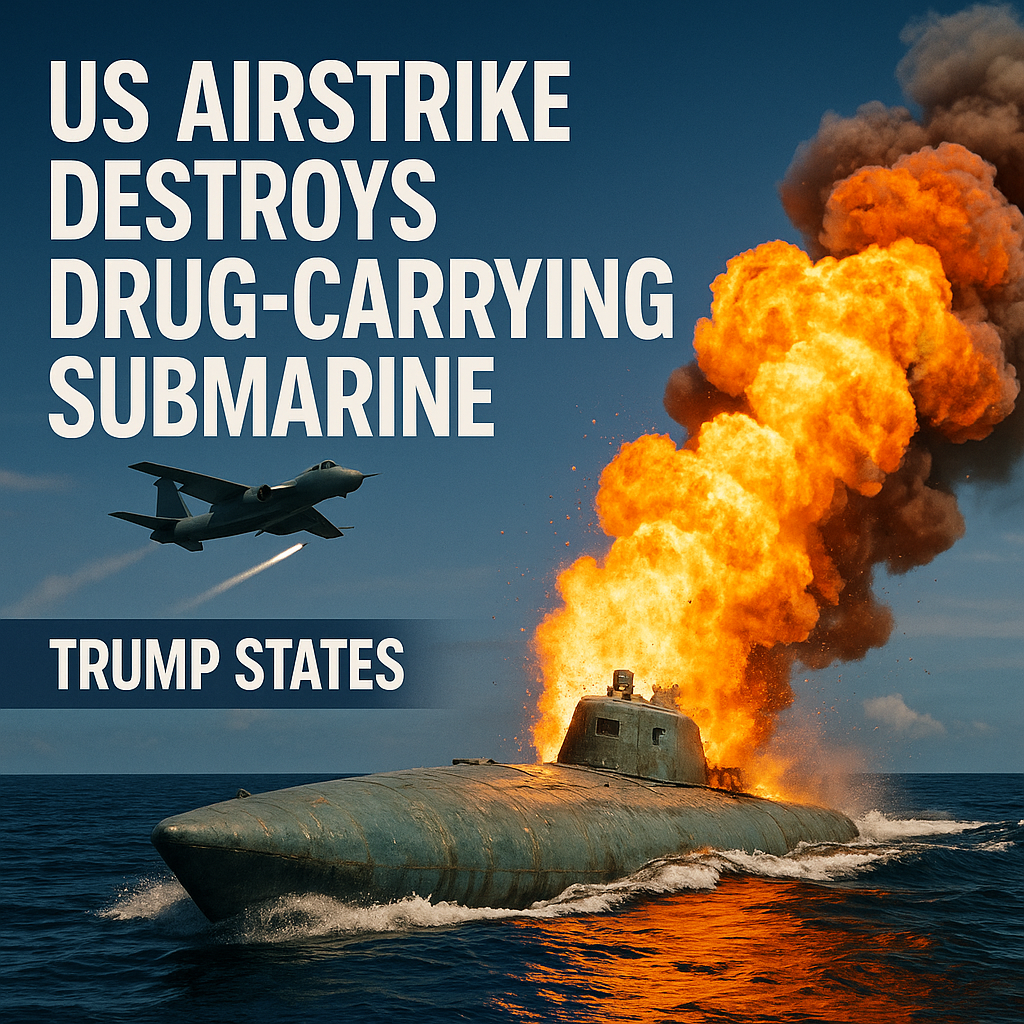
US Airstrike Destroys Drug-Carrying Submarine, Trump States

US Airstrike Destroys Drug-Carrying Submarine: Analyzing the Implications
In an unprecedented move, a U.S. airstrike recently targeted and destroyed a drug-carrying submarine, a significant point brought to light by former President Donald Trump. This incident not only raises questions surrounding the effectiveness of U.S. counter-narcotics efforts but also reflects broader geopolitical dynamics and operational tactics.

Unpacking the Incident: What Happened?
According to reports, the U.S. Navy carried out an airstrike that successfully disabled a semi-submersible vessel transporting illegal drugs. Trump hailed this operation as a vital success in the war against drug trafficking, asserting that such actions are crucial for national security. The submarine was reportedly intercepted in the Eastern Pacific, a common nexus for drug trafficking between Latin America and the United States.


The operation also involved the repatriation of surviving crew members to their home country. This raises ethical questions about the treatment of individuals involved in drug trafficking and the broader implications of their repatriation. Engaging with local governments and ensuring proper legal frameworks are followed can be a complex process, particularly where drug trafficking is a significant social issue.


Diverse Perspectives on Drug Enforcement Strategies
The Case for Aggression: A Security Perspective
Proponents of aggressive counter-narcotics strategies argue that significant actions like airstrikes are essential. They believe that disrupting drug trade routes directly impacts crime rates and public health crises associated with substance abuse. Data indicating a rising opioid crisis in the U.S. highlights the urgent need for decisive action. Law enforcement agencies and public health advocates may support such military interventions as a means to drive down the availability of illicit drugs.
Moreover, supporters argue that military resources trained for various defensive roles can be reallocated for more proactive measures in combating drug trafficking. “When traditional law enforcement is not enough, military capabilities can provide the edge we need in the fight against drugs,” a former military official stated.
The Risks of Militarization: A Humanitarian Perspective
On the other hand, critics warn against the militarization of drug enforcement. They emphasize that while airstrikes might yield immediate results, they risk causing civilian harm and may not effectively address the root causes of drug trafficking. Focusing solely on supply-side measures—like targeting submarines—may neglect the demand side, where comprehensive policies addressing drug addiction and socio-economic conditions are required.
Furthermore, some experts caution that airstrikes could foster resentment in affected regions, potentially destabilizing communities and leading to further conflict. Their contention holds that diplomatic outreach and partnership with local governments might yield longer-lasting benefits than military action alone.
A Gray Area: National Security vs. Human Rights
The complexity of this situation is aptly captured in the discussions surrounding national security versus human rights considerations. While Trump’s announcement promotes the narratives of safety and security, it also ignores the multifaceted nature of drug trafficking. Effective drug policy needs to encompass not only military intervention but also community development, education, and harm reduction programs.
Reports in outlets like Al Jazeera highlight calls for more holistic approaches, citing that without addressing social inequities and drug addiction treatment, military strategies could exacerbate the situation rather than alleviate it. The implications of the airstrike reflect broader challenges in U.S. policy, where a lack of consensus exists on how best to tackle the endemic drug problems.
The Road Ahead: What Comes Next?
Moving forward, this incident calls for a reassessment of U.S. foreign policy concerning drug trafficking. While military action may offer immediate, headline-grabbing victories, the sustainable long-term strategy requires collaboration with international partners. Law enforcement efforts, public health initiatives, and education must intertwine more closely with any military ventures.
Balancing aggressive counter-narcotics operations with humane, effective drug policy reflects a nuanced approach to a complicated issue—a recommendation echoed by various analysts across political spectrums. The focus must be on innovative solutions that address both the symptoms of drug trafficking and its underlying causes.
Conclusion: A Delicate Balance
The airstrike on the drug-carrying submarine represents a critical moment in the ongoing struggle against drug trafficking and brings forth a multitude of perspectives. As the U.S. continues its fight against the drug trade, it will need to consider the complex interplay of military action, diplomacy, and social policy to pave the way forward.
In this landscape of competing narratives, embracing a multi-faceted strategy—grounded in both immediate action and long-term vision—may prove to be the best path for all stakeholders involved. Approaching the intricate nature of drug trafficking through diverse, cooperative means will challenge traditional approaches but may offer more promising results in the long run.















