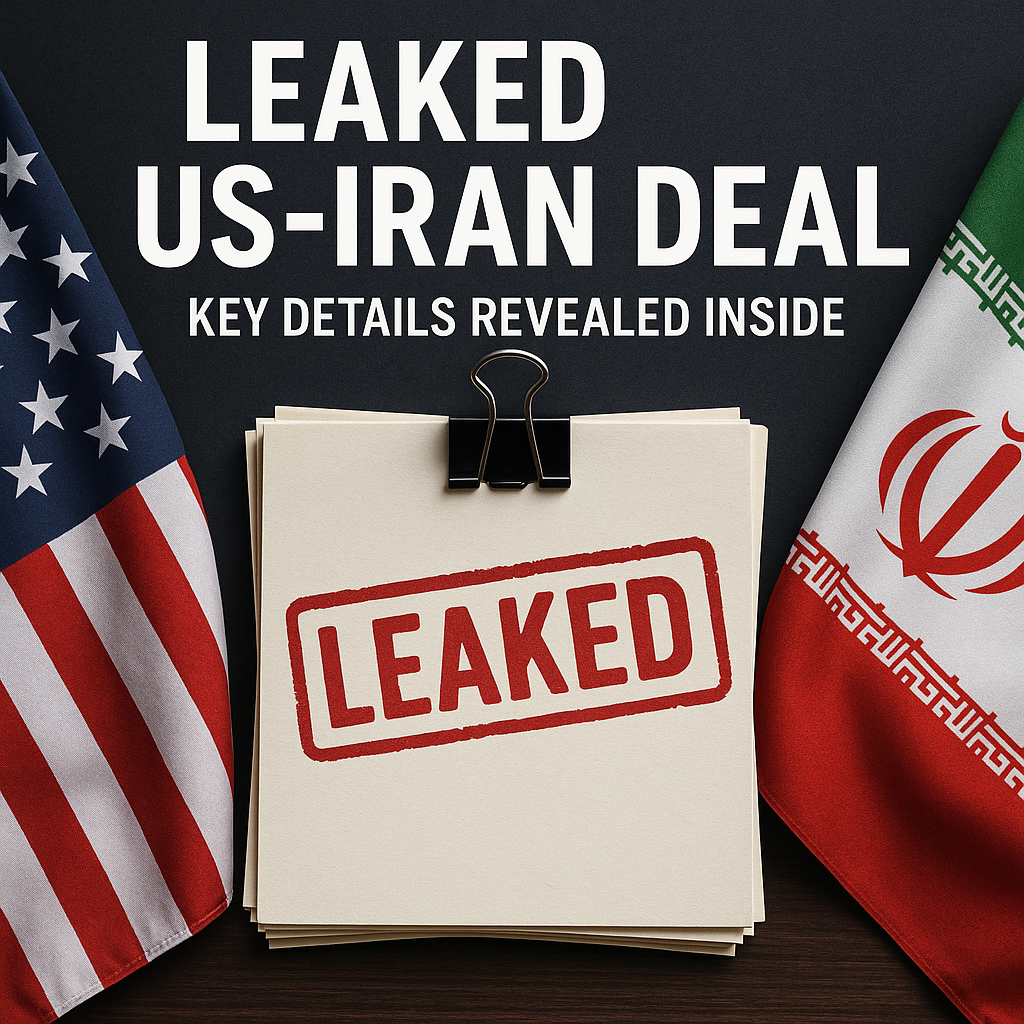
Leaked US-Iran Deal: Key Details Revealed Inside

Leaked US-Iran Deal: Key Details Revealed Inside
The recent leak concerning a proposed deal between the United States and Iran has raised eyebrows and ignited discussions across various platforms. In an era where transparency is increasingly scrutinized, this unfolding story shines a light on the complexities of international diplomacy and the underlying motivations of both nations.

The Key Elements of the Leaked Deal
According to reports from multiple sources, the leaked documents suggest a potentially significant shift in US-Iran relations. The proposal reportedly includes several key components aimed at easing decades-long tensions. The deal centers around nuclear negotiations, sanctions relief for Iran, and an agreement on regional security cooperation.


1. Nuclear Program Limits: The United States is purportedly willing to ease some restrictions on Iran’s nuclear program in exchange for more strict verification measures. This aligns with both nations’ interests in stabilizing the region, albeit from different viewpoints—while Iran seeks to lift sanctions and return to its pre-2018 nuclear strategy, the US aims to ensure that Iran’s nuclear ambitions are constrained.


2. Sanctions Relief: The documents indicate that the US may consider lifting certain economic sanctions that have crippled the Iranian economy since 2018. This component, however, remains contentious, with varied opinions on whether such moves would genuinely alter Iran’s behavior or merely empower its existing regime.
3. Regional Security Cooperation: The deal could also entail a framework for cooperation on issues affecting regional stability, notably concerning militant groups that both nations regard as threats to their security. This aspect, if confirmed, may pave the way for future dialogues but raises questions about trust and commitment from both sides.
Diverging Viewpoints on the Implications of the Deal
As reactions flood in, a schism appears between those who see the deal as a diplomatic breakthrough and those who caution against potential pitfalls.
From a progressive viewpoint, some analysts argue that this potential agreement represents a step toward de-escalation. For instance, proponents highlight the importance of dialogue over confrontation, with one political analyst stating, “Engaging in discussions is crucial for peace and can lead to an environment where both parties agree to universal terms on nuclear arsenals and regional security.”
Conversely, critics of the deal argue that any form of sanctions relief could embolden Iran’s activities, particularly concerning regional influence. A prominent representative from a think tank voiced concerns about the unintended consequences of lifting sanctions: “History has shown that appeasing adversarial nations can lead to further aggression. We must tread carefully.”
The Uncertain Path Forward
Despite the various opinions circulating, the future of this deal remains unclear. The leaked documents have not yet been officially confirmed by either Washington or Tehran, and both sides are likely evaluating domestic and international repercussions of proceeding with such an agreement.
Moreover, the political climate in both nations adds another layer of complexity. In the US, the impending elections may affect the Biden administration’s approach, as political opponents may seize the opportunity to criticize any perceived “softness” on Iran. Meanwhile, in Iran, different factions have their own agendas, which could lead to internal opposition to any compromises reached with the US.
Conclusion
The leaked deal between the US and Iran is a narrative tiptoeing through a minefield of geopolitical sensibilities. With critical components such as nuclear limits, sanctions relief, and regional cooperation on the table, the implications hold significant weight for both nations and the broader Middle East. As the analysis continues, stakeholders on all sides will be keenly watching how this situation unfolds—navigating the delicate balance between diplomacy and national interests. The skepticism and hope surrounding this unofficial dialogue encapsulate the complexities of international relations, where one move could alter the trajectory of stability in a fractured region.