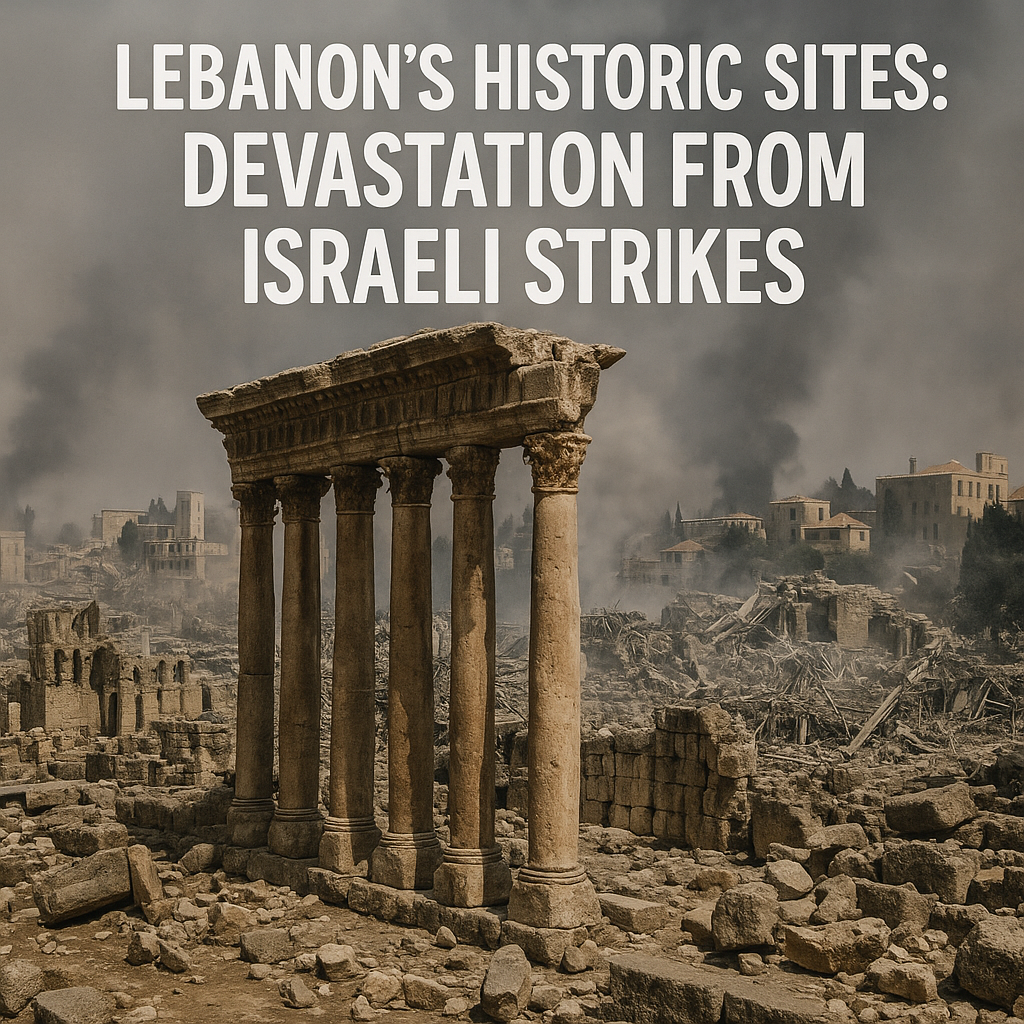
Lebanon’s Historic Sites: Devastation from Israeli Strikes

Lebanon’s Historic Sites: Devastation from Israeli Strikes
Lebanon’s historic sites have suffered extensive damage as a consequence of recent Israeli military strikes, reigniting discussions about the cultural and historical implications of ongoing regional conflicts. The destruction not only affects the physical remnants of Lebanon’s rich history but also symbolizes the broader human and cultural cost of warfare.

Historical Context and Recent Developments
Lebanon is home to a wealth of historical sites that date back thousands of years, including remnants of Phoenician, Roman, and Ottoman civilizations. The UNESCO World Heritage sites, such as Baalbek and Tyre, are emblematic of Lebanon’s diverse cultural tapestry. However, the continued violence in the region has placed these irreplaceable treasures at significant risk.


Recent Israeli strikes, particularly in areas with historical significance, have been reportedly justified by Israel as necessary actions against military targets allegedly linked to Hezbollah. However, multiple sources indicate that the collateral damage has disproportionately affected civilian infrastructure and historical sites. Al Jazeera highlighted how “several iconic structures have been leveled,” calling into question the military rationale behind such extensive destruction.


Competing Narratives and International Reactions
The narrative surrounding the devastation of Lebanon’s historic sites varies considerably depending on the source. While Israeli officials assert that their strikes are aimed at limiting terrorist activities, critics argue that the impact on historical and cultural landmarks raises ethical concerns about military conduct. RT emphasized the “catastrophic consequence” of targeting areas steeped in history, stating that the loss could not only diminish Lebanon’s cultural heritage but potentially erase significant historical narratives.
International organizations have also voiced their concerns. The United Nations Educational, Scientific and Cultural Organization (UNESCO) has urged restraint, appealing for the protection of cultural heritage sites during conflicts. In contrast, some geopolitical analysts suggest that the broader implications of such strikes could galvanize international attention, but with uncertain outcomes. The contrast in viewpoints underscores the complexity of this situation, showcasing how military objectives often conflict with cultural preservation.
The Human Cost of Cultural Destruction
The devastation of these sites speaks volumes not just of loss of history but also about the human cost intertwined with such destruction. Communities often rally around their cultural heritage, which serves as a sense of identity and continuity amidst turmoil. The destruction, therefore, resonates deeply on a communal level, provoking anger and despair. Community leader Youssef Saleh remarked in an interview that “each destroyed site is like losing a part of ourselves.”
Adding to this loss, the economic impact of damage to tourist sites cannot be overstated. Lebanon has historically depended on tourism, and with many cultural attractions rendered inaccessible or destroyed, locals face both immediate and long-term repercussions. This economic downturn exacerbates an already challenging living situation, leading to a spiraling cycle of decline.
Towards a Balanced Discourse
In the face of destruction, it is essential to approach the discussion about Lebanon’s historic sites with sensitivity and balanced consideration. While military necessity is often cited as justification for such actions, the overarching narrative of cultural loss must equally weigh into public discourse. There is a pressing need for civil society and international actors to advocate for the protection of cultural heritage in conflict zones, emphasizing that such sites transcend political and military objectives.
The bombardment of historic sites in Lebanon symbolizes a larger narrative where culture, identity, and history are often caught in the crossfire of geopolitical strife. As efforts continue to advocate for peace and preservation, understanding the ramifications of these actions on both human and cultural fronts becomes imperative. The hope is that in highlighting these complexities, a path may be forged toward not only political resolution but also cultural reconciliation.
In summary, Lebanon’s historic sites are crucial both to the nation’s identity and to universal history. As military actions persist, so do debates surrounding the cultural ramifications of such conflicts. Engaging with these narratives in a nuanced and compassionate manner may facilitate a deeper understanding of the ongoing tragedy affecting Lebanon’s landscapes and people.