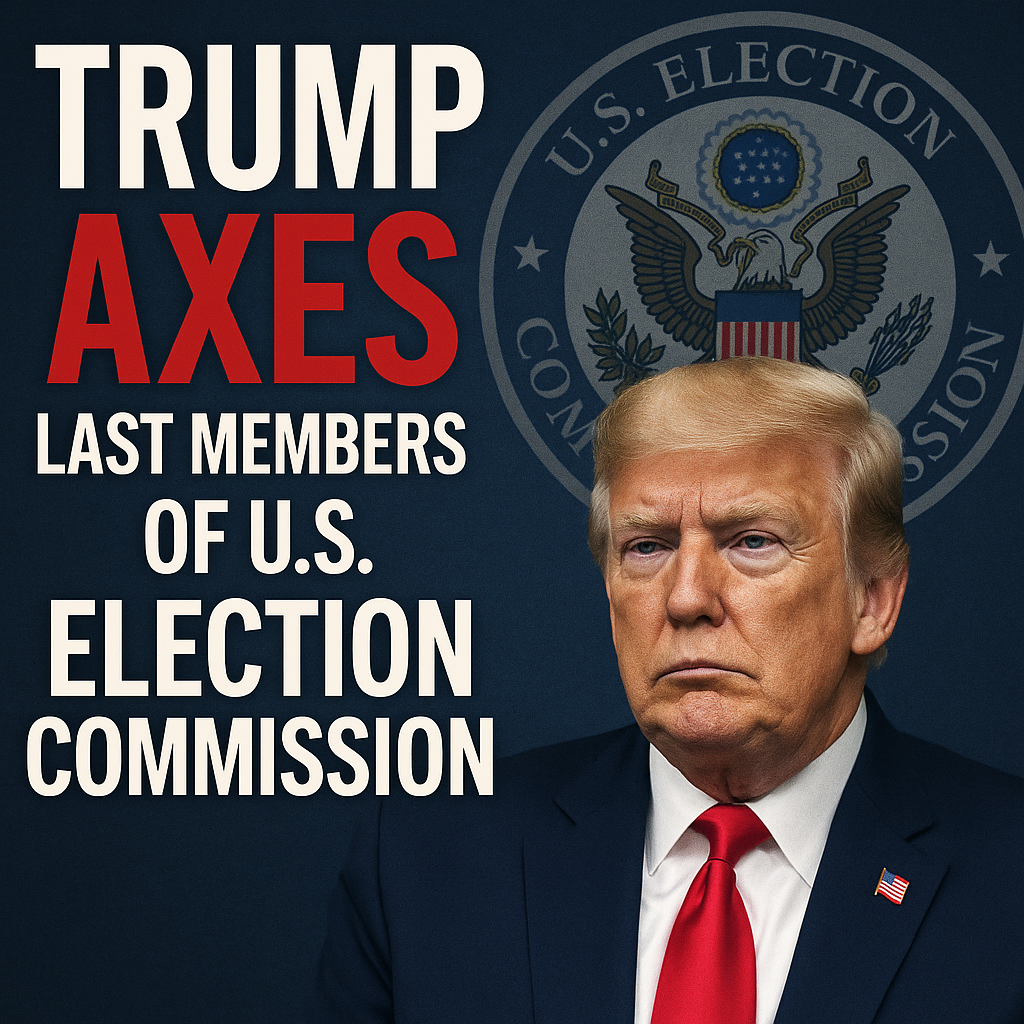
Trump Axes Last Members of US Election Commission

Trump Axes Last Members of US Election Commission: Implications and Reactions
In a surprising move, former President Donald Trump has removed the last members of the U.S. Election Commission, a body tasked with overseeing federal election laws and ensuring fair elections. This decision has ignited a flurry of responses, reflecting the heightened tensions surrounding electoral integrity in America.

The Background of the Election Commission
The U.S. Election Commission (EAC) was established to promote fair and impartial operations of elections across the country. Comprised of bipartisan representatives, its role includes overseeing the administration of federal elections, ensuring compliance with election laws, and addressing issues such as voter registration and campaign finance. Trump’s decision to dismiss the remaining commissioners has significant implications for an already contentious electoral landscape.


Historically, the EAC has faced criticism from both sides of the political aisle. Democrats often argue that the commission lacks the necessary enforcement power to combat voter suppression, while Republicans have claimed it is biased against their interests. With the recent reorganization, Trump aims to reshape the commission’s makeup, potentially tilting the scales in favor of his party.


Diverging Perspectives
Many observers have weighed in on the potential ramifications of Trump’s actions. Supporters argue that reconstituting the commission can reinvigorate a body they believe has lost its effectiveness and clarity. “It’s time to bring in new leadership that prioritizes the integrity of our elections,” said a prominent Republican strategist cited in an Al Jazeera report. They see this step as a means to restore faith in the electoral process and stave off perceived biases against conservative candidates.
Conversely, critics contend that this move could undermine trust in the U.S. electoral system even further. Democrats and various watchdog organizations argue that dismantling the commission’s structure will lead to more partisan maneuvering and less oversight of potential electoral fraud. A spokesperson for a leading electoral integrity group voiced concerns, stating, “This is a blatant attempt to weaken an independent body that was created to provide checks and balances in our electoral process.”
Implications for Future Elections
As the 2024 presidential elections draw near, the repercussions of Trump’s reshuffling of the Election Commission will likely reverberate through the political landscape. With different factions suggesting varied solutions for electoral challenges, the absence of an independent commission could exacerbate divisions between parties and their supporters.
Experts note that maintaining the integrity of the electoral process could become increasingly difficult without a functioning body to oversee elections. Former attorneys general from both parties have emphasized the importance of a fully operational commission to ensure that elections are free from manipulation. They argue that in an era where misinformation and allegations of fraud are rampant, the need for an impartial overseer is more pressing than ever.
A Complex Reality
While it remains uncertain what exact form the restructured Election Commission will take, one thing is clear: the decision to remove its last members is emblematic of a larger trend in American politics where questions of electoral integrity continue to fuel partisan conflict. As various sources highlight, the effectiveness of any upcoming reconfiguration will depend greatly on whether Trump appoints members willing to adhere to impartial standards or if the commission will become another tool for partisan ends.
In summary, Trump’s move to sever ties with the remaining members of the U.S. Election Commission stands at the intersection of electoral integrity and political strategy. As stakeholders weigh in and anticipate the implications for the upcoming elections, the clarity of America’s electoral process hangs in a delicate balance.
This situation underscores the necessity for ongoing dialogue and civic engagement, regardless of one’s political affiliation. Whether this reshuffling leads to a renewed sense of faith in elections or further suspicion and unrest remains to be seen, but the stakes could not be higher in a drastically polarized political climate.