
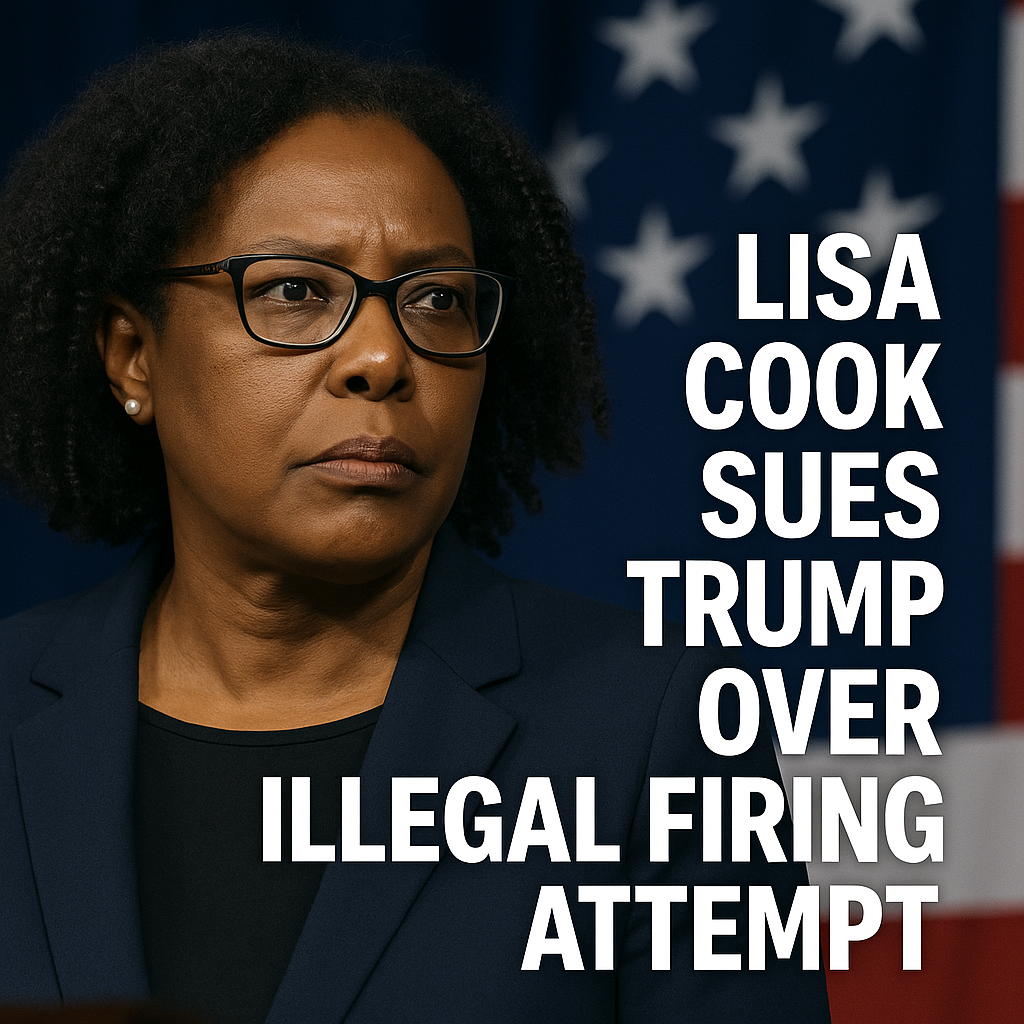
Lisa Cook Sues Trump Over Illegal Firing Attempt

Lisa Cook Sues Trump Over Illegal Firing Attempt
In a significant legal move, Federal Reserve Governor Lisa Cook has filed a lawsuit against former President Donald Trump, asserting that his attempt to fire her was both illegal and retaliatory. This case unfolds against a backdrop of political tension, reflecting complex intersections of governance, accountability, and the independence of monetary policy institutions.

The Context of the Lawsuit
Lisa Cook was appointed to the Federal Reserve’s Board of Governors in May 2021, becoming the first Black woman to hold such a position. Her appointment signified a broader effort to diversify the central bank’s leadership, ensuring that different perspectives inform monetary policy. However, Cook’s tenure has not been without challenges, especially considering the polarized political climate surrounding economic decision-making.


The lawsuit accuses Trump of attempting to unlawfully eliminate her from her position as a form of retribution against her critiques of his economic policies. Cook argues that such actions threaten the independence essential for the Federal Reserve’s operations, a perspective supported by numerous analysts and advocates for institutional integrity. As highlighted in an article by Al Jazeera, “The independence of the Federal Reserve is crucial for maintaining public trust in monetary policy.”


Diverging Perspectives on the Case
The unfolding legal battle has captured attention from various platforms, each emphasizing different aspects of the situation. Some sources advocate for Cook, illustrating her role as a critical voice within an institution often criticized for lacking diversity. They argue that Trump’s alleged actions represent a broader trend of undermining independent institutions when their decisions conflict with political agendas.
Conversely, other viewpoints express skepticism about the timing and implications of her lawsuit. Critics argue that Cook’s claims may be politically motivated, especially given the charged atmosphere surrounding the upcoming elections. A piece from RT emphasizes the potential ramifications for governance, positing that if Cook’s lawsuit were to succeed, it could set a precedent that complicates future executive accountability in federal appointments and dismissals.
Legal and Political Implications
Cook’s lawsuit raises pivotal questions about the scope of presidential power and the potential for political interference in economic governance. The President’s authority to appoint and dismiss members of the Federal Reserve is not absolute; it is historically bounded by norms aimed at preserving the institution’s autonomy. The Federal Reserve has traditionally functioned best when insulated from partisan politics, a principle that many lawmakers and economists tout as vital for stabilizing economic policy.
This legal confrontation invites a comparison with past instances where political figures sought to influence central bank actions—be it through public pressure or attempts to alter leadership. Regularly questioned in economic discourse, these occurrences often ignite debate about the proper role of political influence in independent institutions. As noted, “A balanced approach is critical to ensure that monetary policy remains focused on economic stability,” further underlining the delicate balance in governance that the lawsuit brings into focus.
The Broader Outlook
As the case unfolds, it could shed light on the protections available to public officials working within politically charged environments. Should Cook’s claims be upheld, it could encourage greater protections for government officials at various levels, establishing a precedent against illegitimate dismissals. Ultimately, this lawsuit might influence public opinion on the balance of power between elected officials and independent regulatory bodies.
However, uncertainties remain about its ultimate outcomes. Court decisions will be scrutinized with interest, and, despite contrasting opinions, the societal implications of this legal battle are profound. Citizens may find themselves in a difficult position, torn between the desire for governmental accountability and the need for the autonomy of institutions critical to economic stability.
Conclusion
Lisa Cook’s lawsuit against former President Trump introduces a compelling narrative about governance, institutional autonomy, and the dynamics of accountability. As the legal proceedings unfold, they will not only influence Cook’s career but could also shape public discourse on the role of independent institutions in an increasingly divided political landscape. The ramifications of such cases are far-reaching, signaling a potential shift in how government officials navigate the complexities of their roles amid partisan pressures. Time will reveal the full impact of this escalating dispute, but for now, Cook’s case is a crucial flashpoint in the ongoing dialogue surrounding governance and independence in the era of political turbulence.















