
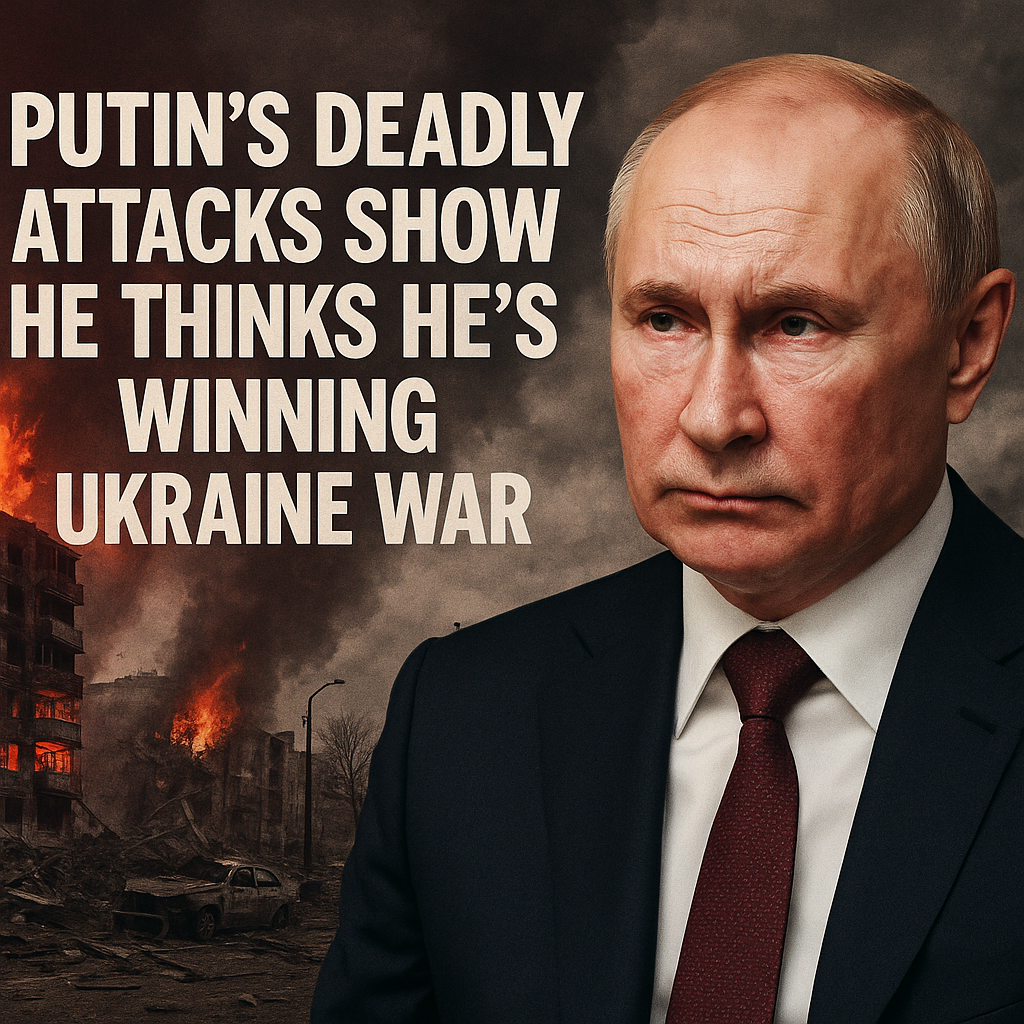
Putin’s Deadly Attacks Show He Thinks He’s Winning Ukraine War

Putin’s Strategy in Ukraine: A New Phase of the Conflict?
Vladimir Putin’s recent military actions in Ukraine suggest a chilling shift in strategy, as the Russian leader appears to believe he is gaining the upper hand in this protracted conflict. From targeting infrastructure to intensifying bombardments, the tactics employed by the Kremlin could indicate a more relentless approach aimed at ultimately wearing down Ukrainian resistance. This article delves into the complexities of the situation, examining various perspectives on Putin’s ambitions and the broader implications for both Ukraine and the international community.

The Offensive Strategy: A Show of Strength
Recent reports suggest that Putin may be escalating military operations not only to secure territorial gains but also to bolster his image domestically. According to analysis from Sky News, there is a perception that the Russian president is “playing for time” while simultaneously intensifying attacks to break Ukraine’s resolve. The bombardment of civilian infrastructure is seen not merely as a tactic of war, but also as a method to undermine the morale of both Ukrainian citizens and their leadership.


Al Jazeera reports on the multifactorial reasons behind this escalation, identifying that Putin may believe a prolonged campaign could wear down not just Ukraine but also its Western allies. The logic here is grim yet strategic: by increasing operational tempo and demonstrating an ability to sustain pressure, Russia may be attempting to convey the message that a Ukrainian victory is an impossible dream. This has led to concerns among analysts about a potential escalation into a more brutal phase of the war, exacerbating humanitarian crises and further entrenching hostilities.


Domestic Imperatives and International Ramifications
While the battlefield is critical, Putin’s domestic political environment cannot be overlooked. Several analysts propose that by ramping up military initiatives, he is seeking to unify public sentiment behind the war by portraying it as a struggle for national survival. According to RT, the Kremlin’s narrative has leveraged historical grievances and nationalistic sentiments, framing the conflict as a fight against an allegedly aggressive West. This rhetoric may resonate with a portion of the Russian populace, possibly bolstering support for his administration amid rising dissent due to sanctions and economic instability.
However, the international repercussions are equally significant. The ongoing violence and civilian toll may galvanize further Western support for Ukraine, reinforcing the resolve to increase sanctions and provide military aid. Both Sky News and Al Jazeera highlight that prolonged attacks could lead to a heightened response from NATO nations, prompting discussions about the scale and scope of military assistance—an aspect that could complicate Putin’s calculations.
Weighing Perspectives: The Path Forward
The situation in Ukraine is fluid and complex, and as such, clarity in predicting future developments remains elusive. While some analysts suggest that Putin’s aggressive tactics signal confidence, others warn that they could backfire. Reports point to potential fissures within the Russian military establishment and among political elites who may question the long-term viability of indefinite conflict.
Moreover, the psychological aspect of warfare cannot be overlooked. Historically, conflicts often see an ebb and flow of fortunes, and outcomes can change rapidly. As observed in analyses published by various sources, a protracted campaign that depersonalizes the target—by depicting enemies as mere statistics—could invite unexpected results. Heightened casualties, disillusionment, and geopolitical miscalculations may lead to intensified focus on conflict resolution rather than escalation.
Conclusion: An Uncertain Future
Putin’s current military strategy in Ukraine reflects a multifaceted approach that combines elements of aggression, domestic political maneuvering, and long-term aspirations of territorial consolidation. However, as domestic and international pressures continue to mount, the repercussions of his actions may lead to unexpected developments. The overarching sentiment among experts illustrates a crucial divide: while some view the situation as evidence of Russian resilience, others highlight the potential for ruinous consequences stemming from unchecked hostilities.
In a conflict where narratives are weaponized just as fiercely as conventional arms, the only certainty seems to be uncertainty. Stakeholders both within and outside the region must tread cautiously as they navigate the intricacies of modern warfare—balancing immediate security concerns with the need for a comprehensive and sustainable peace.
Ultimately, scrutinizing Putin’s strategy necessitates a nuanced understanding of the conflict’s evolving landscape, underlining the importance of diplomatic dialogue alongside military assessments for a peaceful resolution.















