
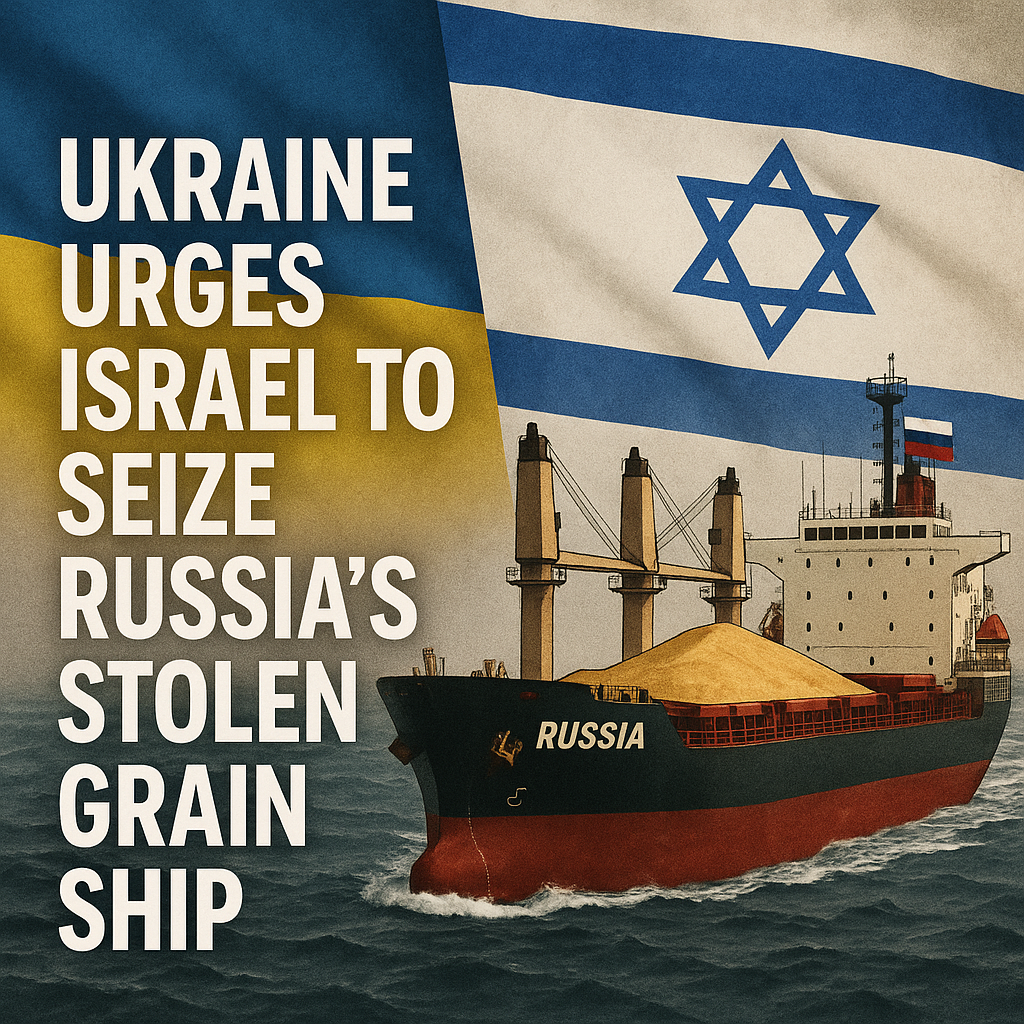
Ukraine Urges Israel to Seize Russia’s Stolen Grain Ship

Ukraine Urges Israel to Seize Russia’s Stolen Grain Ship
In a significant escalation in the ongoing conflict surrounding grain exports, Ukraine has officially called on Israel to seize a grain ship allegedly carrying stolen goods from Russia. This request highlights the complicated geopolitical dynamics in a time of heightened tension and food insecurity exacerbated by the war in Ukraine.

Context of the Grain Controversy
The issue of stolen grain has been a contentious topic since the onset of the war in Ukraine, particularly after Russia’s annexation of Crimea and its ongoing military activities in Eastern Ukraine. Reports indicate that Russia has been commandeering grain from territories it has occupied, leading to international condemnation and a series of legal and diplomatic challenges.


Recent discussions suggest that Ukraine’s appeal to Israel is not merely about one ship, but part of a broader strategy to hold Russia accountable for its actions. According to sources from Al Jazeera, the grain in question is believed to have originated from Ukrainian territories and is thus emblematic of Russia’s broader approach to asserting its control over resources in the region.


Varied Responses from the International Community
Responses to Ukraine’s call have varied widely. On one hand, numerous nations, particularly in Europe and North America, have exhibited strong support for Ukraine, championing measures against Russian aggression. For instance, the European Union has imposed sanctions aimed at curtailing Russian exports, including agricultural products, to hold Russia responsible for its actions in Ukraine.
Conversely, perspectives from Russia and sympathetic nations diverge significantly. Russian officials have dismissed Ukraine’s claims as unfounded, presenting the situation as a mere political maneuver intended to divert attention from Ukraine’s own internal issues and financial instability. As reported by RT, Russian spokespeople assert that the ship involved in the current controversy is acting within the confines of international maritime law and echo claims of the legality of its actions.
Israel’s Delicate Position
Israel’s role in this unfolding narrative is particularly complex due to its historically cautious stance in international conflicts, especially those involving Russia and Ukraine. While Israel has maintained a neutral position, increasingly complex dynamics are pushing it to navigate relationships with Western allies while balancing ties with Moscow.
Reports indicate that Israel is hesitant to intervene directly in the conflict. The sensitivity of Israel’s operations in Syrian territory, where it has frequently conducted airstrikes against Iranian positions, compounds the situation. Israel is concerned that taking a stand might provoke unwanted repercussions from Russia, thereby complicating its strategic interests in the region.
Implications for Global Food Security
This latest appeal from Ukraine raises significant questions about the implications for global food security, particularly in the context of a rising crisis influenced by the war in Ukraine. Grain is a staple resource for many developing nations, and disruptions in its supply chain can lead to soaring prices and increased food scarcity. Agencies such as the United Nations have warned that the conflict could exacerbate an already precarious situation, particularly in regions that rely heavily on Ukrainian grain.
In light of this, international reaction to Ukraine’s request could set important precedents regarding the enforcement of sanctions and the treatment of contested resources. As the world grapples with the implications of the war, the call for international action resonates far beyond the immediate conflict, potentially influencing broader global policies regarding food security and resource management.
A Complicated Future
In conclusion, Ukraine’s urging of Israel to seize the grain ship underscores the multifaceted nature of contemporary geopolitical conflicts, where issues of territorial sovereignty, food security, and international law converge. While there is a clear moral argument to prioritize the rights of Ukraine over its resources, the global stage is rife with competing interests and complex diplomatic relationships.
As Ukraine continues to seek support from the international community, including nations with traditionally neutral stances, the outcome of this situation holds the potential to reshape discussions on international accountability and cooperation. The coming weeks may provide clarity—or continued ambiguity—as stakeholders from both sides weigh their options against the backdrop of an evolving conflict that impacts millions beyond the battlefield.















