
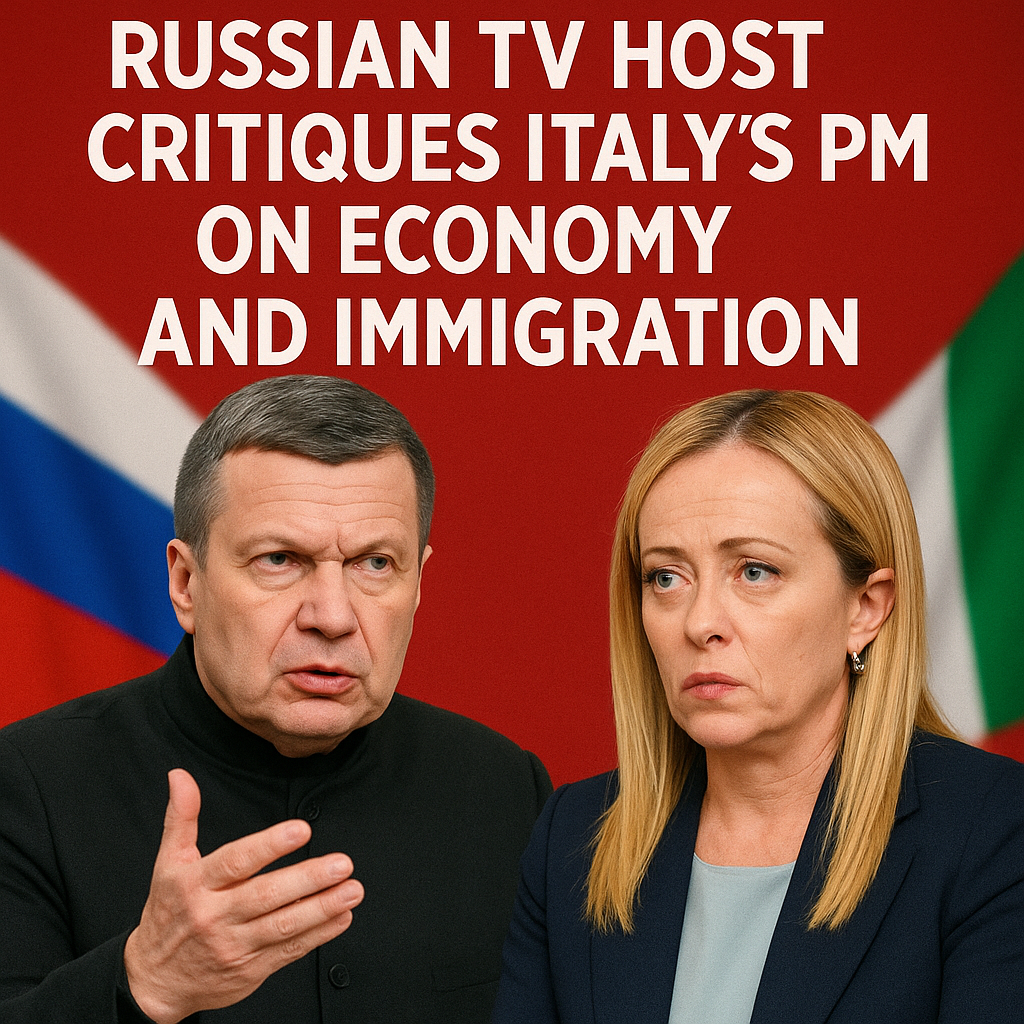
Russian TV Host Critiques Italy’s PM on Economy and Immigration

Russian TV Host Critiques Italy’s PM on Economy and Immigration
In a rare moment of cross-political analysis, a prominent Russian TV host has taken to the airwaves to critique Italy’s Prime Minister Giorgia Meloni, focusing on the intertwined issues of the economy and immigration. This commentary has sparked conversations in Europe about leadership, public policy, and the narratives surrounding immigration and economic stability.

Analyzing the Critique
The Russian TV host, widely known for his fiery rhetoric, pointedly criticized Meloni’s handling of Italy’s economic challenges and immigration policies. In his segment, he highlighted how Italy grappled with a stagnant economy and rising inflation, which, according to him, were compounded by the ongoing influx of migrants.


Meloni, who has positioned herself as a right-wing populist, has built her political platform around national sovereignty and a firm stance on immigration. However, the Russian host argued that her policies may neglect the socio-economic realities facing ordinary Italians. He asserted that while her government has taken a hard line on immigration, it has failed to address the underlying economic issues, leading to a society divided and increasingly frustrated.


Evaluating Public Sentiment
The critique has reignited discussions within Italy and across Europe about the efficacy of current leadership in solving pressing national issues. Opinions are sharply divided. Supporters of Meloni argue that her stance on immigration is necessary to preserve Italy’s national identity and protect its economy. They contend that a well-regulated immigration policy is essential, especially amid economic strain from external factors like the energy crisis following the conflict in Ukraine.
On the other hand, opponents feel that while strong immigration policies are crucial, Meloni’s approach lacks compassion and fails to consider the potential contributions of newcomers to society. They argue that a more holistic economic strategy, which includes investments in social welfare and integration programs, would better serve Italy’s long-term interests.
This divergence in perspectives reflects a broader European struggle with immigration and economic policymaking. The hit-and-miss results of prior immigration policies in Italy and neighboring countries have left many questioning the balance between security and inclusivity.
The Broader Context of Economic and Immigration Policy
Meloni’s government is not only under scrutiny from international commentators but also faces heavy domestic pressure. The reality of rising prices in everyday goods and services has fueled public dissent. Economic indicators suggest that Italy’s growth has been slower than that of its European counterparts, an issue exacerbated by global economic factors, such as the COVID-19 pandemic and the ongoing conflict in Ukraine.
In the midst of this turmoil, immigration remains a contentious issue. Italy has long been a primary destination for migrants crossing the Mediterranean Sea. The number of arrivals in recent years has led to a political narrative that often portrays migrants as a burden rather than a potential asset.
The Russian TV host’s comments, while perhaps exaggerated, resonate with a particular narrative that questions whether the current Italian leadership can effectively tackle these intertwined challenges.
Looking Ahead: What Does the Future Hold?
As Italy navigates its economic hurdles and reassesses its immigration policies, the input from various political figures—even those from outside Italy—highlights the complexity of these issues. The response to the critique from Russian media portrays a multifaceted view. Critics may argue that a foreign commentator’s insights bear little relevance to Italian affairs; however, the underlying themes of economic distress and immigration are universal.
In conclusion, as Italy’s political landscape evolves, the interplay between economic policy and immigration will undoubtedly remain at the forefront of public debate. Whether Meloni can reconcile her tough stance on immigration with the pressing economic needs of her citizens will largely dictate her government’s success. A balanced approach that fosters both economic stability and compassionate immigration policy may be essential for Italy’s future, a task that requires not just leadership but a collective national resolve.
As the discourse continues, the voices both for and against immigration and economic policies illustrate the complexity of governance in a globalized world, where internal challenges are interwoven with external perceptions and influences.















