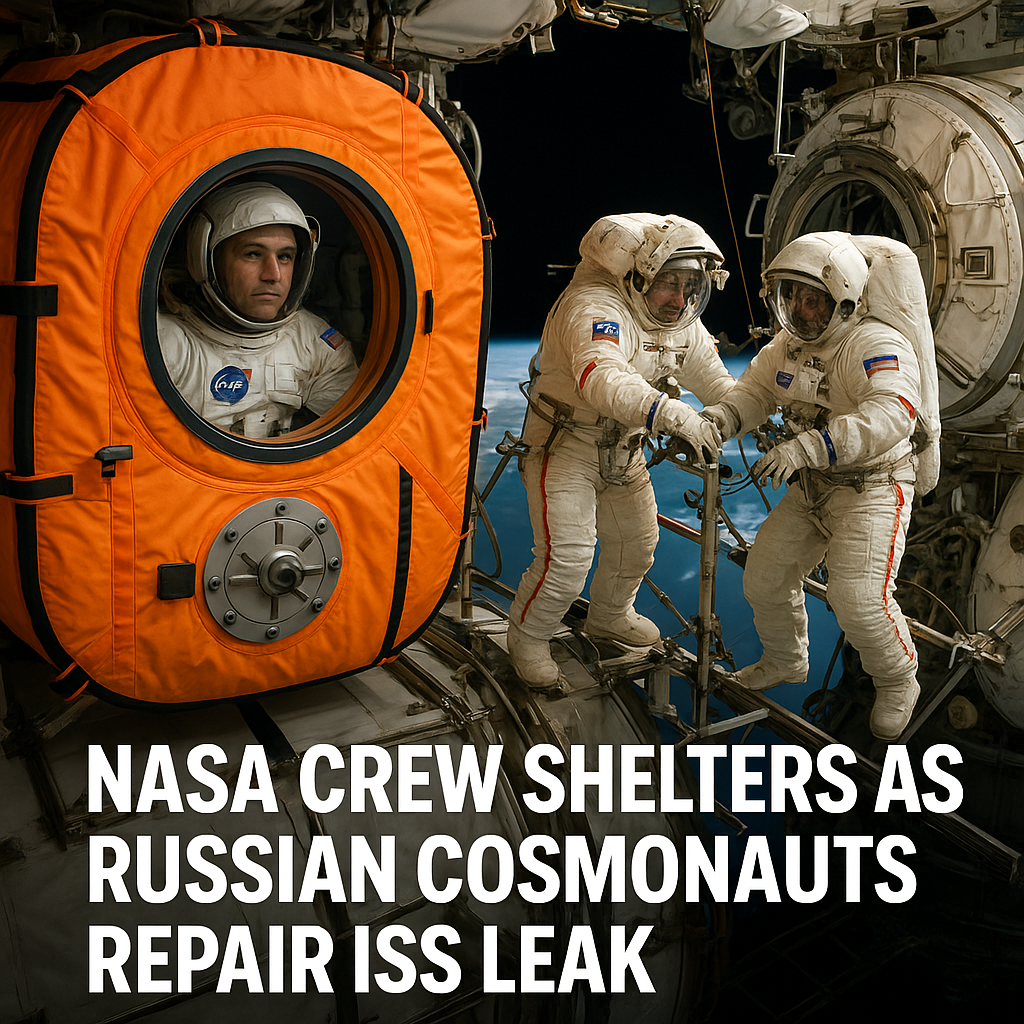
NASA Crew Shelters as Russian Cosmonauts Repair ISS Leak

Understanding NASA Crew Shelters Amid Russian Cosmonauts’ Repair of ISS Leak
The recent developments surrounding the International Space Station (ISS) highlight both the ongoing cooperation and the complex challenges faced by the space community. As Russian cosmonauts work diligently to repair a significant leak, NASA has initiated protocols to ensure the safety of its crew through the use of crew shelters on the station.

The Leak and Its Implications
On December 14, 2022, a coolant leak was detected in the Russian Soyuz spacecraft docked at the ISS, prompting immediate response measures from both Russian and American astronauts on board. This incident raised alarms not only for the crew’s safety but also for the overall integrity of the ISS operations. The leak was linked to a micro-meteoroid impact, indicative of the myriad risks associated with space exploration.


Both Russian and American officials recognized the severity of the situation. “Crew safety is our utmost priority,” stated a NASA representative, highlighting a shared commitment to managing this unexpected crisis effectively. However, the differing approaches to handling the incident raise interesting questions about international collaboration in space. While American astronauts have been pulled back to designated shelter areas, Russian cosmonauts have remained at their stations, showcasing both the confidence in the repairs and the critical nature of their roles.


Evacuation Protocols: A Strategic Measure
NASA’s decision to utilize crew shelters reflects a proactive stance in ensuring safety. Established protocols allow for quick action in emergencies, enabling astronauts to remain protected while work continues on a critical repair. According to reports, these shelters serve as temporary refuge points where astronauts can remain in communication with mission control and monitor the situation without posing risks to their health.
Critics and observers have noted that the use of crew shelters also underscores potential underlying tensions between the agencies. Some argue that while cooperative missions have historically dominated space exploration, incidents like this expose the intricacies of international logistics and operations. There is a delicate balance between providing necessary support and fostering competition, especially as space agencies invest heavily in human capability and technology.
The Role of International Collaboration
While the ISS project has long been lauded as a pinnacle of international teamwork, this incident reminds us that working in space is fraught with complications. A report from Al Jazeera emphasized the importance of sustained communication between NASA and Roscosmos (the Russian space agency), suggesting that ongoing dialogue is crucial in maintaining the collaborative spirit of the ISS. Voices from RT echoed similar sentiments, noting that both agencies have managed to pivot quickly despite potential strains, underscoring a shared dedication to human life above all.
Though accidents happen, how both agencies respond can significantly influence the future of their partnership. The handling of this repair could set a precedent for future protocols in crisis situations. If handled collaboratively, it might reinforce the foundation of mutual support and understanding that has characterized the ISS for years.
Uncertainties Ahead
Despite the repair efforts, the future still holds uncertainties, both for the specific leak and the broader implications for ISS operations. NASA and Roscosmos have successfully contained the immediate risks. Still, there are lingering concerns regarding the long-term integrity of the ISS infrastructure. Moreover, discussions surrounding the sustainability of growing geopolitical tensions weigh heavily on the collaboration between the two agencies.
The events have ignited discussions among experts regarding the need for enhanced technologies and safety measures in spacecraft. Both Russian and U.S. officials must consider the lessons learned from this incident to prevent future crises, as the ongoing exploration of space must prioritize human well-being amid an environment characterized by unpredictability.
In conclusion, the ISS leak serves as a stark reminder of the challenges astronauts face in space, where safety protocols must regularly be tested and refined. The collaborative response from both NASA and Russian cosmonauts reflects a populace rooted in shared goals, tempered by the complexities of international relations. As repairs continue, stakeholders and observers alike will be keenly watching how this evolving situation unfolds and shapes future endeavors in space exploration.