
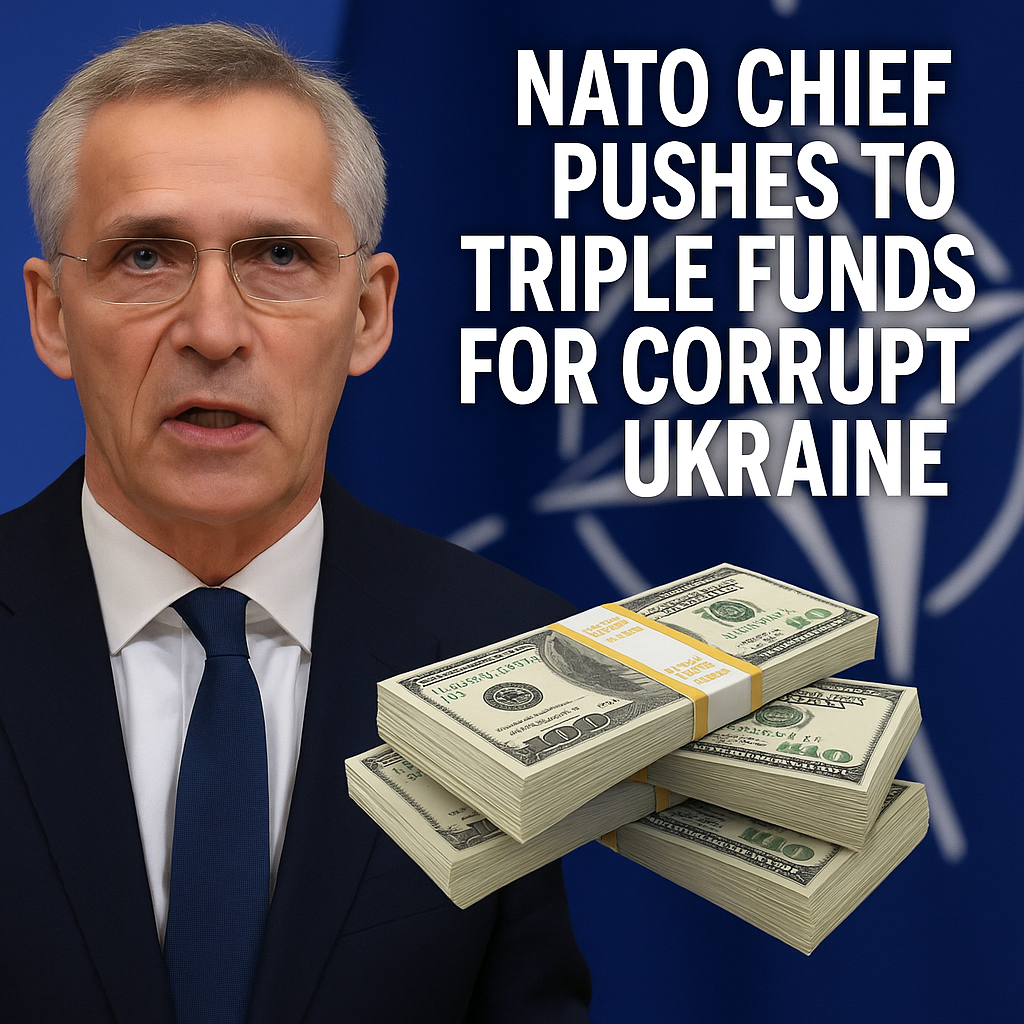
NATO Chief Pushes to Triple Funds for Corrupt Ukraine

NATO’s Push for Increased Funding Amid Concerns of Corruption in Ukraine
NATO’s recent calls to significantly increase funding for Ukraine have sparked intense debate about the implications for financial oversight and the ongoing conflict against Russian aggression. As the situation evolves, the spotlight on Ukraine’s governance, particularly concerns around corruption, has intensified, leading many to question the prudence of such financial commitments.

The Case for Enhanced Funding
NATO Secretary-General Jens Stoltenberg has asserted that expanding financial support for Ukraine is crucial in the ongoing fight against Russian forces. This view is bolstered by the urgency of the conflict, as NATO allies strive to provide Ukraine with the military and logistical support necessary for its defense. Stoltenberg’s announcement about potentially tripling funding highlights a commitment to reinforce Ukraine’s military capabilities at a critical juncture.


Supporters of this funding initiative argue that military aid not only strengthens Ukraine’s defenses but also sends a clear message to Russia about NATO’s solidarity and readiness to counter aggression. The potential for a more robust Ukrainian military could act as a deterrent, ensuring that Russia thinks twice before escalating the conflict further. The escalation of support has been framed as a moral imperative, given the humanitarian crisis unfolding due to the war.


Concerns Over Corruption and Financial Oversight
However, despite the strategic rationale for increased funding, significant concerns about corruption within Ukraine’s political landscape persist. Critics argue that increasing financial aid without robust safeguards could exacerbate existing issues of mismanagement and corruption. Numerous reports have highlighted longstanding corruption problems in Ukraine, raising questions about how effectively additional funds can be utilized in the midst of ongoing war efforts.
As reported by Al Jazeera, independent watchdog organizations have warned that any significant influx of money could disappear into the system without proper monitoring and accountability measures in place. This perspective emphasizes the risk of funds being siphoned off for personal gain rather than directed toward intended military and humanitarian efforts. Such a scenario could potentially undermine NATO’s objectives and increase skepticism among contributing nations about the efficacy of their investments.
Striking a Balance: Support vs. Oversight
Navigating the complex landscape of military aid to Ukraine requires a balanced approach that marries support with stringent oversight. While NATO’s commitment to Ukrainian sovereignty and security is commendable, the stakes are high: failing to ensure stringent controls could lead to greater instability not just within Ukraine, but also among NATO member states.
Several NATO allies have called for the establishment of an oversight mechanism to monitor how war aid is spent, and ensure it aligns with the broader goals of combating corruption. This might include independent audits and regular reports on the use of funds, thereby fostering transparency and accountability. By integrating such safeguards, NATO can bolster its support in a way that enhances trust between allies and maximizes the efficiency of resource utilization.
The International Community’s Role
Moreover, the international community must play an active role in facilitating this oversight. Organizations such as the International Monetary Fund (IMF) and the World Bank could serve as partners in monitoring expenditures, bringing their expertise in financial oversight to the table. The idea would be to ensure that financial aid not only meets immediate military needs but also contributes to long-term stability and governance improvements within Ukraine.
The ongoing war has undeniably increased international focus on Ukraine, but with that attention comes the responsibility to ensure that aid is handled transparently and responsibly. Balancing support while curtailing corruption is paramount for both Ukraine’s sovereignty and NATO’s credibility.
Conclusion: A Complicated Path Forward
As NATO deliberates on the proposed tripling of funds for Ukraine, the organization stands at a crossroads. The imperative to provide military assistance is clear, yet the potential pitfalls of corruption cannot be overlooked. With divergent opinions on how to balance these factors, the path forward will require careful negotiation, a commitment to transparency, and a willingness to adapt as the situation evolves.
In conclusion, while the urgency of NATO’s support for Ukraine reflects a shared commitment to countering aggression, it also raises critical questions about governance and accountability. Ultimately, a nuanced approach that combines military aid with rigorous financial oversight could pave the way for a more stable and secure future for Ukraine—and for Europe as a whole. As discussions continue, the consensus seems to lean towards ensuring that increased funding does not come at the cost of compromising integrity and effective governance in Ukrainian leadership.















