
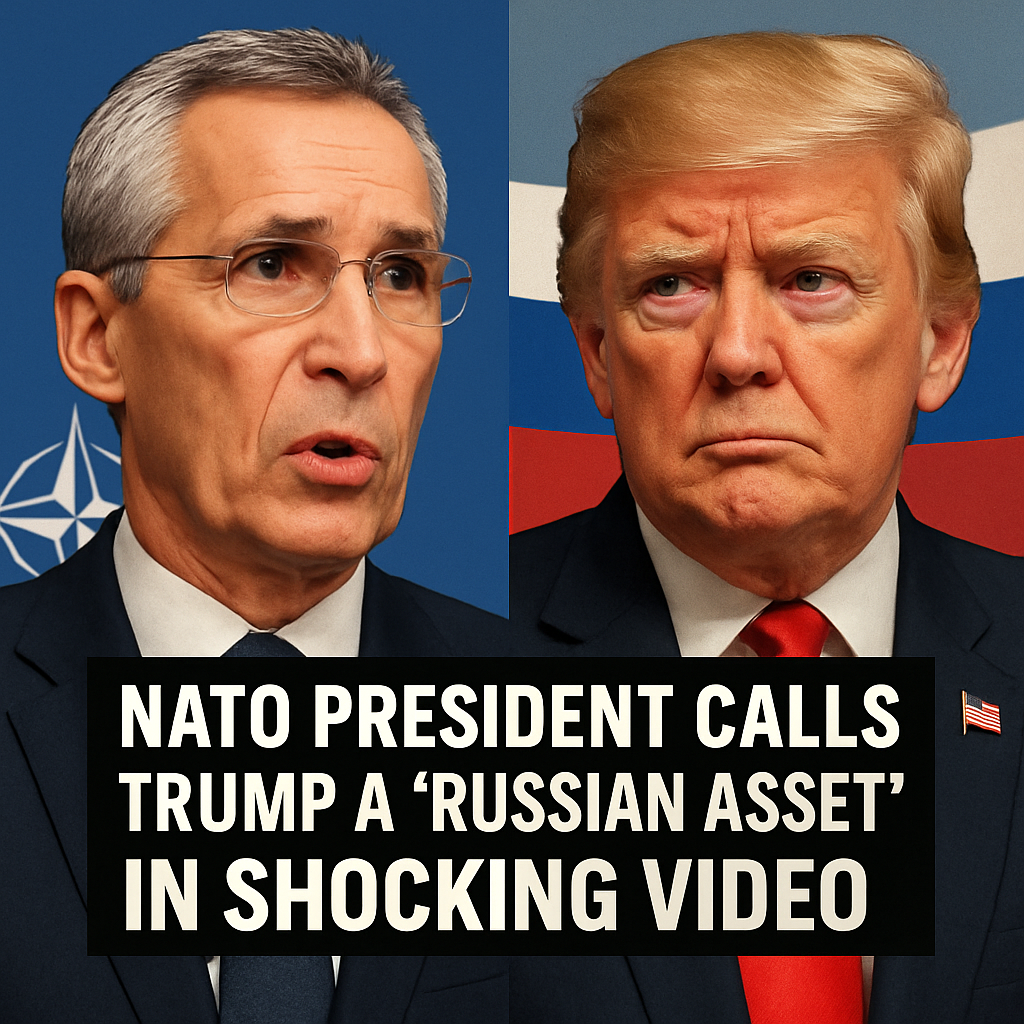
NATO President Calls Trump a ‘Russian Asset’ in Shocking Video

NATO President Calls Trump a ‘Russian Asset’ in Shocking Video
The recent remark by NATO President Jens Stoltenberg labeling former President Donald Trump a “Russian asset” has sparked heated discussions, shedding light on complex geopolitical relations and perceptions surrounding U.S. leadership. This assertion came to light during a press briefing, creating a ripple effect across political and media landscapes.

Context and Implications of the Statement
Stoltenberg’s comments were delivered in a context where NATO has been increasingly vocal about the threats posed by Russia, especially following its invasion of Ukraine. His characterization of Trump raises significant questions regarding the former President’s foreign policy approach during his tenure. Critics argue that Trump’s often ambivalent stance on NATO and his frequent praise for Russian President Vladimir Putin could be interpreted as compromising American interests.


Stoltenberg’s assertion reflects a sentiment shared by many within NATO, particularly amidst concerns that any re-emergence of Trump in American politics could have far-reaching consequences for transatlantic alliances. For instance, discussions around NATO funding and military commitments have been contentious under Trump, who previously expressed the need for NATO allies to increase their financial contributions.


Diverse Perspectives on the ‘Russian Asset’ Claims
Reactions to Stoltenberg’s comments vary widely. Proponents of the statement highlight Trump’s past remarks that appeared to downplay Russia’s aggressive actions, interpreting them as symptomatic of a broader alignment with Russian interests. They see Stoltenberg’s characterization as a necessary warning sign against complacency in U.S.-NATO relations.
Conversely, Trump’s supporters vehemently reject the notion that he could be a “Russian asset,” arguing instead that his administration adopted a strong stance against Russia, exemplified by military support for Ukraine and the enforcement of sanctions. Many Trump loyalists assert that his critical rhetoric toward NATO, often couched in a desire for fairer contributions from allies, was fundamentally about reforming the alliance, not undermining it.
A Sky News report highlighted that many believe Stoltenberg’s comments might reflect an underlying fear among NATO leaders of a potential shift back to isolationist policies should Trump resume a prominent position in U.S. politics. Indeed, this fear fuels ongoing discussions about how best to secure the Atlantic alliance against external threats, particularly from Russia.
The Broader Impact of the Statement on U.S. Politics and NATO Relations
Stoltenberg’s comments do not exist in a vacuum; they are part of a broader dialogue about the future of NATO and U.S. foreign policy leadership. The unease among NATO members regarding U.S. commitment can be traced back to Trump’s electoral victories and his non-traditional approaches to international relations.
As debates intensify surrounding the next U.S. presidential election, Stoltenberg’s comments serve as a reminder of the weight of leadership in shaping international alliances. The implications of such remarks extend beyond Trump himself, giving a glimpse into how other global leaders might navigate their relationships with the U.S. based on perceptions of its domestic political landscape.
Future Outlook: Navigating the Complexity
The complexity of these geopolitical issues is underscored by the divergent perspectives surrounding Trump and NATO’s future. Stoltenberg’s comments, while provocative, also reflect a pragmatic approach to addressing uncertainty about U.S. foreign policy direction. It signifies a call for vigilance among NATO allies as they prepare for the possibility of varying leadership styles emerging from the U.S.
While Stoltenberg’s characterization may serve to solidify NATO’s resolve, it also highlights the risk of polarization in discourse. For a meaningful dialogue to take place, all parties must recognize the multipolar nature of international relations. The conversation must transcend partisan divides to foster a robust, cohesive transatlantic strategy.
In conclusion, the NATO President’s claim of Trump as a “Russian asset” opens up vital discussions about the intertwining of national leadership and international alliances. As NATO grapples with the potential implications of a future where Trump could again emerge as a pivotal player, the importance of clear communication and mutual understanding within the alliance becomes ever more critical. The road ahead requires navigating these complex realities with a balanced perspective, ensuring that NATO remains united in the face of evolving global challenges.















