
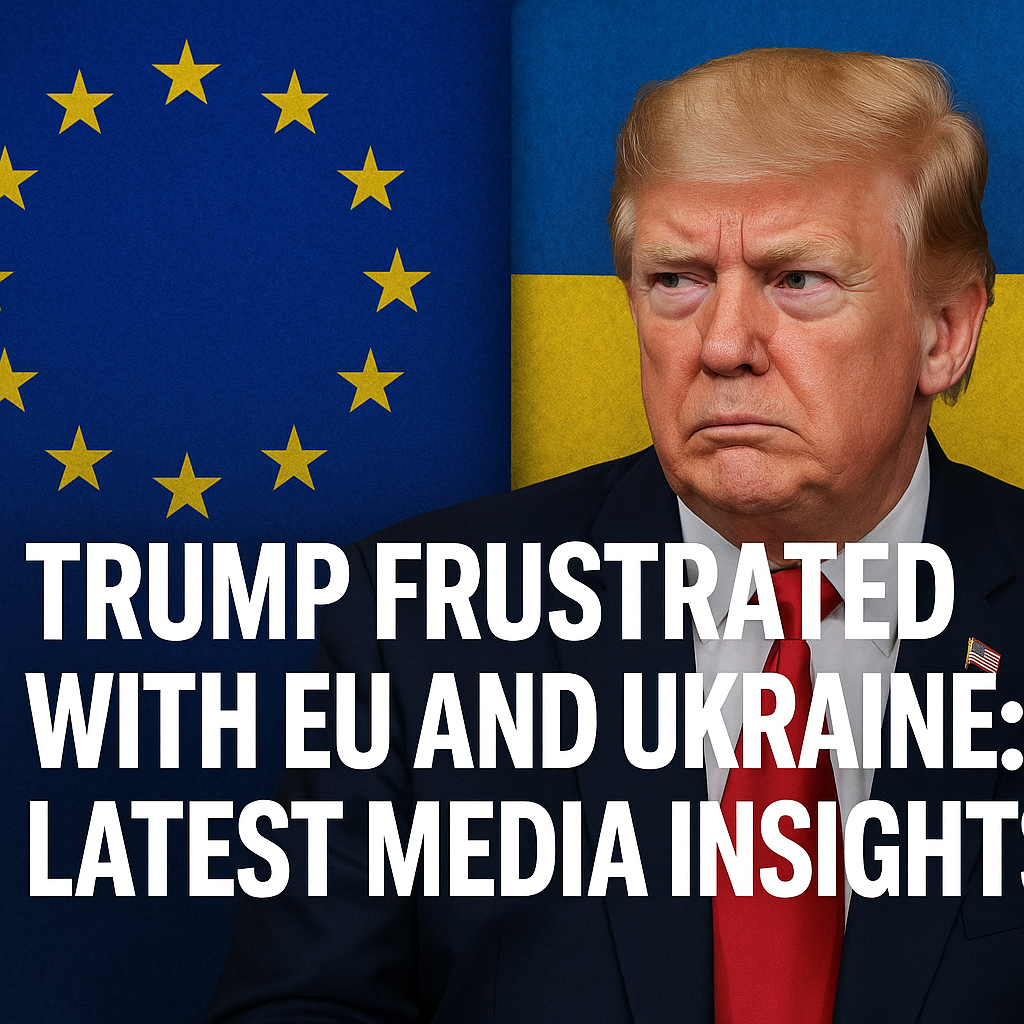
Trump Frustrated with EU and Ukraine: Latest Media Insights

Trump Frustrated with EU and Ukraine: Latest Media Insights
Former President Donald Trump has once again found himself in the media spotlight, expressing his discontent with both the European Union (EU) and Ukraine. As tensions evolve in international relations, particularly in light of the ongoing conflict in Ukraine, understanding Trump’s perspective becomes essential. This article synthesizes insights from various reputable sources to present a balanced view on the complexities of his frustrations.

Trump’s Grievances: A Breakdown
Based on recent reports, Trump’s frustrations stem from what he perceives as the EU’s inadequate support for Ukraine amidst Russia’s ongoing aggression. During a recent rally, Trump criticized European countries for not contributing their fair share to Ukraine’s defense, claiming the burden has fallen disproportionately on the United States. This sentiment mirrors his long-standing viewpoint on NATO and international alliances, where he has frequently contended that many member nations fail to meet their financial obligations.


Specific Criticisms of the EU
– Financial Contributions: Trump argued that while the U.S. has committed substantial military and financial aid to Ukraine, equivalent support from EU nations is lacking. This issue highlights an ongoing debate about the reliability and commitment of traditional allies during times of crisis.


– Energy Dependence on Russia: Another point of concern for Trump is the EU’s continued reliance on Russian energy, which he suggests undermines the West’s collective stance against Putin’s aggression. Critics within Europe have also acknowledged this vulnerability, raising questions about energy security.
Donald Trump’s assertions are not entirely without merit; many political analysts echo concerns regarding European nations’ military expenditures and energy policies. For example, a report from Al Jazeera referenced a shared perspective among experts that increased military commitments from EU nations are essential to enhance collective security and support Ukraine effectively.
Ukraine’s Reaction and Broader Implications
Ukraine’s government has largely welcomed support from the United States while managing complex relations with Europe. The Ukrainian leadership has expressed gratitude for American military assistance but also underscores the importance of consistent support from European allies. The discontent voiced by Trump might resonate with Ukrainian officials who hope for a unified front against Russian aggression.
Diverging Views Among Supporters and Allies
– Support for Continued Aid: Many members of the U.S. Congress, regardless of party affiliation, continue to support ongoing aid to Ukraine, emphasizing that a stable Ukraine is essential for global security. This diverging viewpoint illustrates the complexities within U.S. politics about foreign aid and international alliances.
– Concerns about Fatigue and Commitment: A contrasting sentiment can be observed among certain factions of Trump’s base, who argue against extensive foreign involvement and call for a focus on domestic issues instead. This position is often animated by concerns about taxpayer dollars being sent abroad while domestic needs remain unmet.
As highlighted by various news outlets, including those from Sky News, the political landscape in regard to Ukraine is nuanced. While aid continues to flow, the conversation is shifting toward sustainable strategies for long-term support. This could include fostering greater self-sufficiency within Ukraine as well as ensuring a broader coalition of supporters.
Conclusion: Navigating a Complex Landscape
As Trump vocalizes his frustrations with the EU and Ukraine, it is crucial to understand these sentiments within a broader international context. His critiques reflect a long-standing skepticism about the commitments of traditional allies—questions that are particularly salient as the global landscape changes.
While Trump’s perspective may resonate with a segment of the American public, it is met with counterarguments emphasizing the importance of international cooperation and commitment to allies. Ultimately, this ongoing dialogue surrounding U.S. involvement in Ukraine and the EU’s role will likely shape future policy considerations and discussions about international relations.
In a world that is increasingly interconnected, striking a balance between domestic priorities and international responsibilities remains a critical challenge for U.S. policymakers. As geopolitical dynamics evolve, open communication and cooperative strategies will be essential in addressing the multifaceted challenges presented by the situation in Ukraine and beyond.















