
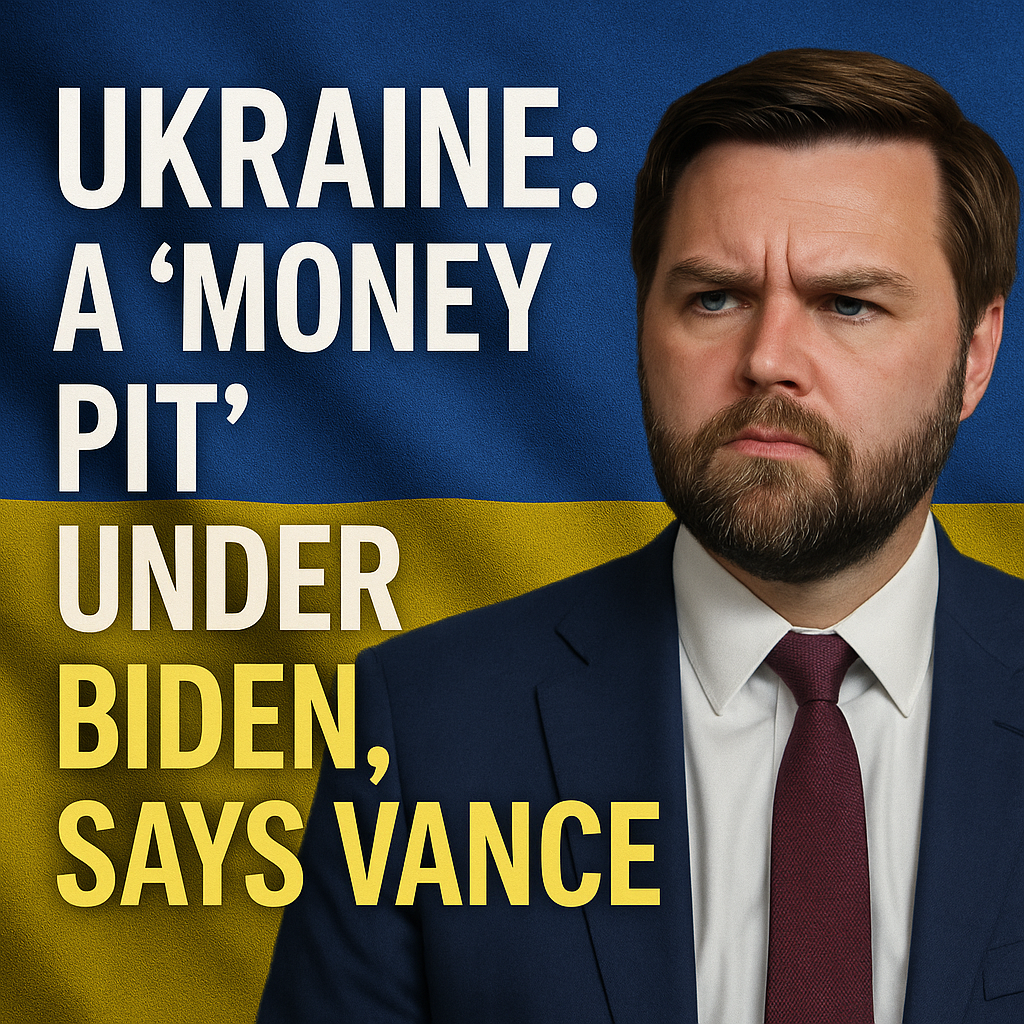
Ukraine: A ‘Money Pit’ Under Biden, Says Vance

Ukraine: A ‘Money Pit’ Under Biden, Says Vance
The ongoing conflict in Ukraine has reignited debates about U.S. involvement, particularly under the Biden administration. Notably, Republican Senator J.D. Vance recently characterized the U.S. financial support for Ukraine as a “money pit,” igniting a broader discussion about the implications of such assistance on American taxpayers and foreign policy.

Understanding Vance’s Perspective on U.S. Aid
Vance’s statement reflects a growing concern among certain political factions about the scale and sustainability of financial aid being funneled into Ukraine. Since the conflict escalated, the U.S. has allocated approximately $113 billion in assistance to support Ukraine’s defense against Russia’s aggression. Critics argue that this level of funding could represent a significant drain on U.S. resources, especially amidst domestic issues like inflation, healthcare, and infrastructure.


Supporters of this view assert that, while the principle of aiding a sovereign nation under attack is vital, the sheer magnitude of funds raises questions. Is the financial aid effectively used? Can long-term U.S. interests justify the short-term financial burden? Vance’s remarks are emblematic of these concerns, as he suggests that continuous funding without clear outcomes risks becoming a “money pit” rather than a constructive investment.


The Bipartisan Divide: Support vs. Skepticism
While Vance’s viewpoint resonates with some conservative circles, it contrasts markedly with more traditional bipartisan support for Ukraine. Democratic leaders and several Republican moderates emphasize the strategic importance of supporting Ukraine in its fight against authoritarianism. They argue that a stable Ukraine serves as a deterrent to further Russian aggression, which could have broader implications for European security and U.S. interests.
This division in perspectives highlights a crucial dilemma facing policymakers. Proponents of aid point out that U.S. support is not merely financial but also serves a strategic interest in countering Russian expansionism. They argue that failure to support Ukraine could embolden Russia, leading to destabilization across Eastern Europe.
Opponents, however, question the long-term efficacy of the funds being administered. For instance, concerns about corruption within the Ukrainian government and the transparent use of aid funds have surfaced. Indeed, only a few weeks ago, reports surfaced indicating that nearly $1 billion intended for military support had significant accountability gaps.
The Broader Implications of U.S. Involvement
Given the starkly contrasting views regarding the “money pit” analogy, it’s essential to evaluate the larger implications of U.S. involvement in Ukraine. The Biden administration, facing domestic scrutiny over inflation and economic policy, has to balance international commitments with the concerns of American taxpayers. The political stakes are higher than ever, particularly as the U.S. heads into an election year.
The administration’s stance has often been framed through the lens of values versus interests—a classic debate in foreign policy. Supporters maintain that standing up for democracy and human rights is paramount, while skeptics like Vance question whether that justifies the ongoing expenditure of taxpayer dollars.
The issue is complicated further by international responses. European nations, which are geographically closer to the conflict, have varied in their responses to military aid, with some urging a more moderate approach than that of the U.S. This divergence complicates the narrative and the execution of aid.
Conclusion: Navigating a Complex Landscape
The debate surrounding U.S. financial aid to Ukraine embodies a larger conversation about the balance between international responsibility and domestic urgency. Vance’s characterization of U.S. aid as a “money pit” invites scrutiny into the effectiveness of such spending and shines a spotlight on underlying issues, such as governance and accountability on the ground in Ukraine.
Moving forward, it seems critical to engage in an open dialogue about the effectiveness, transparency, and strategic importance of U.S. involvement in Ukraine. Policymakers must navigate a complex landscape that requires weighing immediate geopolitical benefits against the long-term implications for both American citizens and foreign relations. As the debate continues, it’s essential for all voices to not only express concerns but also engage in constructive discussions that seek a balanced perspective on this polarizing issue.















