
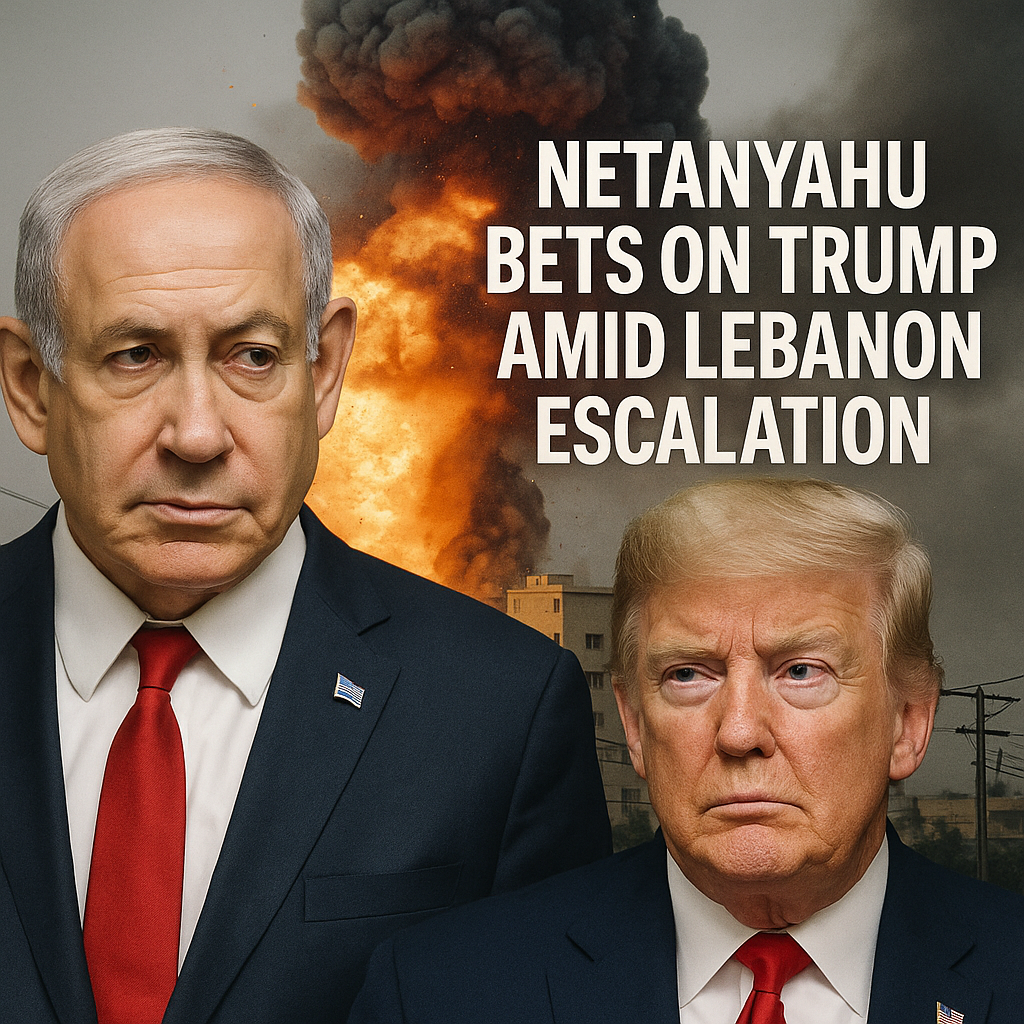
Netanyahu Bets on Trump Amid Lebanon Escalation

Netanyahu Bets on Trump Amid Lebanon Escalation
In the midst of rising tensions in Lebanon, Israeli Prime Minister Benjamin Netanyahu appears to be strategically aligning himself with former U.S. President Donald Trump. As Hezbollah and Israel engage in a dangerous escalation of hostilities, Netanyahu’s decision to front a new coalition may serve multiple political purposes, both domestically and internationally.

The Context of Escalation
The current escalation in Lebanon is marked by a series of military confrontations between Israel and Hezbollah. This situation has drawn global attention, particularly due to its implications for regional stability and security. Reports indicate that skirmishes along the border have intensified, with both sides exchanging fire and threats. As Hezbollah continues to exert its influence, various geopolitical factors, including the influence of Iran and possibilities of broader regional conflict, complicate the situation further.


Netanyahu’s focus on Trump comes at a crucial time. Recent polls suggest a waning support base for Netanyahu domestically, mainly due to public discontent with his government’s handling of socio-economic issues and rising security threats. By aligning himself with Trump, who remains a popular figure among right-wing constituencies in Israel, Netanyahu may be looking to bolster his standing amongst a crucial voter demographic.


A Political Strategy Rooted in Alliances
The alliance between Netanyahu and Trump is not new; however, its timing is particularly significant given the current geopolitical climate. Trump’s administration was marked by a series of policies favoring Israel, including the relocation of the U.S. embassy to Jerusalem—the symbolic heart of the Israeli-Palestinian conflict. Netanyahu has often emphasized the importance of U.S.-Israel relations, especially under a Republican leadership, which historically tends to take a more hardline approach against Iran and its proxies, such as Hezbollah.
Some commentators argue that Netanyahu’s outreach to Trump is a move to secure U.S. backing amidst growing regional hostility. According to various reports, collaboration with Trump could provide Netanyahu with the critical diplomatic support needed to stringently counter not just Hezbollah, but also other regional threats such as Iran’s nuclear ambitions.
However, not all analysts see this as a wise bet. Critics point out that relying on Trump—especially amid his unpredictable behavior and legal battles—could backfire for Netanyahu. They argue that Trump’s political future is uncertain, and an over-reliance on a figure embroiled in controversy could pose risks for Israeli diplomacy. This concern is compounded by the shifting sands of U.S. politics, where a Democratic administration may offer very different foreign policy priorities.
Regional Consequences and Uncertainties
The implications of Netanyahu’s strategy stretch beyond Israel’s borders. Lebanon’s involvement in the current escalation serves as a reminder of the delicate balance of power in the region. Many in the international community are concerned that escalated conflicts can quickly spiral into wider confrontations involving additional players such as Syria, Iran, and Gulf States.
While Netanyahu’s alignment with Trump may offer an immediate political boost, observers warn that it could lead to a more entrenched conflict with Hezbollah, thus destabilizing Lebanon further. The international community remains divided on how best to address the situation, with some advocating for a diplomatic approach to de-escalate tensions, while others support a more aggressive U.S. military presence in the area to deter Hezbollah from further aggression.
In the context of the ongoing escalation, it is crucial to acknowledge the complexity of the situation. Some perspectives suggest that peace initiatives often overlook the voices of moderate factions within both Israeli and Palestinian societies. The risk of sidelining these voices in favor of more hawkish stances—a potential byproduct of Netanyahu’s gambit with Trump—could lead to a diminishing likelihood of dialogue and long-term solutions.
Conclusion: A Gamble with High Stakes
The relationship between Netanyahu and Trump, amid escalating tensions in Lebanon, serves as a litmus test for the future of Israel’s foreign policy. Netanyahu’s strategy is one rooted in necessity, but it is not without risks. As he weighs moving closer to Trump in turbulent waters, both he and his government must consider the broader implications of their political narratives.
The intricate web of alliances, threats, and the ever-shifting landscape of Middle Eastern geopolitics will likely dictate the outcomes of this gamble. While Netanyahu seeks to solidify support at home, the stakes are high, not just for Israel, but for the entire region. As tensions rise, the quest for stability and security continues to be a complex and multifaceted challenge for leaders on all sides.















