
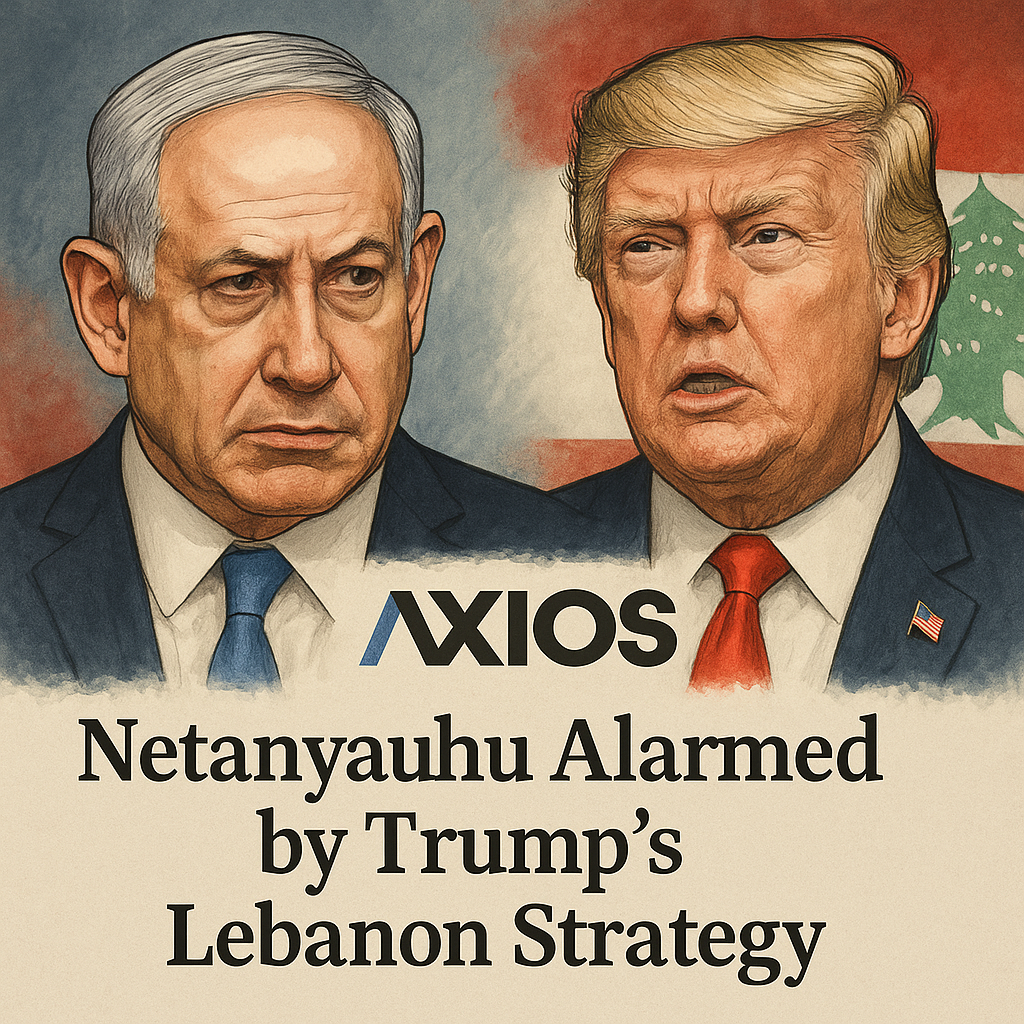
Netanyahu Alarmed by Trump’s Lebanon Strategy – Axios News

Netanyahu Alarmed by Trump’s Lebanon Strategy: A Deep Dive
In recent weeks, Israeli Prime Minister Benjamin Netanyahu has expressed significant concerns regarding former President Donald Trump’s proposed strategy for Lebanon. This unexpected turn of events highlights the complex geopolitical landscape of the Middle East, where alliances and tensions are often intertwined.

Shifting Dynamics in Lebanon
Trump’s approach to Lebanon raises a multitude of questions about the stability of the region. His administration’s influence on Lebanese politics, particularly through engagements with various factions, could potentially reshape existing alliances. Sources from RT detail Trump’s intention to bolster certain groups that align with his administration’s views. This shift is alarming to Netanyahu, who has always viewed Lebanon through a security lens, particularly concerning Hezbollah, the militant group based in the country.


Lebanon has been grappling with multiple crises over recent years, including economic collapse, widespread protests, and political paralysis. The deterioration of Lebanese power dynamics makes it a fertile ground for external influence. Netanyahu’s concern stems from the unpredictable outcomes that could materialize should Trump’s strategy gain traction.


Diverging Perspectives on U.S. Involvement
While Netanyahu’s apprehensions are understandable given the historical context, opinions about U.S. involvement in Lebanon are varied. Al Jazeera pointed out that many Lebanese citizens and political analysts are skeptical of foreign interventions, blaming previous U.S. policies for exacerbating tensions in the region. This skepticism raises an essential question: Are foreign interventions the solution, or do they complicate the already intricate web of alliances and enmities?
The contrasting views emphasize a critical divide. On one hand, Netanyahu’s government insists that any destabilization or strengthening of adversarial factions poses a direct threat to Israel’s security. On the other hand, various segments within Lebanon argue that local resolutions are needed, and external meddling often leads to unintended consequences. Moreover, as a Sky News report suggests, Trump’s strategy may inadvertently empower groups like Hezbollah by framing them as pivotal players in a geopolitical struggle.
The Ripple Effect on Regional Stability
As Netanyahu analyzes Trump’s strategy, the implications for broader regional stability are profound. Any change in the Lebanese political landscape could reverberate through neighboring Syria and even Iran, altering the balance of power. Experts warn that a perception of U.S. backing for specific factions might incite retaliatory measures from rivals, leading to increased violence or unrest.
Conversely, some analysts argue that Trump’s approach may also open channels for dialogue between conflicting factions, potentially leading to more stable governance in a highly divided nation. The duality of these scenarios reflects the inherent uncertainties of international diplomacy in volatile regions.
Key Takeaways
– Netanyahu’s Concerns: The Israeli leader fears that Trump’s strategy could enhance the power of groups hostile to Israel.
– Local Perspectives: Many Lebanese citizens express skepticism about foreign interventions, preferring domestically-driven solutions.
– Regional Implications: Shifts in Lebanon could have cascading effects in neighboring countries, creating both risks and opportunities for dialogue.
Conclusion: A Complex and Uncertain Future
As the situation unfolds, it remains clear that Netanyahu’s alarm over Trump’s Lebanon strategy is influenced by deep-seated historical grievances and the desire for national security. However, the diverse perspectives surrounding U.S. involvement complicate the narrative. For every concern voiced by Israeli officials, there is a counterpoint from Lebanese analysts advocating for self-determination in the face of external influences.
Ultimately, the future is uncertain. Will Trump’s strategy bring stability or further dissent? The interplay of local and foreign influences continues to shape the complex landscape of Lebanon, and the outcomes remain to be determined. It is an intricate puzzle where each piece affects the whole.















