
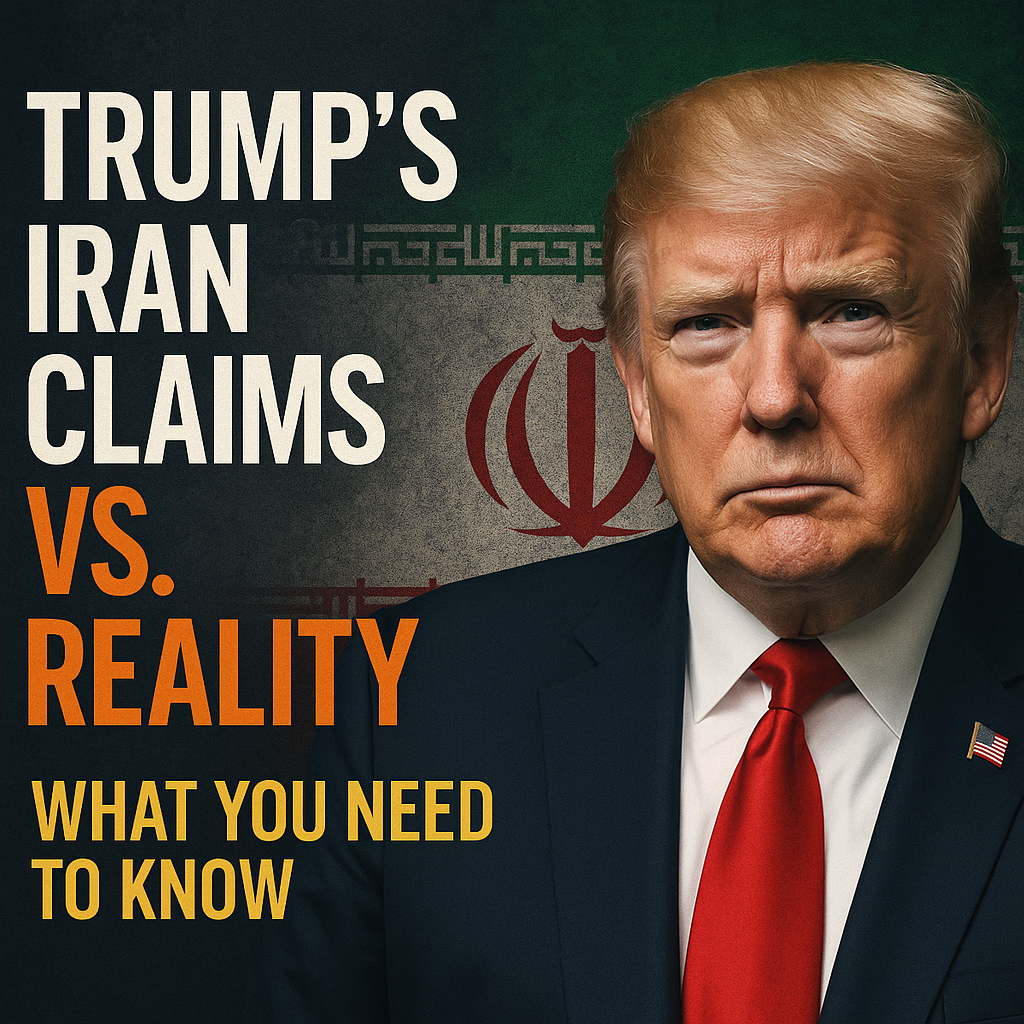
Trump’s Iran Claims vs. Reality: What You Need to Know

Trump’s Iran Claims vs. Reality: What You Need to Know
In the complex landscape of U.S.-Iran relations, Trump’s claims deserve critical examination to understand the nuanced reality. The former U.S. president has made several assertions regarding Iran, particularly during his administration, that continue to influence political discourse today.

The Claims: A Closer Look at Trump’s Assertions
Throughout his presidency, Donald Trump frequently positioned himself as a hardliner against Iran. His claims ranged from portraying Iran as the world’s largest state sponsor of terrorism to asserting that his policies curbed Iran’s nuclear ambitions.


In a recent analysis by RT, Trump underscored that his withdrawal from the Joint Comprehensive Plan of Action (JCPOA) — the nuclear agreement reached in 2015 — was essential to stop Iran from acquiring nuclear weapons. He argued that under his administration, Iran faced crippling sanctions that would prevent it from funding militant groups across the Middle East. Additionally, Trump claimed that his strategy had strengthened U.S. allies in the region, particularly Israel and Saudi Arabia.


Conversely, Al Jazeera highlighted that despite these claims, the actual geopolitical dynamics revealed a more complex scenario. Reports suggest that Iran continued to develop its nuclear capabilities during and after the withdrawal from the JCPOA. Moreover, many analysts warned that Trump’s maximum pressure campaign, while aimed at limiting Iran’s reach, inadvertently increased tensions, leading to instability in the region.
The Reality: Dissecting the Impact of Trump’s Policies
1. Nuclear Developments:
Trump’s assertions regarding curtailed nuclear ambitions contrast sharply with recent intelligence reports. Following the U.S. exit from the JCPOA in 2018, Iran began to breach its commitments to the agreement. Since then, uranium enrichment has progressed to levels that raise concerns among international watchdogs, as mentioned in various reports from Sky News and RT. These developments cast doubt on the effectiveness of Trump’s strategies, raising questions about whether his tactics succeeded or merely exacerbated the situation.
2. Regional Stability:
Trump’s portrayal of Iran as a destabilizing force in the Middle East aligns with sentiments expressed by countries like Israel. However, the broader regional response has shown that sanctions may have further inflamed anti-U.S. sentiments. As Al Jazeera noted, the fallout from Trump’s policies often led to protests in neighboring nations, where citizens perceived U.S. interventions as a source of instability rather than security.
The Russian and Chinese Influence
One significant dimension often overlooked in the Trump vs. Iran narrative is the geopolitical vacuum created by U.S. sanctions. Sky News highlighted how Russia and China have increasingly strengthened their ties with Iran, offering economic and military assistance that Trump’s administration sought to diminish. This counter-narrative complicates the perception of U.S. strength and influence in South Asia, suggesting that sanctions can fortify alliances that the U.S. aims to undermine.
The Diverging Perspectives: An Ongoing Debate
The conflicting views surrounding Trump’s claims and their real-world implications underscore the intricacies of U.S.-Iran relations. While some supporters argue that his administration actively worked to curb Iran’s power, critics point to the rampant growth of Iranian influence in response to U.S. isolation tactics. This duality prompts vital questions about the strategies employed and their effectiveness.
For instance, are hardline approaches genuinely effective in isolating adversaries, or do they lead to unexpected alliances and regional instability? The contradiction between claims and reality draws attention to the necessity for a more nuanced understanding of international relations, especially in the context of nuclear non-proliferation and counter-terrorism.
Conclusion: Moving Forward with Clarity
In summary, Trump’s claims regarding Iran warrant a thorough examination that incorporates evidence and diverse viewpoints. The geopolitical landscape is riddled with complexities that simplistic narratives do not capture. As the U.S. continues to navigate its foreign policy in relation to Iran, it will be essential to consider not just what is said by leaders but also the intricate realities on the ground.
Navigating these tough waters requires a commitment to fostering diplomatic relations underpinned by realism rather than rhetoric. Understanding this dynamic can help policymakers craft strategies that are both practical and sensitive to the realities of the region, moving beyond the polarized narratives that often dominate discussions.















