
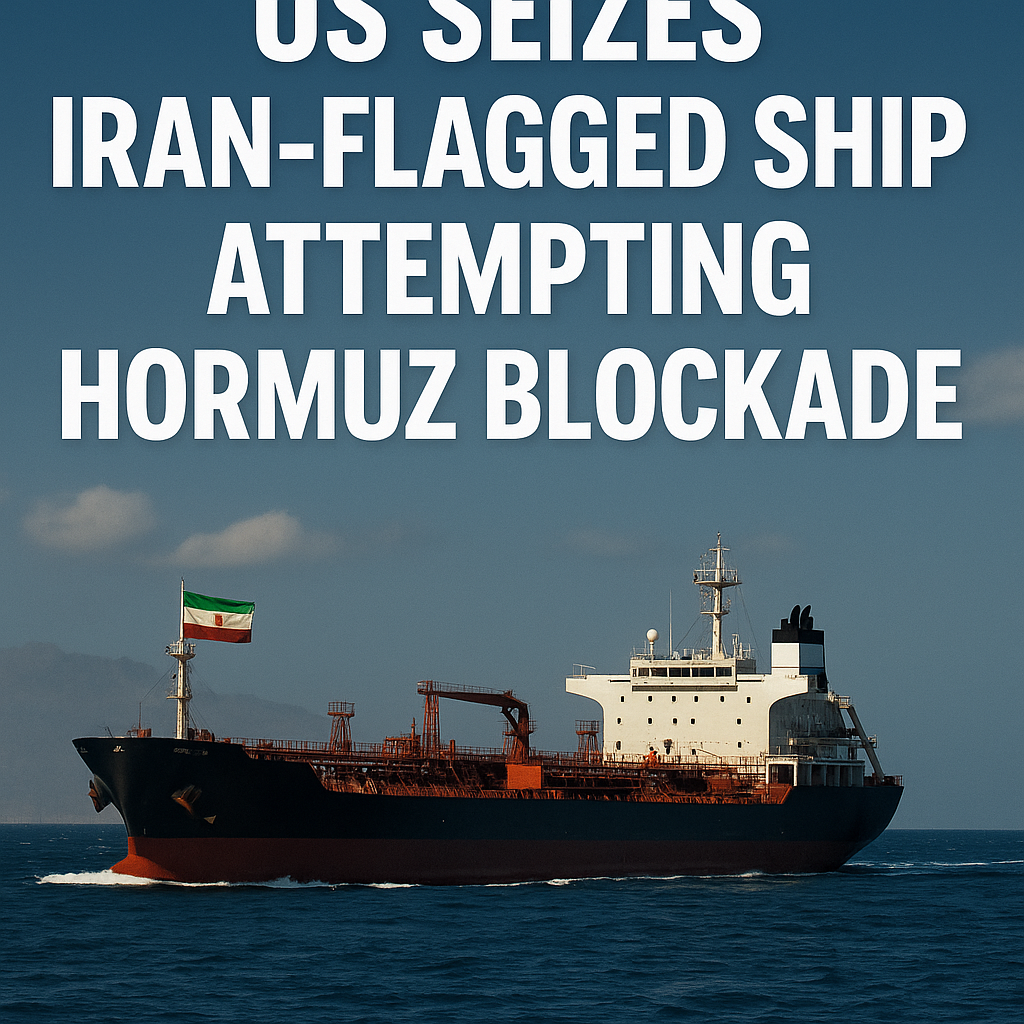
US Seizes Iran-Flagged Ship Attempting Hormuz Blockade

US Seizes Iran-Flagged Ship Attempting Hormuz Blockade
The recent seizure of an Iran-flagged vessel attempting to breach the Strait of Hormuz blockade has reignited tensions in the already fraught relationship between the United States and Iran. The waters of the Strait, an essential conduit for global oil shipments, have become a focal point for maritime security concerns amidst ongoing geopolitical strife.

The Context Behind the Seizure
The U.S. Navy’s decision to intercept and seize the Iran-flagged ship underscores the escalating tensions in the Gulf region. Observers note that this incident reflects not just immediate maritime security issues, but also broader strategic interests and regional power dynamics.


According to reports from Al Jazeera, the U.S. military asserted that the cargo onboard was linked to violations of international sanctions imposed on Iran. Authorities claim the ship was attempting to deliver supplies that could aid Iran’s controversial nuclear program. This assertion aligns with long-standing U.S. efforts to curb Iran’s nuclear ambitions and its impact on regional stability. Conversely, Iranian officials have denounced the seizure as a blatant act of piracy, asserting that the vessel was engaged in lawful trade that should remain free from interference.


In light of these contrasting narratives, it’s important to note that the Strait of Hormuz is a critical passage for approximately one-fifth of the world’s crude oil. Any disruption here not only affects regional economies but has global ramifications, making the stakes extraordinarily high for all parties involved.
Regional Reactions and Implications
As news of the ship’s seizure spread, various stakeholders reacted emphatically, illustrating the diverse opinions surrounding the incident. RT represents a more sympathetic stance toward Iran, framing the U.S. actions as a provocation likely to exacerbate tensions. In their view, such aggressive tactics could ultimately lead to retaliatory measures from Tehran, raising the risk of a broader conflict.
On the other hand, Sky News reported that the U.S. is poised to increase its naval presence in the Gulf region further, a move that could be seen as both a deterrent and a challenge to Iran’s maritime activities. While U.S. officials argue that enhancing military presence is necessary to ensure the freedom of navigation in the Strait, critics warn that this could heighten the risk of military encounters.
A Balancing Act
In analyzing these viewpoints, it becomes apparent that the situation at the Strait of Hormuz is emblematic of a complex balancing act in U.S.-Iran relations. The narrative surrounding the ship’s seizure is not merely about one vessel, but rather a reflection of deeper historical enmities, strategic interests, and the contentious nature of international maritime law.
For many analysts, the situation is a reminder of the precarious balance countries must strive to maintain in the complex matrix of international relations. The U.S.’s objective to stifle Iran’s activities comes with the risk of upping the ante and potentially leading to military escalation.
Conversely, Iran’s standpoint that it’s merely exercising its legitimate trade rights highlights the country’s intent to assert itself against what it perceives as interference from external powers. This dynamic creates a thorny predicament where both sides feel justified in their actions, yet the consequences could be dire for both regional and global stability.
Conclusion: Navigating Uncertainties
Ultimately, the seizure of the Iran-flagged vessel serves as a stark reminder of the volatility in the region and the perils of miscalculation. For policymakers on both sides, the challenge ahead is to manage their strategic ambitions without provoking a situation that could lead to open conflict.
As the situation evolves, it is essential to stay attuned to developments, as both diplomatic engagement and military maneuvers will play crucial roles in shaping the future of U.S.-Iran relations. With uncertainties persisting on both sides, the path forward remains fraught with challenges—a delicate dance upon which the safety and security of many depend.















